
Disclosure: This post may contain affiliate links. If you purchase through one of our links, we may earn a commission at no additional cost to you.
This semi trailer tiny house belongs to Nancy, a baker in British Columbia’s Kootenay region known locally as “Croissant Moon.” Instead of buying a standard tiny house trailer, she bought a used 45-foot “high boy” flatbed semi trailer and built a two-bedroom, off-grid home on top of it with her friend Chandler Rogers of Small House Innovation.
The finished house is 45 feet by 10 feet including the porch, with a full kitchen, a full bathroom, a living room, and two bedrooms on one level. That is far more room than a typical 24- or 28-foot tiny house on wheels can offer, and it shows why a semi trailer appeals to people who need real space for a family or a home business.
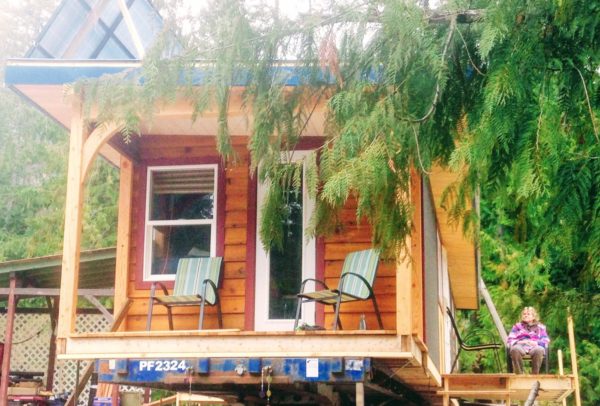
Image via Nancy “Croissant Moon”
From a School Bus Bakery to a Semi Trailer Tiny House
Before the house, Nancy and her daughter Mary spent five years living off-grid on solar power in a converted school bus. The bus was set up for the way Nancy works: the front half was a dedicated kitchen for baking croissants for local farmers’ markets, and the back held two beds, storage, a shower, and the batteries and solar gear.
My business had grown, as had my daughter, and we needed more space, and to separate the business from the dwelling.
The bus stayed on as her off-grid bakery, and the new house became the family home. Splitting work and living space this way is one of the smartest moves a small-space household can make. The croissant oven and its heat, flour, and early mornings stay in the bus, and the house stays a calm place to live.

Image via Nancy “Croissant Moon”
Why a 45-Foot High-Boy Flatbed?
A high-boy is a classic flatbed semi trailer with a single, flat deck that sits roughly five feet off the ground over the axles. Nancy bought hers used and had it towed to Chandler’s shop. Building on a flatbed gave her a long, level, heavy-duty platform that was designed to carry tens of thousands of pounds, so the weight of a full-size kitchen, a bathtub, and a wood stove was never a concern.
Length is the real win. A 45-foot deck let her fit two separate bedrooms and a full living area on one floor, with no ladders or sleeping lofts. In the photo below you can see the finished house parked next to the school bus bakery at her homesite.

Image via Small House Innovation
Building It With Small House Innovation
Construction started in late spring 2017. Nancy designed the house herself “with much input” from Chandler Rogers, and the two of them built it together. Small House Innovation is a small design-and-build shop that focuses on small homes, prefabricated construction, site-specific design, and fine woodcraft.
These build photos show the process: framing the walls right on the trailer deck, insulating, wrapping the shell in house wrap, and adding the timber-framed porch. Because the deck is already a rigid steel platform, the house is framed much like a long, narrow stick-built home, just sitting higher off the ground.

Image via Small House Innovation

Image via Small House Innovation

Image via Small House Innovation
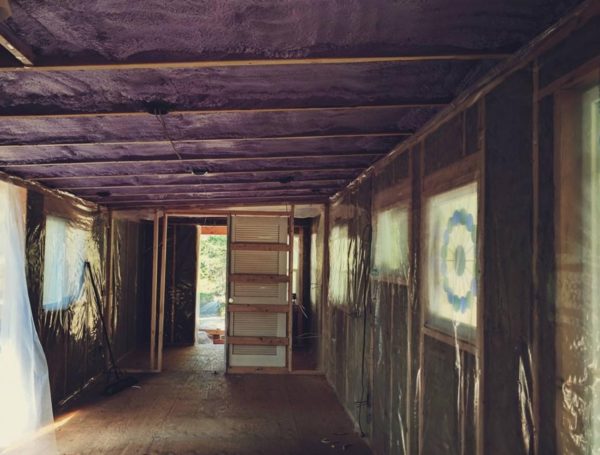
Image via Small House Innovation

Image via Small House Innovation

Image via Small House Innovation
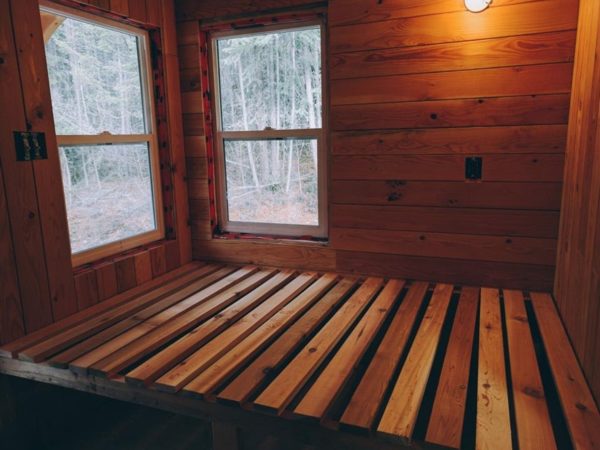
Image via Small House Innovation
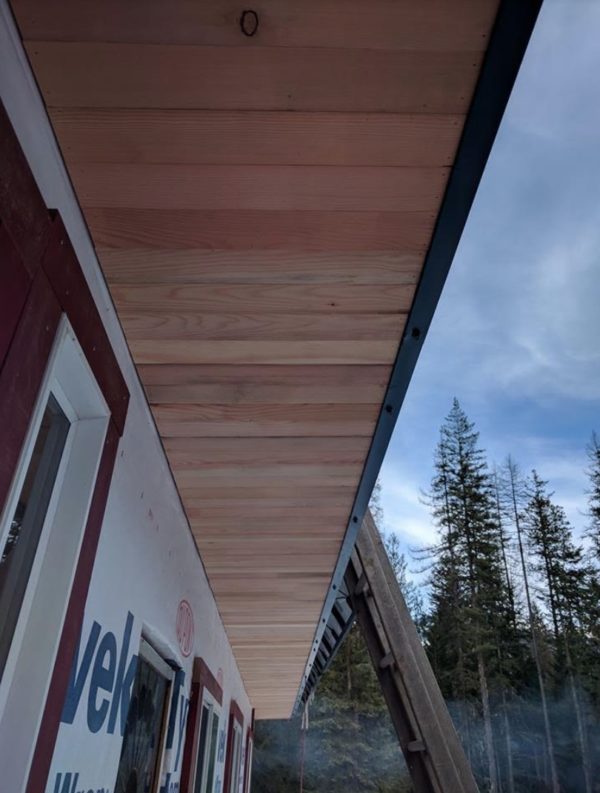
Image via Small House Innovation
Moving a 10-Foot-Wide House Before the Snow
By fall 2017 the house was ready to move to Nancy’s homesite a few kilometers away. They got it there just before the snow came. One big advantage of a semi trailer tiny house is that it’s built to be hauled by a semi tractor. A move like this is a job for a professional hauler, and a house this wide is oversize, so it normally needs a permit.
Nancy spent the winter finishing the inside, and she and Mary started sleeping in the house in January 2018. Chandler came back in the spring to help finish the interior and exterior, and the house was basically done by May 2018, just in time for market season.

Image via Small House Innovation

Image via Small House Innovation
A Long Galley Kitchen Built for a Baker
The kitchen runs along one wall of the house, with a long counter, a double sink under a big window, a propane range with a hood, and open shelving up high. For a professional baker this is a real working kitchen, not a kitchenette. Putting a window behind the sink brings forest light onto the main work surface, and dark countertops hide the wear of daily use.

Image via Nancy “Croissant Moon”

Image via Nancy “Croissant Moon”
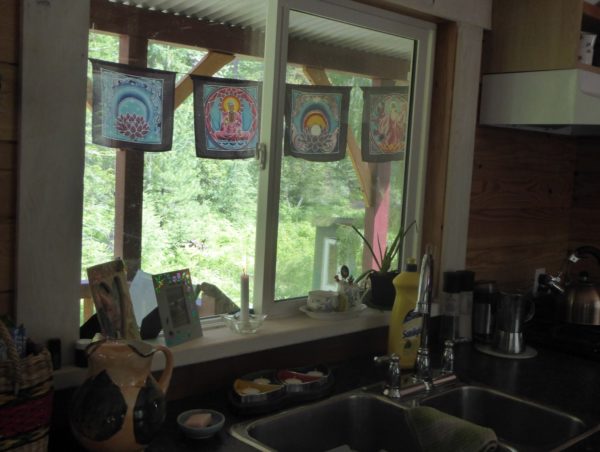
Image via Nancy “Croissant Moon”

Image via Nancy “Croissant Moon”

Image via Nancy “Croissant Moon”
A Living Room With a Wood Stove and a Long Line of Windows
The open main room feels more like a cabin than a trailer. White tongue-and-groove ceiling boards bounce light down the length of the house, while wood walls and trim keep it warm. A breakfast bar with red stools divides the kitchen from the living area, and a small wood stove heats the whole space.
The long, narrow footprint is the main design challenge of any semi trailer tiny house. Here it’s handled with windows spaced along both walls, so there’s no dark middle section, and with track lighting and string lights that run down the ceiling.

Image via Nancy “Croissant Moon”
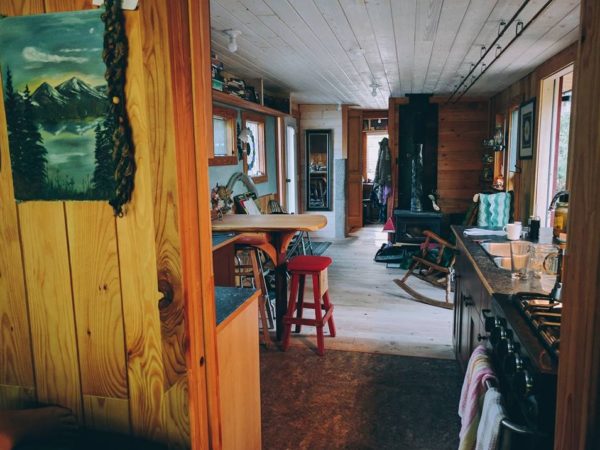
Image via Nancy “Croissant Moon”
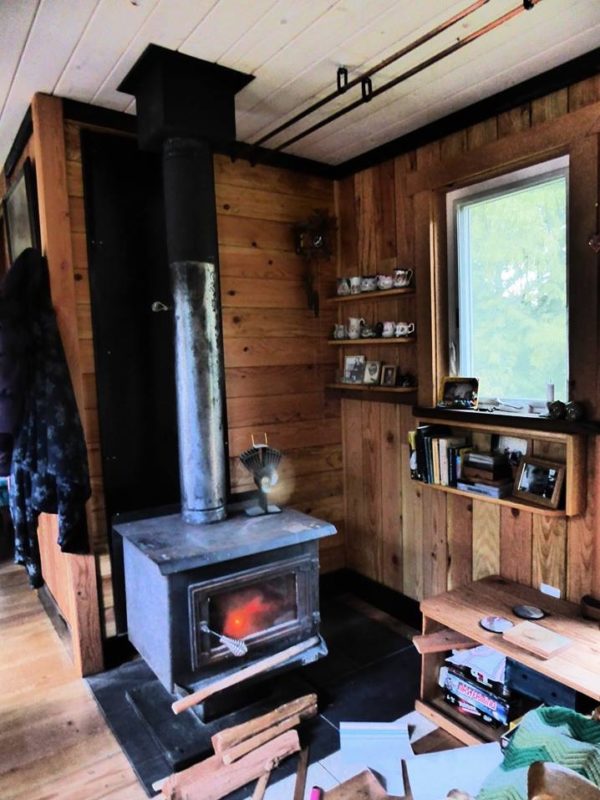
Image via Nancy “Croissant Moon”
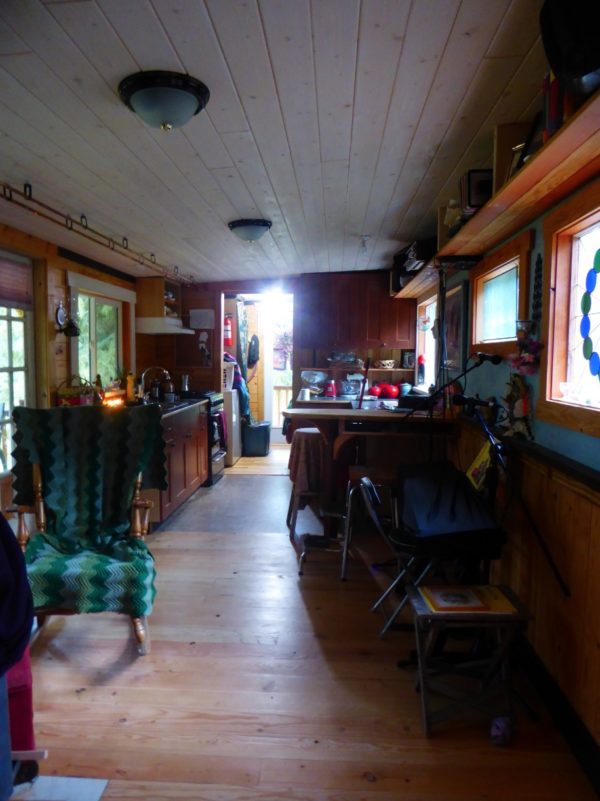
Image via Nancy “Croissant Moon”

Image via Nancy “Croissant Moon”

Image via Nancy “Croissant Moon”
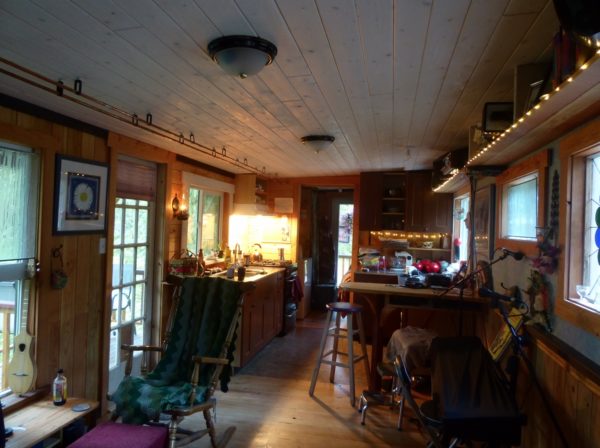
Image via Nancy “Croissant Moon”
A Music Corner With Stained Glass
One end of the living area is a creative nook with a keyboard, microphone stands, a pale blue accent wall, and a round stained-glass window. It’s a good example of how the extra length of a semi trailer lets a tiny home have space for hobbies, not just the basics.

Image via Nancy “Croissant Moon”

Image via Nancy “Croissant Moon”
A Full Bathroom With a Tub
The house has a full bath with a bathtub and shower and a dark tile surround. A full-size tub is one of the first things that gets cut from a typical tiny house. On a 45-foot deck there’s room for it.

Image via Nancy “Croissant Moon”
Two Bedrooms on the Main Floor
Instead of lofts, the house has two real bedrooms, one for Nancy and one for her daughter. Both have windows on more than one wall, built-in shelves, and room for a full-size bed. For a parent and a teenager, separate rooms with doors are a big upgrade over a shared bus.
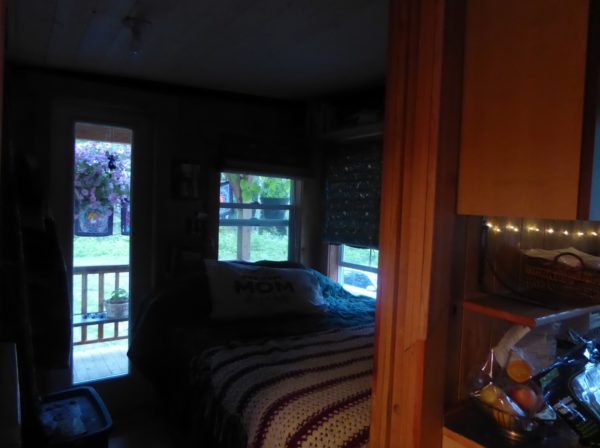
Image via Nancy “Croissant Moon”

Image via Nancy “Croissant Moon”

Image via Nancy “Croissant Moon”
Cedar Siding, a Covered Porch, and Solar on the Roof
Outside, the house mixes cedar siding with dark corrugated metal and bright red trim. The shed roof holds the solar panels, and a covered porch with hanging flower baskets fills one end of the trailer. Because the deck sits high, wooden stairs lead up to the porch, and firewood is stacked underneath.
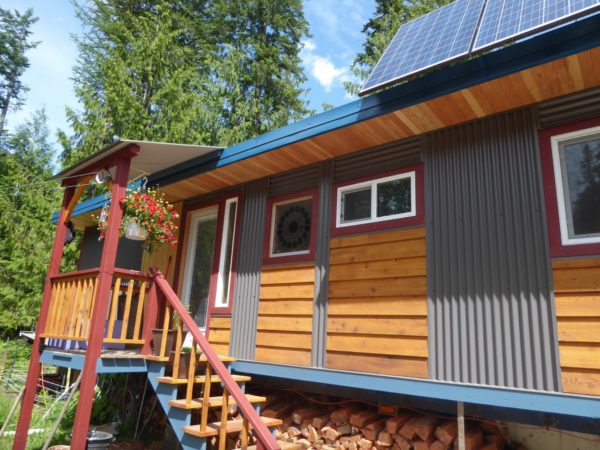
Image via Nancy “Croissant Moon”
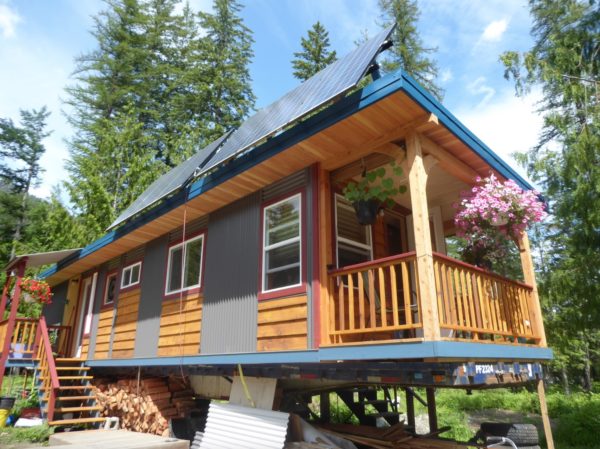
Image via Nancy “Croissant Moon”

Image via Nancy “Croissant Moon”

Image via Nancy “Croissant Moon”
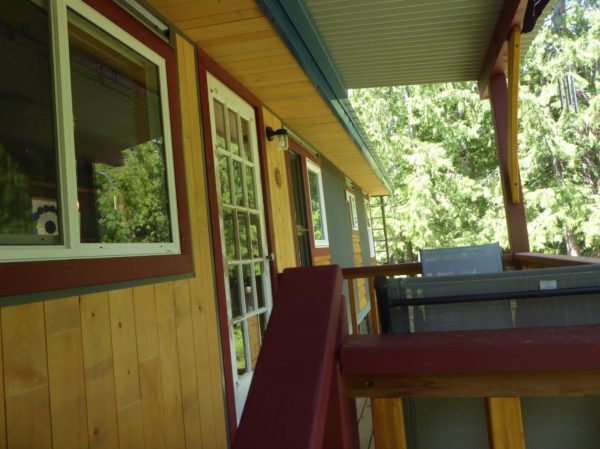
Image via Nancy “Croissant Moon”
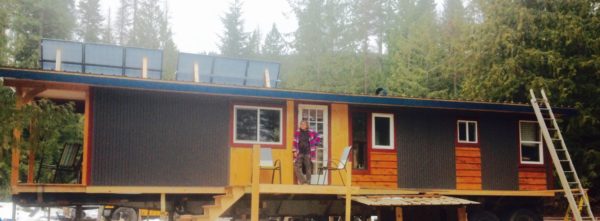
Image via Nancy “Croissant Moon”
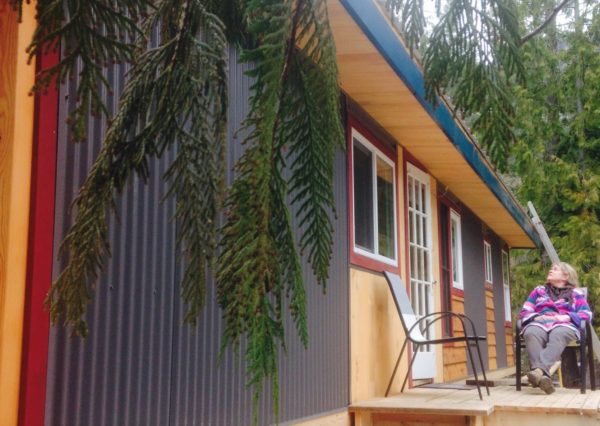
Image via Nancy “Croissant Moon”
Off-Grid Systems That Power It All
The house is fully off-grid. It runs on six solar panels and eight deep-cycle batteries. Nancy heats with wood, cooks with propane, and uses a propane water heater. Pairing a modest solar array with propane for the big loads (cooking and hot water) and wood for heat is a proven formula for off-grid living in a cold, cloudy mountain climate, where winter solar output can be low.
I am currently living in Cooper Creek, a half hour north of Kaslo at the head of Kootenay Lake, where I live in my Little House on Wheels, and create delicious croissants in my off grid, solar powered school bus.
Semi Trailer Tiny Houses: Flatbed Build vs. Box Conversion
There are two main ways to make a semi trailer tiny house, and Nancy’s is the less common one.
- Building on a flatbed: You frame a house from scratch on the trailer deck, like Nancy did. You get full freedom over windows, ceiling height, roof shape, and porches, and it looks like a house. The trade-off is more building work, and the high deck uses up some of your height allowance.
- Converting a dry van or reefer: You start with the enclosed box trailer, cut in windows and doors, and finish the inside. The shell is already there, and a refrigerated (reefer) trailer comes pre-insulated. The trade-off is a narrow, boxy space and a lot of steel or aluminum to cut through.
For box conversions, see the semi truck trailer turned luxury tiny home, the refrigerated semi-trailers turned into 344 sq ft tiny homes in the Czech Republic, and this couple building a semi trailer tiny house.
What to Know Before Building a Semi Trailer Tiny House
- Width: Standard road-legal width is 8.5 feet (102 inches) in the U.S. and 2.6 meters in Canada. Nancy’s house is 10 feet wide, so moving it is an oversize load that needs permits.
- Height: Most U.S. states cap height at 13.5 to 14 feet. A high-boy deck sits about five feet up, which leaves less room for the house. If headroom matters, look at step-deck or lowboy trailers.
- Moving it: A semi trailer needs a semi tractor. Most owners hire a hauler for each move, so these homes work best for people who plan to stay put.
- Trailer condition: Used trailers are affordable, but check the axles, brakes, tires, deck, and frame for rust or damage before you buy.
- Zoning and insurance: Rules vary widely. A home on a semi trailer may not fit neatly into RV, tiny house, or manufactured-home categories, so check with your local planning office and insurer first.
Semi Trailer Tiny House FAQ
How big is a semi trailer tiny house?
Most are built on 40- to 53-foot trailers. An 8.5-foot-wide, 45-foot house has roughly 380 square feet of floor. Nancy’s 10-foot-wide, 45-foot house, porch included, has about 450 square feet of total deck area.
Can you live in a semi trailer tiny house year-round?
Yes. Nancy has lived in hers full-time since January 2018 through Kootenay winters, with wood heat and solar power.
Is a semi trailer tiny house road legal?
It can be if it stays within legal width and height and is properly registered, but many (like this one) are wider than 8.5 feet and need oversize permits to move.
Do you need a semi truck to move one?
Yes, a semi trailer is hauled by a semi tractor. Most owners hire a commercial hauler rather than owning a truck.
Design Details
- Trailer: Used 45-foot high-boy flatbed semi trailer
- Size: 45 x 10 feet, including the porch
- Layout: Two bedrooms, full bathroom with tub, full kitchen, living room
- Power: Six solar panels, eight deep-cycle batteries
- Heat: Wood stove
- Cooking and hot water: Propane range and propane water heater
- Exterior: Cedar siding, corrugated metal, shed roof, covered porch
- Designer: Nancy, with input from Chandler Rogers
- Builders: Nancy and Chandler Rogers of Small House Innovation
- Build time: Late spring 2017 to May 2018
- Location: Cooper Creek, near Kaslo, British Columbia
What Makes This Build Special
- A full two-bedroom home on one level, with no lofts or ladders, made possible by a 45-foot deck
- A flatbed semi trailer gave her a heavy-duty platform for a tub, wood stove, and full kitchen
- Separating the home from the bakery bus keeps the business out of the living space
- Windows along both long walls keep a long, narrow house bright
- A simple, proven off-grid setup: solar for electricity, propane for cooking and hot water, wood for heat
- An owner-designed, owner-built home finished with the help of a small local builder
Video Tours
Nancy shared two videos on Facebook: one of life in the school bus and one of the house being moved.
Living in the Bus
Living in the buss~a year later
Posted by Nancy Moon Hoops on Tuesday, December 30, 2014
Moving the House
The move
Small House InnovationPosted by Nancy Moon Hoops on Saturday, December 2, 2017
Learn More
Builder — Small House Innovation
Nancy’s bakery — Croissant Moon
Video — Living in the bus | The move
More Semi Trailer Tiny Houses
- Semi Truck Trailer Turned Luxury Tiny Home
- Couple Building Semi Trailer Tiny House
- Insulated Semi-Truck Trailer Tiny House with a Downstairs Bedroom
- Refrigerated Semi-Trailers Turned Into 344 Sq Ft Tiny Homes
- A 10-Ton Semi-Truck Turned Off-Grid Tiny House
- He Built a Tiny House in an Insulated Semi-Trailer
- Retirement in a 73-Foot 18-Wheeler Not-So-Tiny Home
Would you live in a semi trailer tiny house? Tell us in the comments.
Our big thanks to Nancy, AKA Croissant Moon, for sharing!
If you enjoyed this you’ll LOVE our Free Daily Tiny House Newsletter with even more!
You can also join our Small House Newsletter!
Also, try our Tiny Houses For Sale Newsletter! Thank you!
More Like This: Tiny Houses | THOWs | Tiny House Interiors
Disclosure: This post may contain affiliate links. If you purchase through one of our links, we may earn a commission at no additional cost to you.


Alex
Latest posts by Alex (see all)
- Win a Free Spot in a Wild Abundance Basic Carpentry Class Near Asheville (Enter by Nov. 30) - November 18, 2026
- Every Tiny Home for Sale at Canoe Bay Village: A Guide to Wisconsin’s Lakefront Escape Community - November 18, 2026
- The Last Glass House Planned for This Section of Canoe Bay Village: A Presale on Lot 29 - November 18, 2026





Join the Conversation
40 comments