
Disclosure: This post may contain affiliate links. If you purchase through one of our links, we may earn a commission at no additional cost to you.
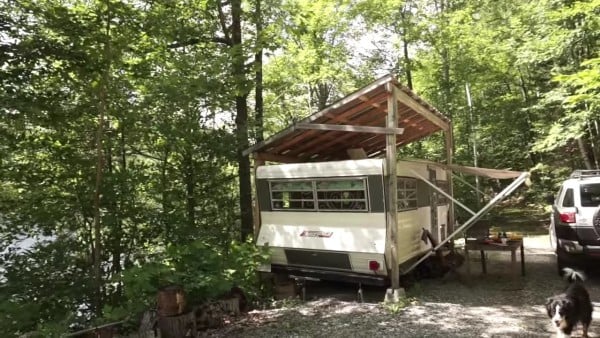
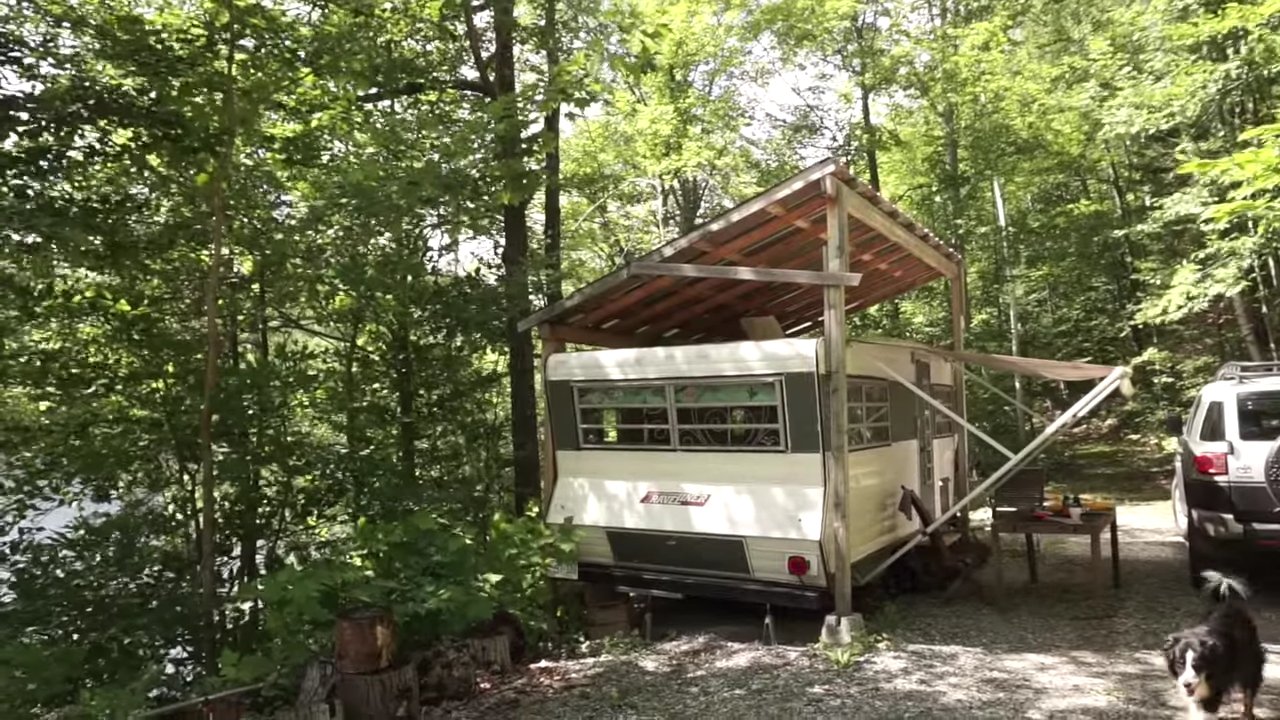
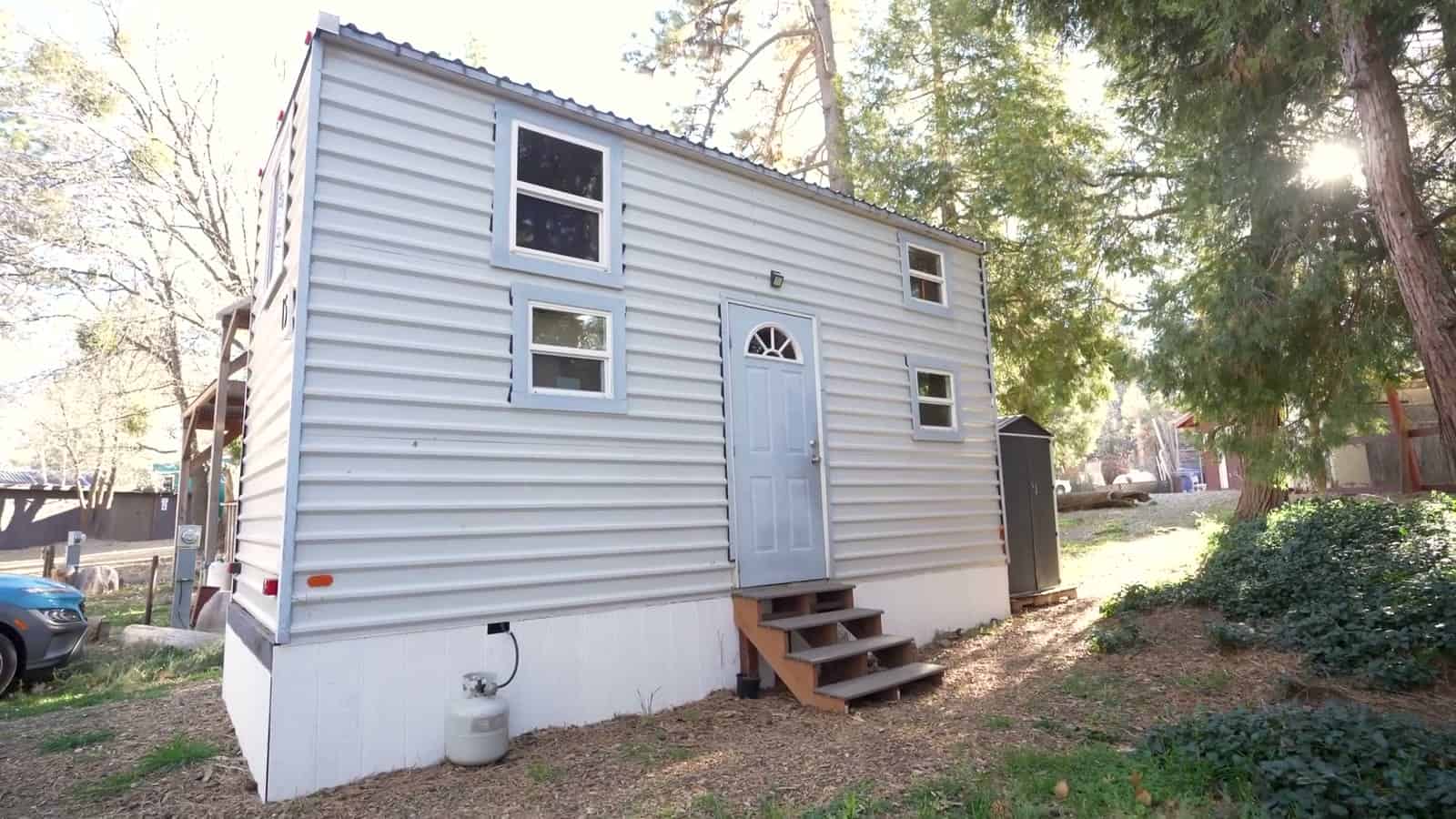
Jeff McIntyre and his family live off-grid on 400 acres near a small lake, splitting their living space between a converted camper cabin and a treehouse studio. The camper, purchased for $600, was gutted and lined with pine, featuring a queen bed and bunk beds for the children. A protective roof structure with metal roofing covers the camper to allow snow to slide off rather than accumulating on top.
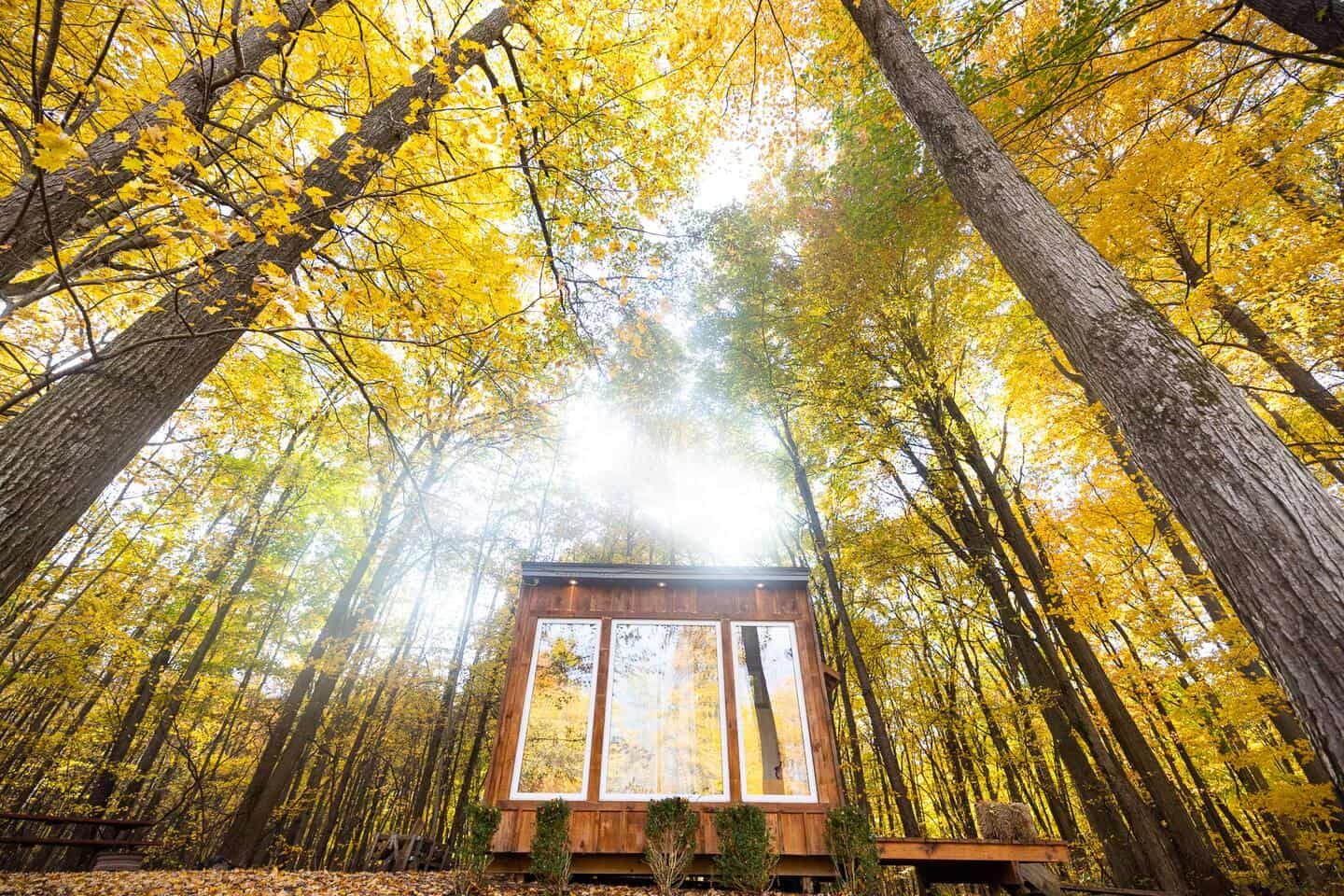
The treehouse serves as both Jeff’s art studio and the family’s main living area. The structure runs entirely on two batteries and one solar panel, with a wood-burning stove for heat. Board and batten siding covers the exterior, while the interior features unfinished walls and shutters instead of glass windows.
Don’t miss other interesting tiny homes like this – join our FREE Tiny House Newsletter for more!
Camper Cabin with Protective Roof Structure
Images © Exploring Alternatives
Pine-Lined Camper Interior

Images © Exploring Alternatives
Treehouse Studio with Board and Batten Exterior

Images © Exploring Alternatives

Images © Exploring Alternatives
Treehouse Interior and Art Studio

Images © Exploring Alternatives

Images © Exploring Alternatives
Living Space with Wood Stove

Images © Exploring Alternatives
Family Living Areas

Images © Exploring Alternatives

Images © Exploring Alternatives

Images © Exploring Alternatives
Video Tour: Off-Grid Family Homestead
Design Details
- Owner: Jeff McIntyre (artist)
- Property: 400 acres near a small lake
- Structures: Camper cabin + treehouse studio
- Camper Cost: $600
- Camper Interior: Pine-lined walls
- Camper Sleeping: Queen bed + bunk beds for kids
- Camper Roof: Metal roofing structure for snow shedding
- Treehouse Use: Art studio + family living area
- Treehouse Exterior: Board and batten siding
- Treehouse Interior: Unfinished walls
- Windows: Shutters only (no glass)
- Power: 2 batteries + 1 solar panel
- Heat: Wood-burning stove
- Furnishings: Table and chairs
Lessons from This Build
- Cheap Campers Make Affordable Sleeping Quarters: A $600 used camper, gutted and lined with pine, provides weatherproof sleeping space for a family without the cost of new construction
- Protective Roofs Extend Camper Life: Building a separate roof structure over the camper prevents snow accumulation and protects the original roof from weather damage
- Minimal Solar Can Power Basic Needs: Two batteries and one solar panel provide enough electricity for a simple off-grid lifestyle when consumption is kept low
- Shutters Replace Glass in Mild Seasons: Using shutters instead of glass windows works in seasonal climates and eliminates the cost and fragility of window installation
- Split Structures Serve Different Functions: Separating sleeping quarters (camper) from living/work space (treehouse) allows each structure to be optimized for its purpose
Learn More
Related Stories
You can share this using the e-mail and social media re-share buttons below. Thanks!
If you enjoyed this you’ll LOVE our Free Daily Tiny House Newsletter with even more!
Also, try our Tiny Houses For Sale Newsletter!
More Like This: Tiny Houses | Treehouses | Off-Grid | Cabins
See The Latest: Go Back Home to See Our Latest Tiny Houses
Disclosure: This post may contain affiliate links. If you purchase through one of our links, we may earn a commission at no additional cost to you.


Alex
Latest posts by Alex (see all)
- Where to Park or Build a Tiny House: Your Options, Ranked - November 2, 2026
- Knitwear Designer Lives and Works in a 280 Sq Ft Oakland Garage ADU - November 1, 2026
- How Do I Get Land for a Tiny House or Camper? 5 Paths That Work - November 1, 2026


Join the Conversation
19 comments