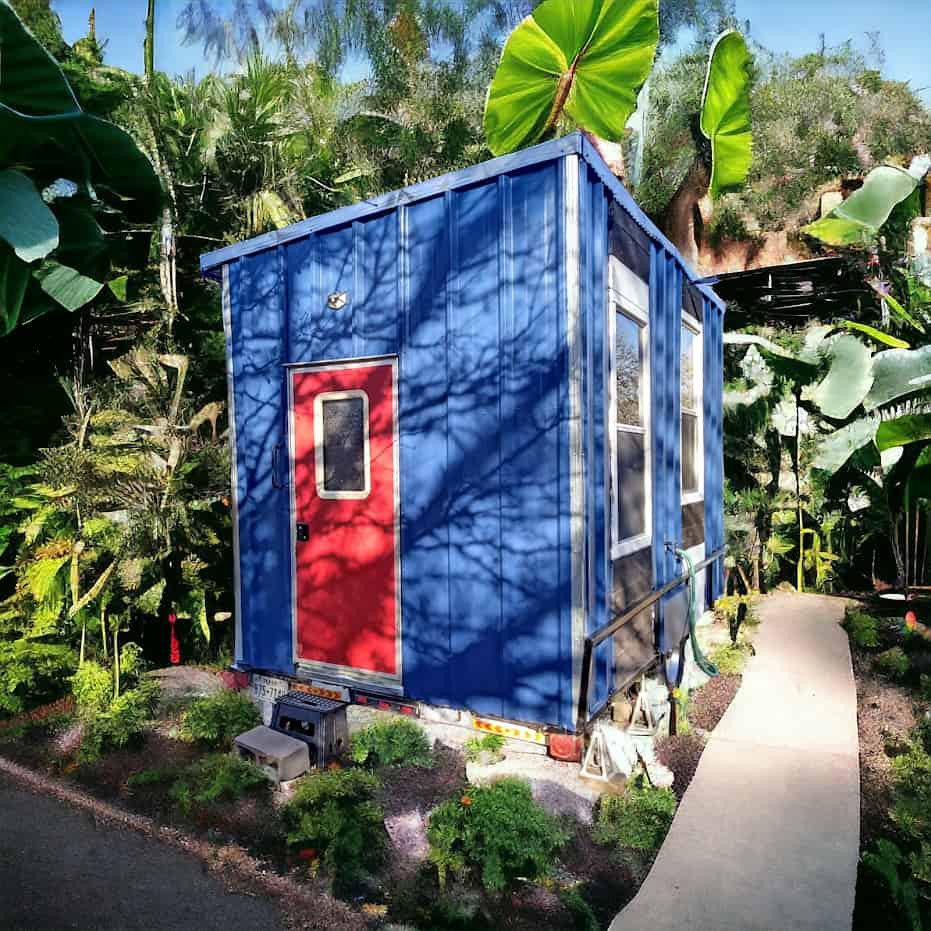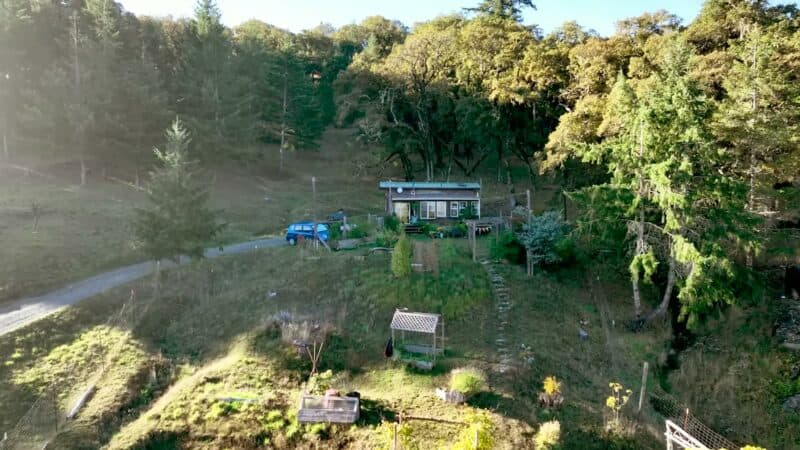
Caitlin wanted to build her own home — and her dad, a carpenter, was all in. Starting in 2014, they spent about three years crafting an off-grid tiny house on a 24-foot trailer. She found land next to the build site, towed the house up a dirt “road” with a small bulldozer, and settled in. Materials came together over time (she didn’t keep perfect books), but the whole project landed around $30,000–$40,000. Eight years later, she’s still there: a huge covered porch, sweeping views, and a house full of Caitlin and her dad’s woodwork.
Caitlin’s DIY off-grid tiny house with a huge covered porch on a wooded hillside. Video still: Tiny House Giant Journey.
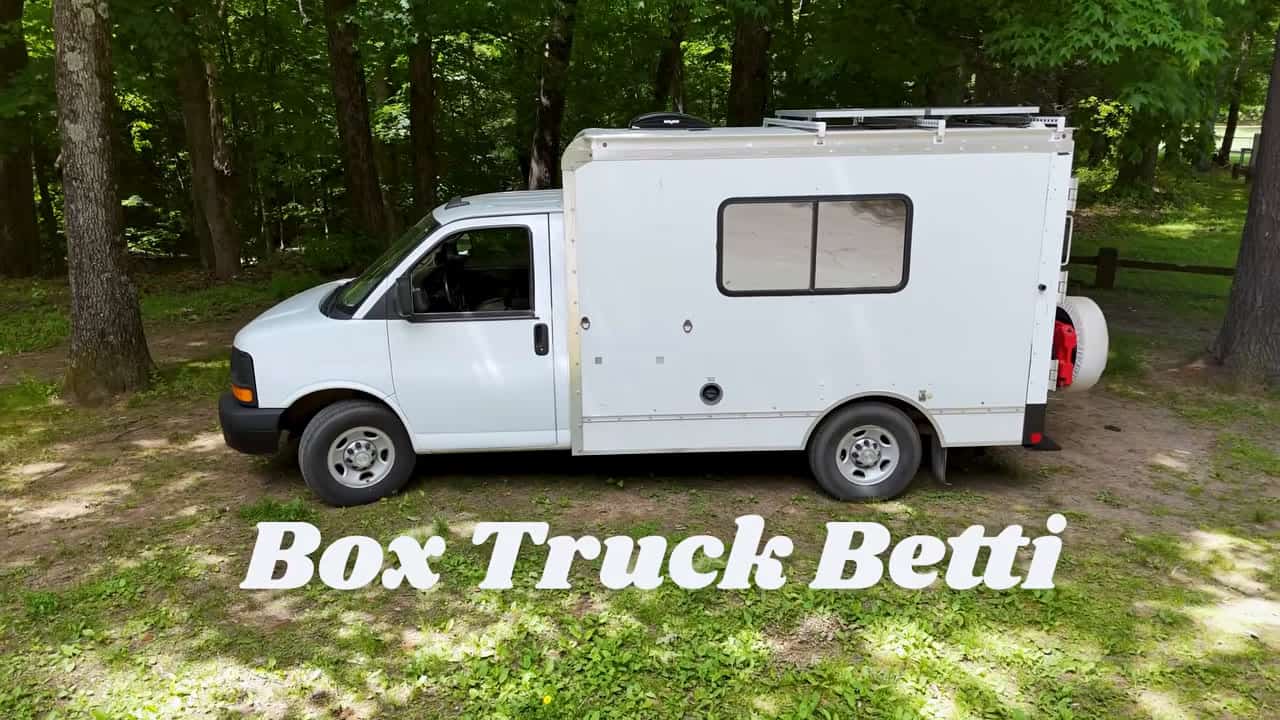
After a major life change, Eva didn’t want another apartment that felt temporary — she wanted something that was completely her own. Starting with little construction experience, a used white box truck, and help from a friend, she built Box Truck Betti: a solar-powered, off-grid tiny home packed with carved wood, space-saving tricks, and the freedom to roam. In this ~17-minute tour from Tiny House Giant Journey, she walks the exterior, the cozy interior, and the systems that keep Betti rolling.
Box Truck Betti parked in the woods — white cutaway box, rooftop solar, spare tire, and a red jerry can ready for the road. Video stills from Tiny House Giant Journey.
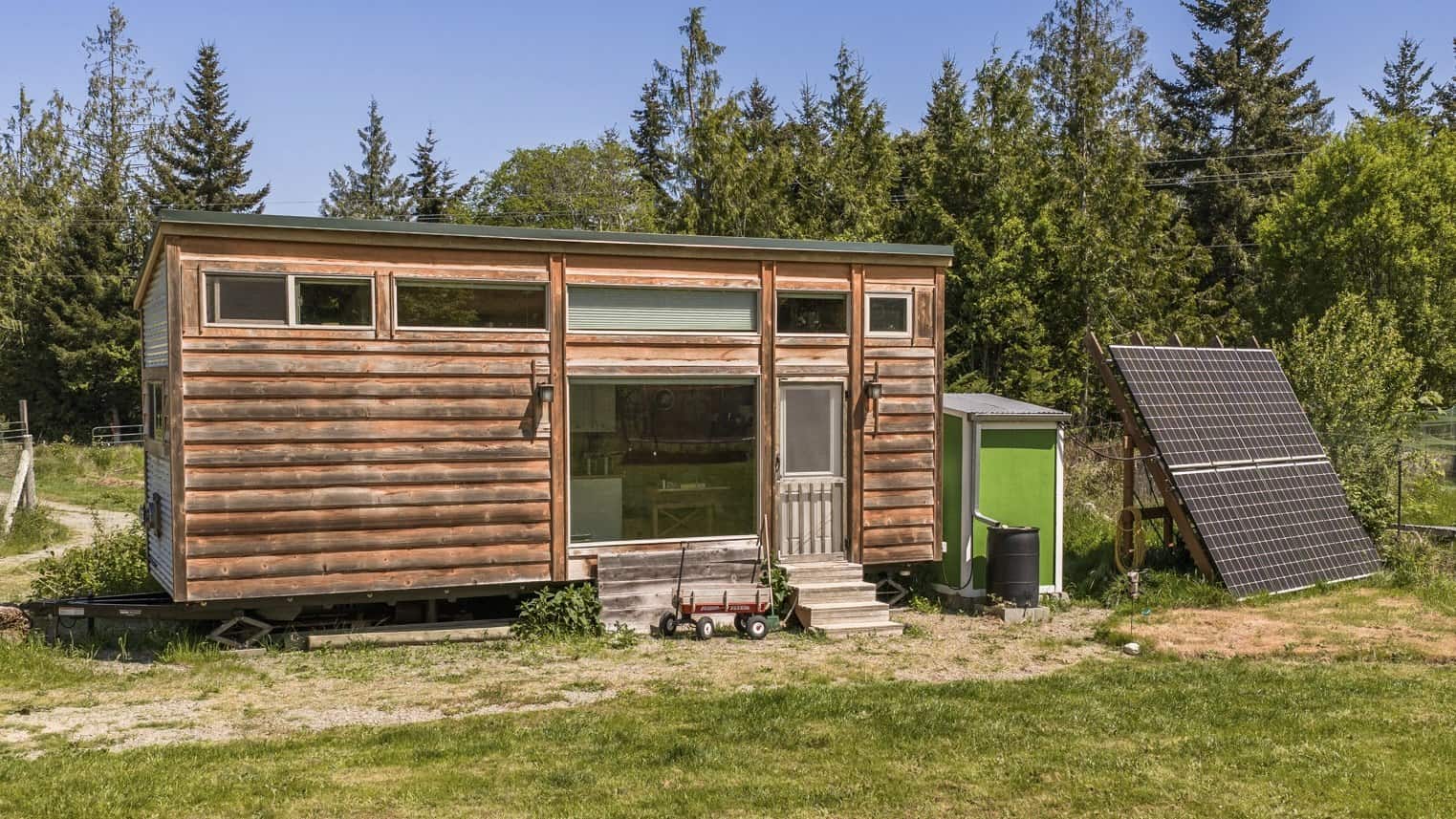
Allison Williams and her family sold a modest Portland house so Dad could stay home. They bought land in Port Angeles, Washington, and a tiny house on wheels — and spent nearly eight years mortgage-free. Their daughter grew up in 290 square feet. She’s becoming a teen now and outgrowing her spaces, so they’re selling the tiny house. The land already sold separately, to someone who already has a tiny house of their own.
The 8 × 26 ft tiny house on wheels in Port Angeles, with the ground-mounted solar array off to the side. Photo: Allison Williams.
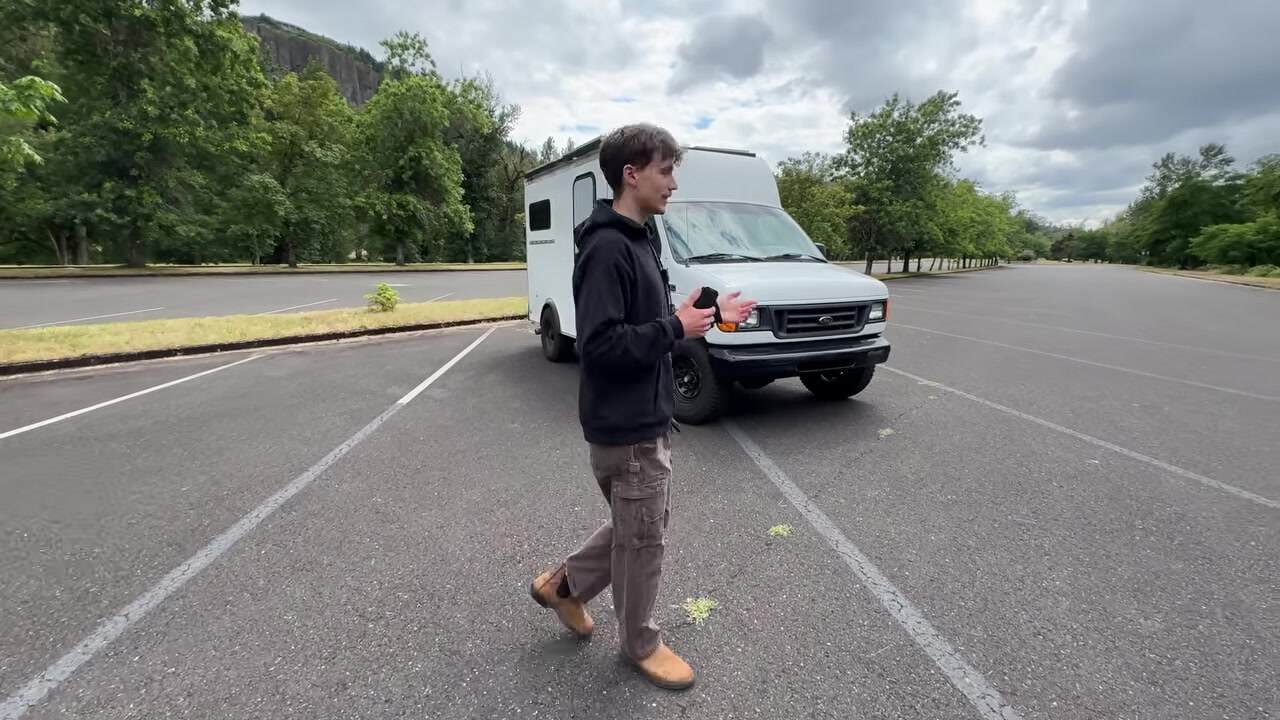
Most people look at a worn white box van and see deliveries. Maxwell Peters looked at a 25-year-old Ford E-350 moving van and saw a finished off-grid home — tall enough to stand in, tough enough for the road, and quiet enough to park under the trees. In his full tour on YouTube, he walks the solar roof, the rear garage, a bright wood-and-white interior, and a galley that actually feels like a kitchen. About 26 minutes of lived-in proof that a work truck can become a tiny house.
Maxwell Peters with his white Ford E-350 moving van tiny home — rooftop solar, rugged tires, and a tall box body. Video stills from Maxwell Peters.
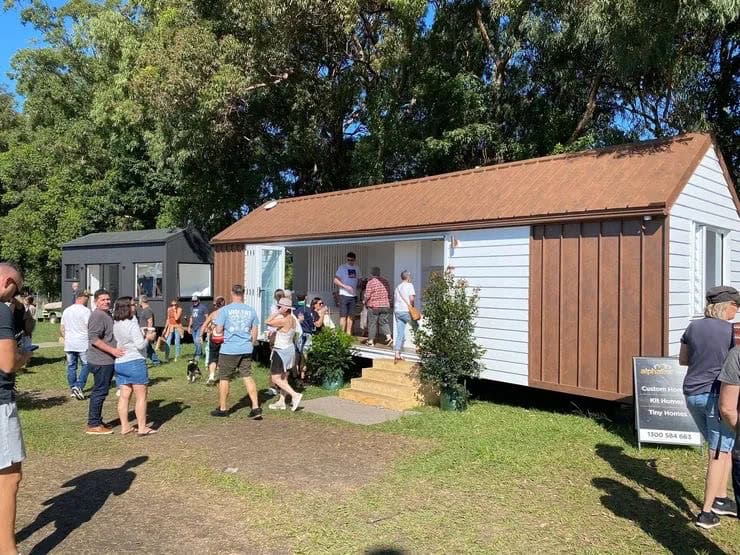
Australia’s tiny home scene has quietly turned into one of the most active in the world, and the clearest place to see it is the Tiny Homes Expo circuit — a travelling show that sets up in a different state every few weeks with 25-plus finished builds you can walk through, climb into, and open the cupboards of.
Four stops remain on the 2026 schedule, running from late August through the end of November. If you have been following our coverage of Australian builders, this is your chance to see that work in person rather than through a screen.
If you have been circling the idea of going off-grid but keep stalling out on the practical stuff — how many solar panels you actually need, what happens to the sewage, whether that $4,000 backyard shed could legally become a house — there is a weekend in Middle Georgia built specifically to answer those questions in person.
The United Tiny House Association and Beloved Cabin Homestead run a series of three-day Off-Grid Workshop Camps on a 16-acre homestead outside Eatonton, Georgia. Three sessions remain on the 2026 calendar, and registration is capped tightly enough that they tend to fill.
Images courtesy of United Tiny House Association / Beloved Cabin Homestead
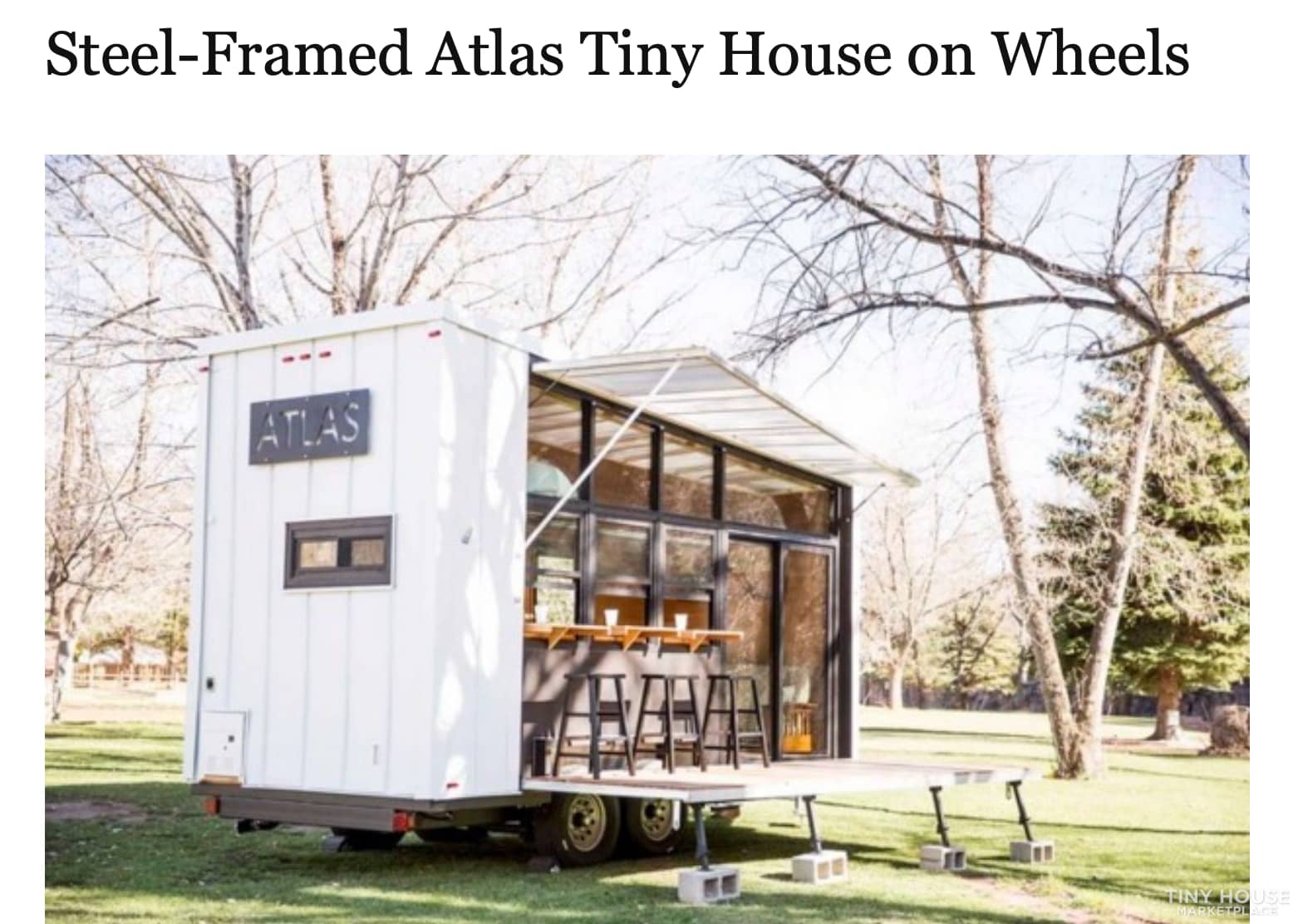
Meet ATLAS, a solar-powered, off-grid tiny house on wheels that was featured on HGTV’s Tiny House, Big Living (Season 1, Episode 13). We originally featured this tiny house back in 2016 and it’s still turning heads. Now available for $45,000 in Hardy, Virginia.
Built in 2015, the Atlas features a striking design on a steel tube frame with light-gauge steel construction, making it exceptionally durable while keeping the weight manageable at 11,000 lbs on an 8′ x 18′ trailer.
Images courtesy of Tiny House Marketplace / Don Hurt
This off-grid cabin on wheels, The Fat Pony Hideaway is a 1983 Mercedes 608D box truck cabin located in Devon, UK. With the capacity to sleep up to four people, the box truck tiny home accommodates 2 adults and 2 children over the age of 8, ensuring that the entire family can revel in the charm of this unconventional vacation.
The ingenious design of the box truck reveals a hidden treasure – a king-size bed that gracefully drops down from the ceiling, offering a cozy haven for the adults. It’s a touch of luxury amid simplicity, providing comfort and tranquility against the picturesque backdrop of Devon, UK.
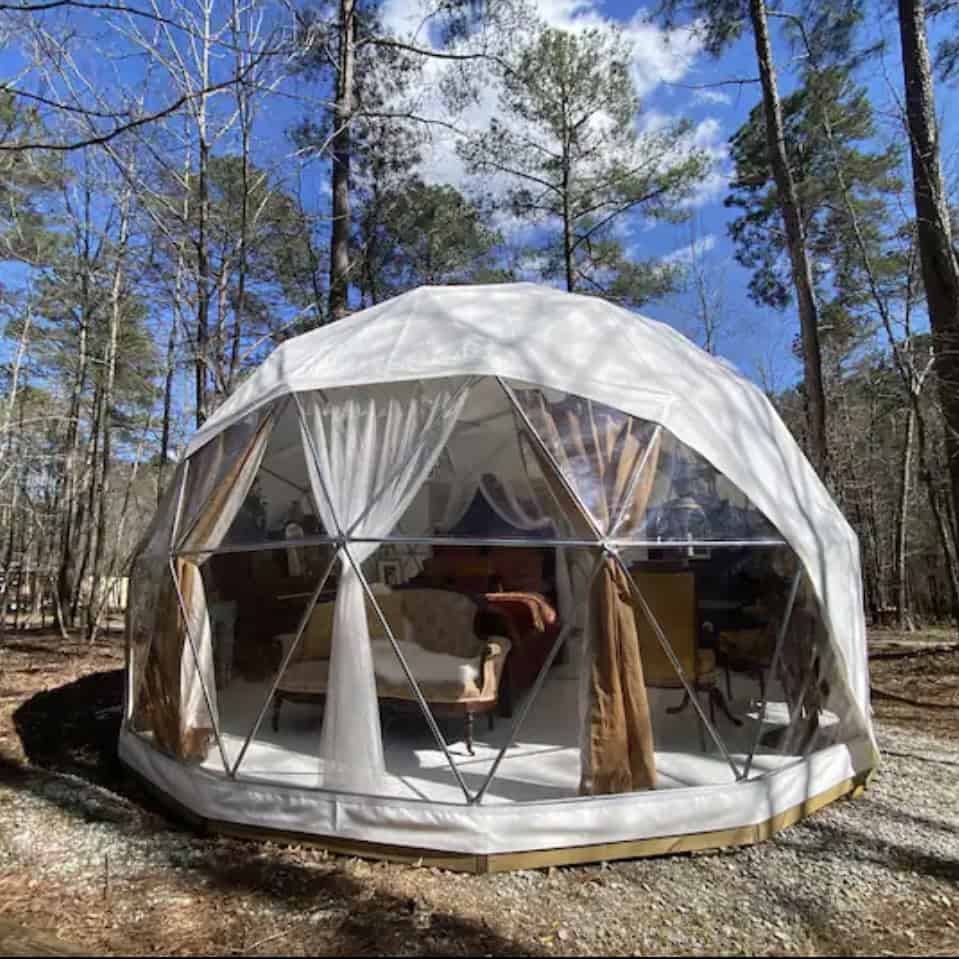
This year, United Tiny House is bringing back their off-grid camps, but with more to learn than ever before, and four weekends you can choose from to attend! Just like last year, you’ll get to enjoy hands-on workshops learning about biogas, rainwater collection, and solar systems, and there’s free tent camping on site (or you can pay extra to stay in one of their 9 off-grid tiny structures!).
New this year, however, is a Shed-to-Home Conversion 101 Class and field trip to local Derksen Portable Buildings‘ dealer Village Barns, as well as a workshop on aquaponics gardening! And don’t forget the concert, potluck dinner, and discussion on the 5 popular composting toilets and which one is the best. Admission is $199/person for the weekend-long event.