Patrick spent ten years building a Tumbleweed tiny house around a full-time job — nights, weekends, Tumbleweed plans, a trailer, and a lot of reclaimed materials. The whole build came in under $30,000.
Then he bought his own land and didn’t stop at the house. He put up a small workshop first, then joined the two with a cedar deck so living and making share one setup. Let’s take a closer look.
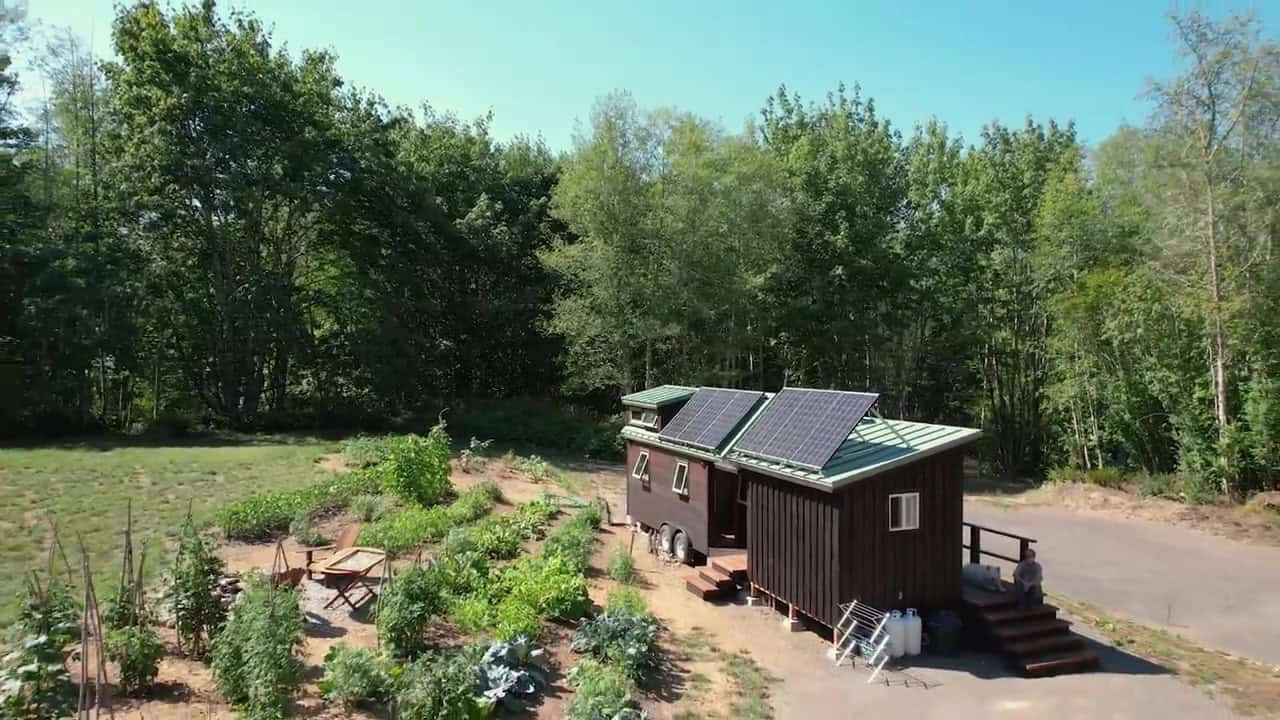
Patrick’s Tumbleweed tiny house joined to a workshop by a cedar deck, with solar on both roofs. Video still: Tiny House Giant Journey.
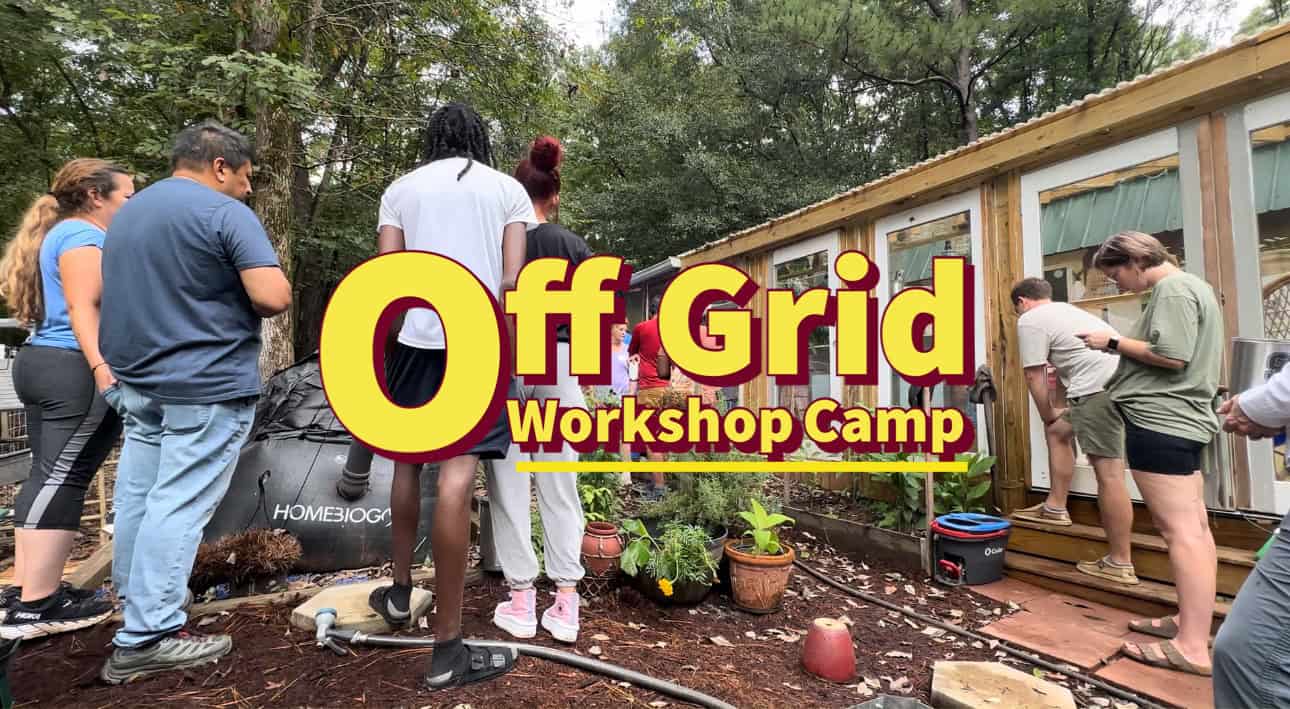
Get excited! If you’ve ever wanted to learn about living off-grid, this workshop could be your answer. Learn about rainwater collection, turning waste into fuel, solar set-ups and much more. You’ll even get to tour multiple off-grid tiny homes the host couple have built and rent on Airbnb.
Fin and John have tons of experience after years of building off-grid tiny homes, and you’ll get to glean from their knowledge, sleep under the stars (or in one of their homes for an additional fee), hang out with other tiny-house-hopefuls and enjoy hands-on projects. The cost is $199/person, with a $50 discount for couples. More details below!
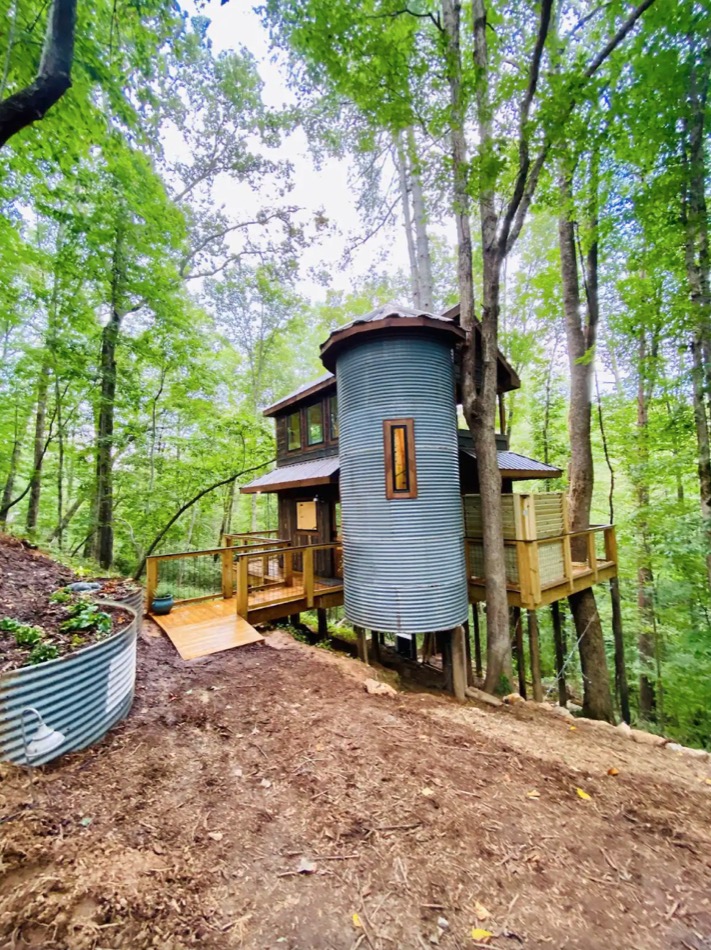
Tucked away in the rolling hills of Dahlonega, Georgia, this secluded treehouse sits on 81 acres of Triple Creek Farms. Hosted by Wes on Airbnb and rated 4.98 stars with 85+ reviews, Tech Time is a nature retreat that blends rustic charm with modern tech amenities — including high-speed internet, a smart TV, and a private outdoor shower overlooking a creek.
Inside, you’ll find a cozy living space with comfortable furnishings, a well-equipped kitchen, and a private bedroom area with large windows framing scenic views of the surrounding forest. It’s an ideal escape for couples or anyone craving a peaceful getaway just minutes from downtown Dahlonega’s wineries, restaurants, and hiking trails.
This is the Pickalotta, an off-grid mushroom-inspired cabin with a living green roof built by Joel and Stephanie in Chesterville, Ontario, Canada. The owner-builders have been living off-grid in their self-built home for over a decade, and they constructed this whimsical second structure to share the off-grid experience with others.
Built using reclaimed telephone poles and furnished with vintage items, the Pickalotta demonstrates how creative design and sustainable building practices can come together in a truly unique small dwelling.
The cabin’s distinctive mushroom shape gives it a fairytale quality while the living green roof provides insulation and blends the structure into the natural landscape.
Jack set out with a clear goal: build a tiny house on wheels as the foundation for a fully off-grid, self-sustaining homestead in Colorado. After three years of hands-on work and a total budget of just $22,000, the result is an inspiring DIY THOW that proves you don’t need a fortune to create a beautiful home.
From the beetle kill pine walls to the cedar-lined shower, every detail reflects Jack’s dedication to craftsmanship on a budget. His design choices — an instant hot water heater, a deep farmhouse sink, a mini woodstove, and a sleek shed-style roof — show that practical can also be beautiful.
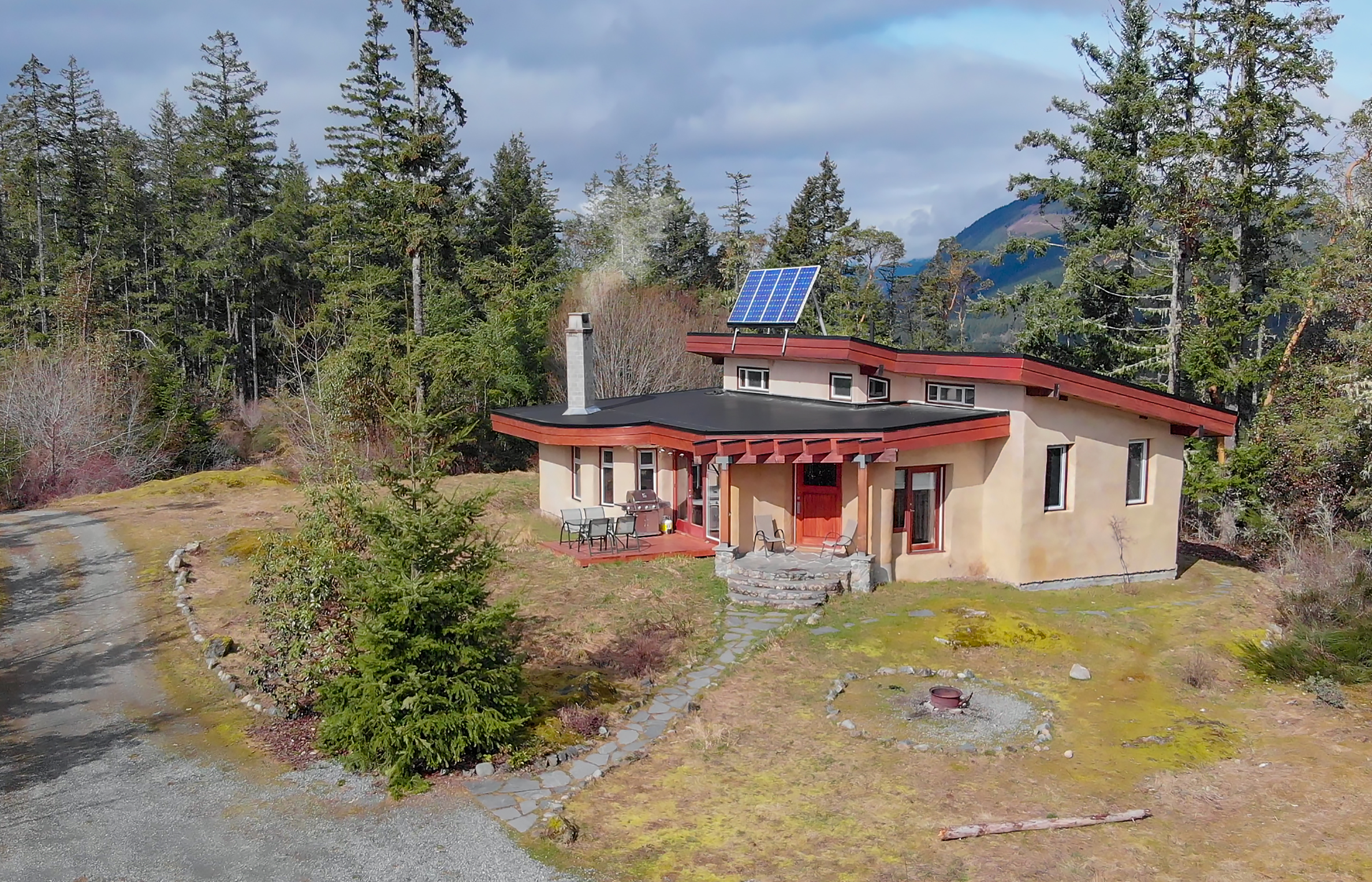
This monolithic cob house is completely off-grid with a 1-kilowatt solar power system and a backup generator for electricity, a Rumford fireplace and propane radiant in-floor heating, and a constructed wetland for natural wastewater treatment.
The modern interior living space is approximately 1,000 square feet in size with an open-concept kitchen, dining, and living room, as well as 2 bedrooms, a mechanical room, and a bathroom.
Bryce and Misty paid off their debts, left the city, and have spent the last 12 years building a cob home by hand on their off-grid homestead. The house cost approximately $1,000 CAD to build using clay from their property, wood harvested within 20km of home, and secondhand windows and roofing. They live without a car, homeschool their two daughters, and produce most of their own food from a permaculture food forest, animals, and foraged crops.