Mr. Luker’s Tiny House project is a relatively new blog recording the building experience for new tiny house builder named Joe.
He really doesn’t share much about himself on his blog or on his attached Google+ profile, but just from reading through his blog you can tell that he is passionate and dedicated to the project.
He started the project in April 2013 by explaining his reasoning for building a tiny home. Like many of us he was attracted to the idea of reducing his finances and the positive environmental impact of a small home.
He explained in detail about his trailer choice and even asked for advice on the overall construction in some the earliest posts this year. You can also see his Sketch-Up designs for the building on the website.
I encourage you to scroll or click below for more of Joe’s story and photos of his tiny house project.
Today I wanted to show you Jay Shafer’s Weller tiny house design.
It’s a 115 square feet gabled cabin designed to be built on a 7′ x 16′ trailer.
This home embraces classical geometry which Jay and his Four Lights Tiny Houses are famous for.
What I like best about it is the traditional craftsman bungalow style.
This isn’t the most inexpensive tiny home because it’s a quality designer house but it’s still made to be affordable to ordinary folks like you and me who might want a lot of styles to go with their future little house.
What if your tiny home did not look like every other tiny home?
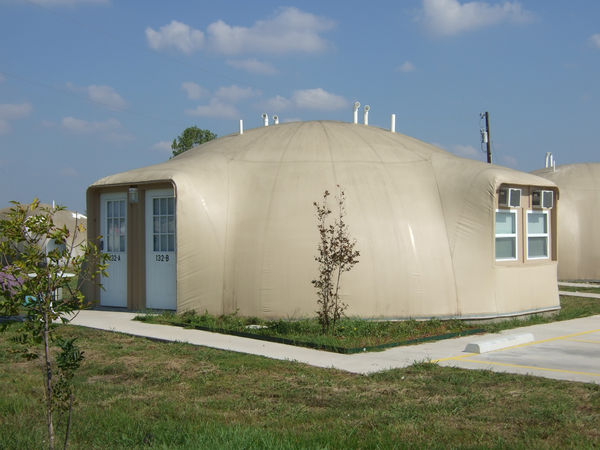
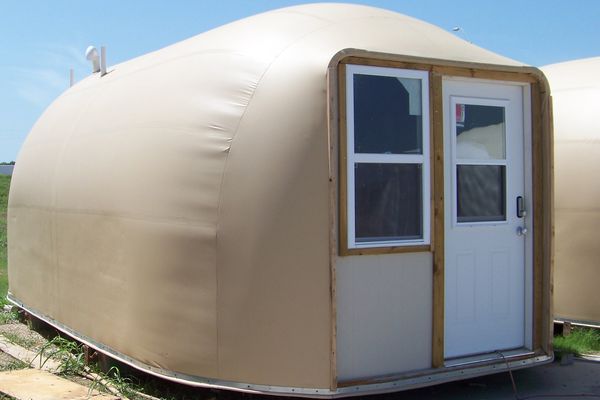
This 540 sq ft dome cabin by Lexa Dome Homes breaks the mold with its round shape, tall ceilings, and unusual wooden construction system. It is a very different take on small living, and that is exactly why dome homes keep catching attention again.
Designs like this stand out because they combine compact footprints with memorable architecture. For readers looking for something beyond the standard rectangular tiny house, this Lexa Dome model is hard to forget.
This past week I was at a small camping festival in rural Minnesota.
The event featured several speakers throughout the week, including myself.
I did two workshops. One was on beer and one was on tiny houses, two of my favorite subjects.
Matt and David enjoying cocktails during our camping trip. Photo by Cara Schulz.
In my tiny house workshop I mentioned my problem with the way our culture has glorified the act of being busy. We aren’t socially allowed to have “too much time on our hands” or else we are judged by our peers or our community. I talked about how disturbing I find this trend and how slowing our lives down can create more satisfaction and peacefulness in our lives.
I encourage you to scroll/click below to read more about my thoughts on busy-ness.
And it gets even better than that. Not only is the home recycled but the family also has some cob structures in the back.
A man cave and a she cave. The main home itself comprises of several reclaimed streetcars.
One of them makes up the living and dining rooms. Another streetcar is where the bathroom, kitchen and bedroom is.
At first this house was just 550 square feet but since then there have been some additions. The family is a mother with her three boys by the way.
She purchased the property back in 1999. After learning permaculture and taking a few classes she began to fall in love with cob. The story gets better..
If you’re like me you don’t just like tiny houses. I happen to like all sorts of unique shelters in all kinds of shapes and sizes, like shipping containers, yurts, cabins, motorhomes, and more.
But usually for me the smaller the better because I like efficiency and the idea of not going beyond our needs too much. So in this post, I’m going to show you an example of what can be done with a couple of recycled shipping containers.
In this case, the two containers were used to create and build a beautiful and eco-friendly small home nestled in the trees. To explore more amazing small homes like this, join our Small House Newsletter. It’s free and you’ll be glad you did!