Deek just released a new video tour of Jay Shafer’s original Tumbleweed Epu tiny house. This tiny home design is 8′ wide and 15′ long and sits on a 7′ x 14′ trailer, but you can also build it on a foundation. It’s an 89 square foot house without including the porch and upstairs sleeping loft.
It’s estimated to cost you $19,950 in materials to build it yourself. Others have done it for much less using reclaimed materials. Also you can always buy the Epu building plans and have a contractor do the work for you, or follow the plans yourself. If you’re new to construction, consider one of the many Tumbleweed tiny house workshops throughout the country.
Please don’t miss other exciting tiny homes – join our FREE Tiny House Newsletter!
Deek takes you on a tour of Jay Shafer’s original Tumbleweed EPU Tiny House on Wheels!
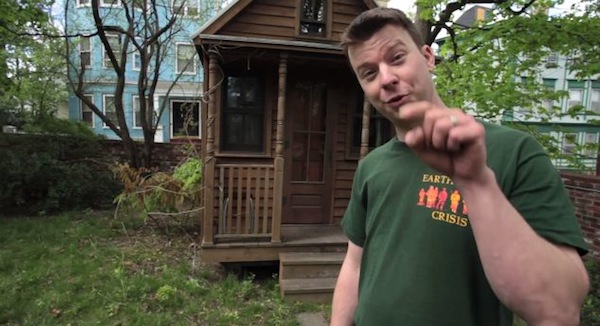
Photo Credit YouTube / RelaxShacks.com
[continue reading…]
{ }
Christopher and Merete from TINY: the Movie are in a new video with their tiny house and their story. It’s a 127 square foot house that they built on a trailer so that they can build a mortgage-free life for themselves without having to endure the consumer pressure of owning a larger home.
Just the other day I talked about how tiny homes were featured on Russia Times as a big trend in Real Estate. MSN features this video interview with them on their website. And so the movement continues to thrive as more people- every day- are learning how they can live richer lives with less stuff.
Please don’t miss other exciting tiny homes – join our FREE Tiny House Newsletter!

Photo Courtesy of TINY a story about living small
[continue reading…]
{ }
This small studio cabin is a vacation rental in Joshua Tree, California.
The owners named it Luna Mesa and you’ll get the complete house tour right here.
The home has panoramic views of the Joshua Tree Mountains.
Here you’re literally inside the Joshua Tree National Park so you can find campgrounds, trails, and Skull Rock, which is a natural rock formation that looks like a human skull.
So let’s check out the house. I included it here because it’s unusual and- of course- quite small.
Take a look at the photos and details below then let me know what you liked best about it in the comments.
Please don’t miss other exciting tiny homes – join our FREE Tiny House Newsletter!
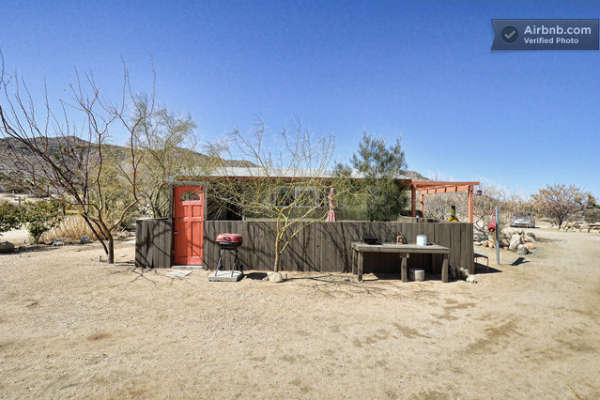
Photo Credits Airbnb.com
[continue reading…]
{ }
Russia Times published an article and video on tiny houses as a growing real estate trend.
It’s titled Dreaming Big, Living Small: Tiny House Movement Gaining Real Estate.
I’ve always realized that tiny houses aren’t for everyone. That there will always be a need for regular- and even- large homes.
The issue is that there are lots of folks out there who’d like to live and pay for a smaller home, but the options aren’t there.
And I think that’s why this ‘movement’ is gaining steam. People are sick and tired of getting taken advantage of financially so they’re coming up with solutions so that they can get ahead.
After all, isn’t that what the American dream is all about, anyway? It’s about getting what you want out of this life. And if you’ve got an over-sized home and mortgage, that’s likely a daunting challenge.
Please don’t miss other exciting tiny homes – join our FREE Tiny House Newsletter!
Photo Courtesy of Renjith Krishnan
I believe that tiny- or even just smaller- homes are the most important part of this solution for single people, families, and also the elderly because of their potential affordability. Some people are going completely mortgage-free within a year or two.
Can you imagine how different your life might be without a mortgage or rent? Or even if it were just significantly less?
I encourage you to read the rest of this post then watch the video from Russia Times below: [continue reading…]
{ }
Dan Louche of Tiny Home Builders has already designed his new house and is in the process of building it right now.
It’s called Tinier Living because it’s the smallest of his other two designs thus far.
This one is meant to be a smaller version of their ‘Tiny Living‘ design which you might have seen before.
The house is just 12′ long so that it’s lighter and easier to move around.
Please don’t miss other exciting tiny homes – join our FREE Tiny House Newsletter!
The design for this tiny house includes:
- Kitchen
- Bathroom
- Family room
- Large dormers
- 7′ sleeping loft
- Vaulted Ceilings
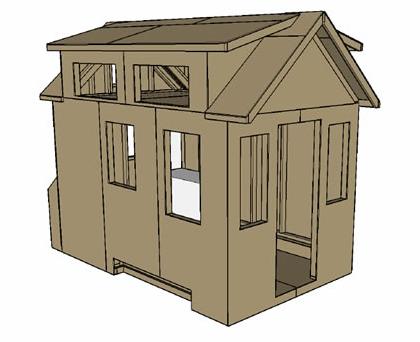
Photo Courtesy of Dan Louche / Tiny Home Builders
[continue reading…]
{ }
This tiny house documentary was created by Kirsten Dirksen, it’s called We the Tiny House People. In the last few years, we’ve gotten to see a lot of tiny house and simple living videos, and most of them are thanks to her.
Nobody has been more dedicated to bringing you closer and closer to these homes and their inhabitants than Kirsten Dirksen of Faircompanies.com. Her first interview was with Jay Shafer was approximately five years ago and it has now reached more than 1 million views.
Since then she has gone on to cover so much more, including Jenine Alexander’s self-designed and built $3,5000 tiny house made from recycled materials. After filming hundreds of hours worth of simple living footage- from people living in converted shipping containers, garages, houseboats, sheds, tree houses, and Airstream trailers- she has now released her first documentary (see below).
Updated January 3, 2019
Tiny House Documentary: We The Tiny House People – Dive into the World of Tiny Homes
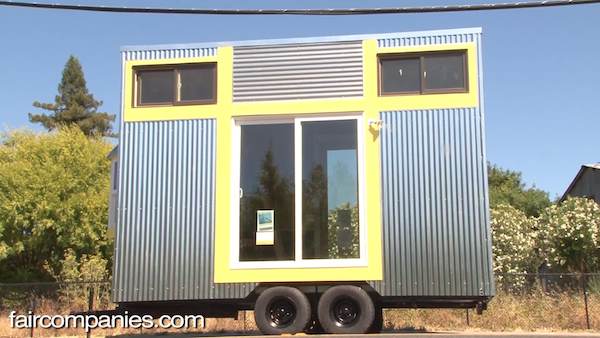
Photo Credits Kirsten Dirksen / YouTube
[continue reading…]
{ }
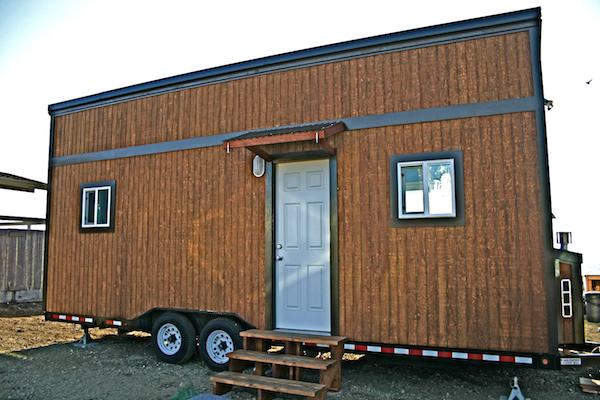
I think you’ll like this tiny house because it’s unique, modern and simple.
It’s a surf shack on wheels by Molecule Tiny Homes.
You might remember them from the tiny home with the flip up porch/deck.
According to their original post, it was custom built for a surfer.
At a first glance (below) it looks as if it’s going to be dark inside because of the small windows.
But if you open the door and walk in, you’d be surprised because there are these giant windows covering the entire opposite side which give you this amazing view of the ocean.
Please don’t miss other exciting tiny homes – join our FREE Tiny House Newsletter!
Photos Courtesy of Molecule Tiny Homes
On the right you can see how they used the tongue area of the trailer to built a tiny shed that can be used as an electrical box. Notice the venting on it too.
So below is the other side of the house, which looks completely different, doesn’t it?
[continue reading…]
{ }
So here’s a tiny house you might have a dream about tonight. It’s from a builder called Molecule Tiny Homes. The most notable feature is the porch which flips up and down.
I like this feature because wherever you might land, you can easily extend your outdoor space without having to actually build a deck or anything. In addition, you get to maximize the interior space as much as possible since the porch flips out. This is something I’ve always wanted to see incorporated into a little house on wheels, so I was thrilled to see it.
Please don’t miss other exciting tiny homes – join our FREE Tiny House Newsletter!
Molecule Tiny House on Wheels with Removable Porch
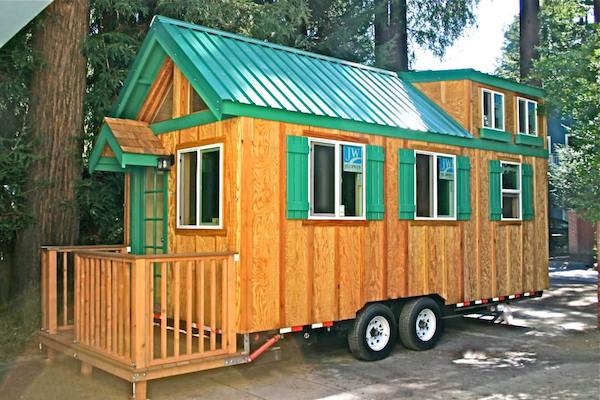
Photo Courtesy of Molecule Tiny Homes
[continue reading…]
{ }
In case you’ve been wondering why there hasn’t been any new posts lately (sorry!), it’s because I’ve been spending most of my time on getting and setting up a new server for tinyhousetalk.wpengine.com.
We’ve been getting enough traffic (especially on newsletter days) that it was causing our server to crash and sometimes just perform slower than I was comfortable with. Our Tiny House Newsletter is now reaching more than 12,000 subscribers, that’s so exciting!
Thank you so much for your continued support. I’m actually very glad that we outgrew our old server because tinyhousetalk.wpengine.com is now ready for even more growth because I’m even more excited to show as many people as humanly possible how a smaller home can help give them more freedom and happiness. And I hope you’ll continue to join me on this inspiring mission that is changing lives for the better, increasing overall consciousness, and making our environment better.
Tiny houses aren’t for everyone and I believe that large homes will always have their place. My goal is to simply get as many people as possible to reconsider by asking themselves, “How much house do I really need to be happy and enjoy the most amount of freedom?”
Right now I’m working on a little bug from the transfer so you might run into some blog posts where the pictures aren’t loading up, this is also causing the entire page to load up slow at times but I’m working on it right now and should be all finished and back to normal soon.
Anyway, just wanted to say “Hi,” and let you know what’s going on. Thank you so much, again, for your patience and support.

Alex Pino
TinyHouseTalk.com
{ }

