
Disclosure: This post may contain affiliate links. If you purchase through one of our links, we may earn a commission at no additional cost to you.
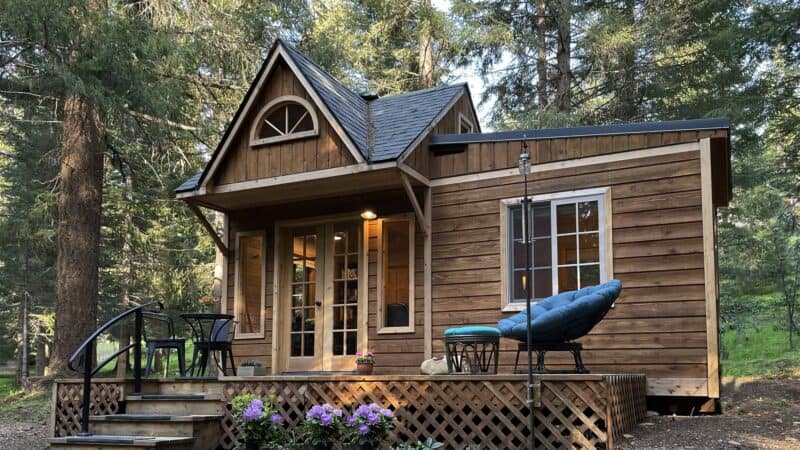
Remember Jay and Kim Merrett? They’re the couple who built a 240 sq. ft. steel-framed tiny house in the woods, remember? You may also recall when they shared photos of their tiny home decorated for Christmas!
Well, today, we’ve got an update from Jay and Kim and I’m happy to be sharing that with you. If you’ve ever wondered what it’s like to live tiny on your own land, and the costs associated, I think you’ll love this story/update! So I’m going to “pass the mic” to Jay & Kim. Enjoy!
Jay & Kim’s DIY Tiny Cabin & Homestead in Texas (Plus How Much It Costs Them To Live This Way)


New Additions (Deck, Cabinets, Bees, Storage and Taxes
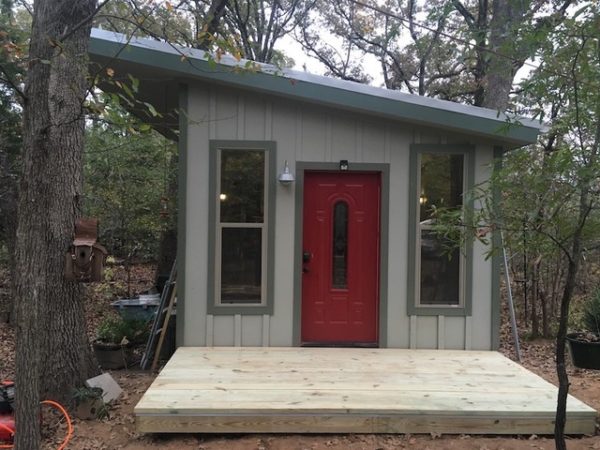
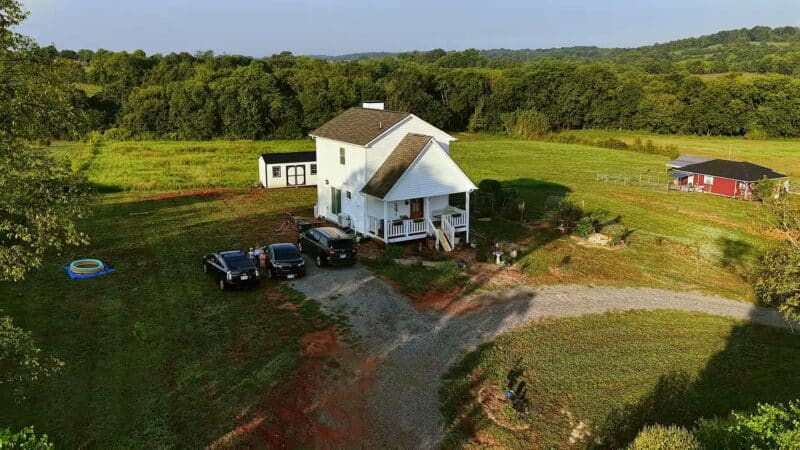
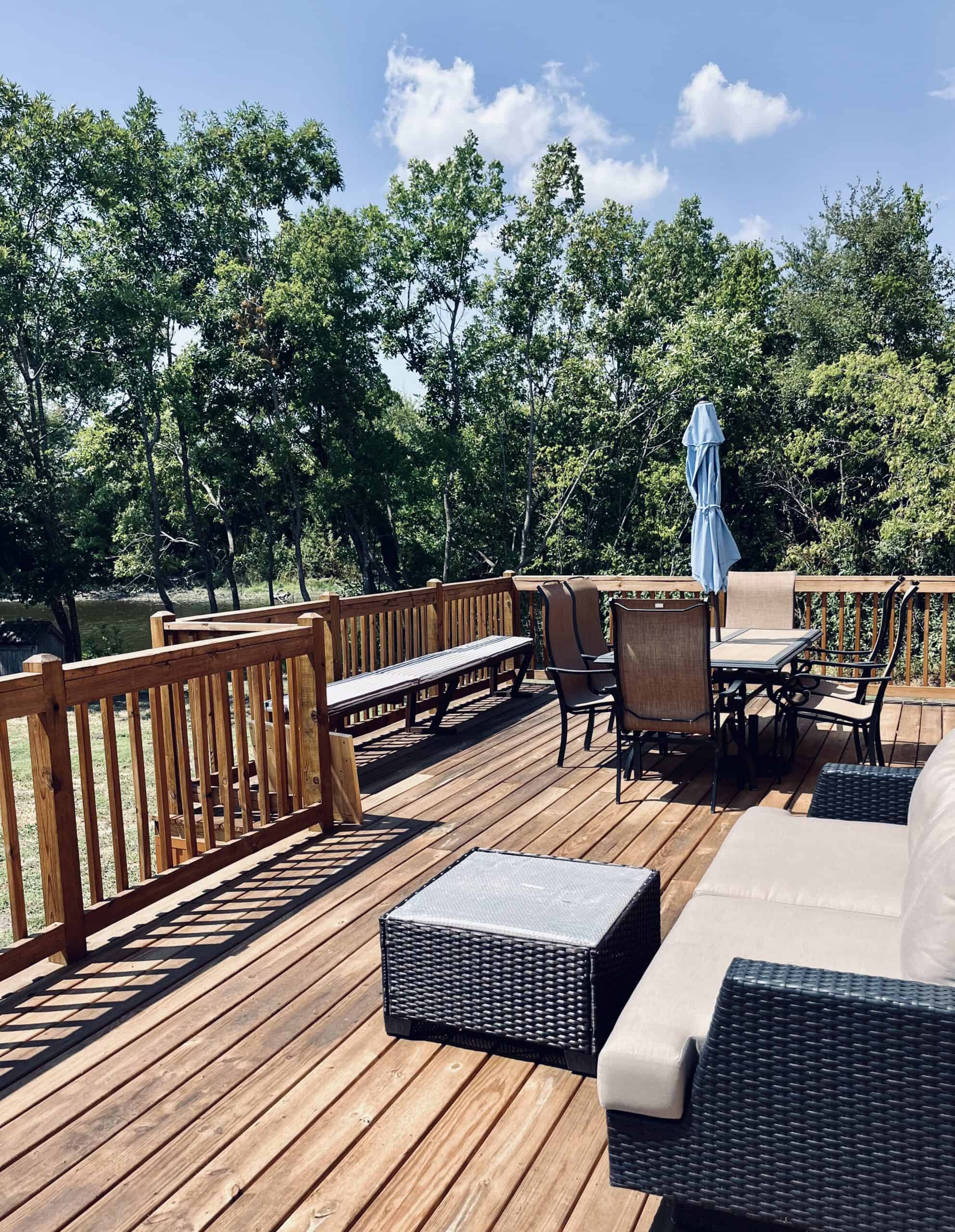
We added a deck and updated our interior cabinets. We’ve also added beekeeping to the property (12 ac) to work towards Ag-exemption. With this in place, our taxes on the 12 acres, the house and a 12’x12’ storage building will be around $250/yr. We have a solar array that offsets most of our electrical use. Our insurance is also very reasonable because of the size of the house. Here’s a breakdown of our expenses. Maybe some of your readers could find use in this.
Other Costs (Mortgage, Insurance, Utilities, Solar System, Cost to Build House, Etc.
No Mortgage – we paid cash as we build over 3 years. We had the land already.
Insurance – $309/yr (they only care about the size and value of the house and bldg)
Electric Utility – $20/mo ($15/mo service fee to be grid-tied and a $5/min bill on usage although we usually don’t use any electricity past what our panels produce)
Water Utility – $49/mo. We do have water catchment system and a 1550 gallon cistern but have not put the systems in place to adequately filter this for consumption. Right now the water from the cistern is for landscape and garden.
Solar Array – Grid-Tie 1560W system consisting of 6 panels and micro-inverters. No batteries to purchase or maintain. All power goes back into the grid to reduce our bill. Easy to scale by adding additional panel/inverter sets. System was $3,000. We installed it all ourselves. We got a $1,000 rebate from our electric company and a $1,000 rebate from the IRS leaving our net price at $1,000 for 30 years worth (life expectancy of the system) of free electricity.
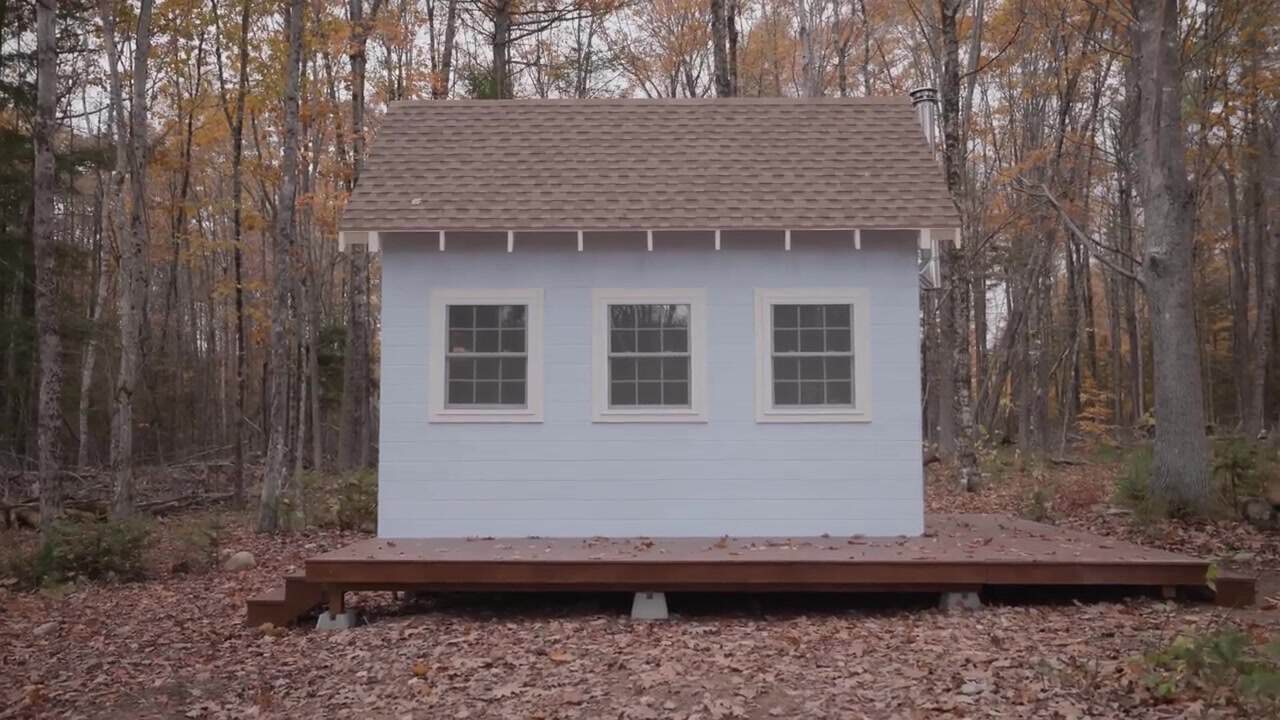
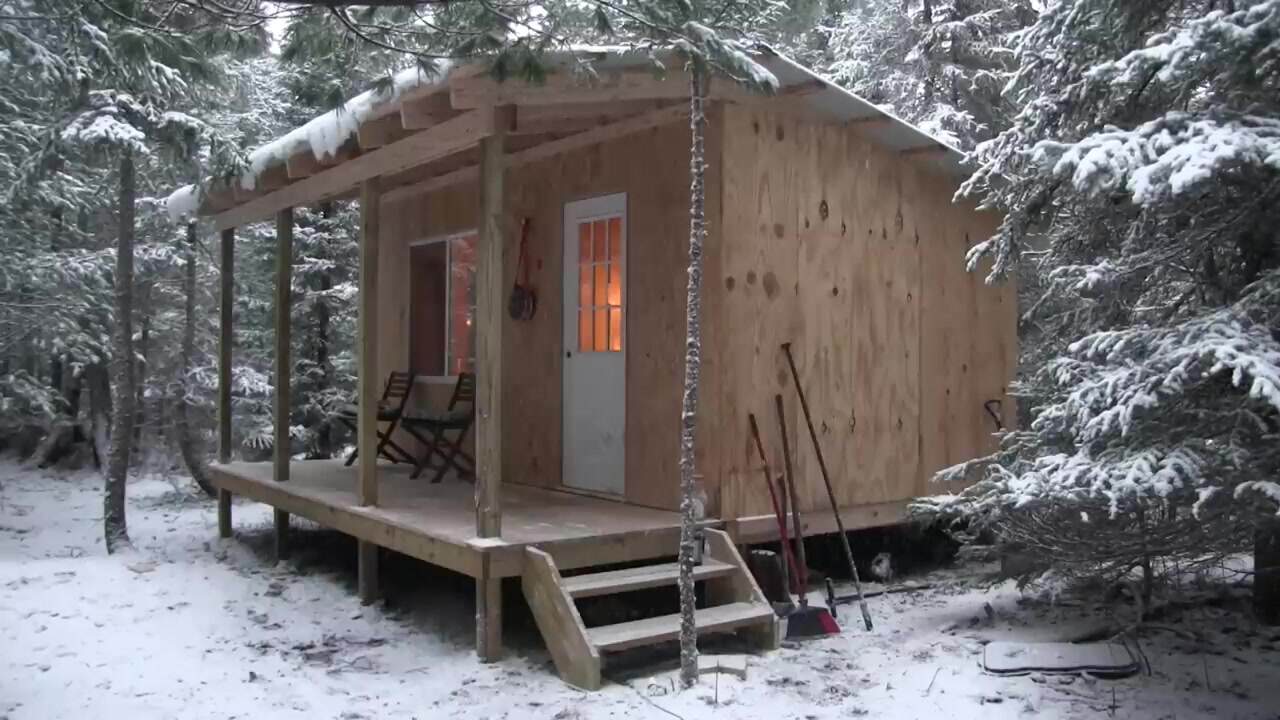
House – 12’x20’ (240sf) steel framing on concrete piers. Hardiboard concrete/fiber siding. Steel roof. Structure cost was $15,000. We put in another $8,000 worth of furniture and appliances. My wife and I did all of the planning and construction ourselves of 3 years of weekends as money and time would allow. Framing, roofing, electrical, plumbing, sheetrock, etc. No contractors hired.
The Goal
Our goal with the property was to come up with a living situation that would minimize our perpetual housing bills. Even if someone gives you a property, you still owe Insurance, Taxes and Utilities on it forever. All of these were dramatically reduced by shrinking the size of the house. By moving storage of “stuff” from the house to the storage building, we reduced our taxable footprint as well as our insurance and utility burden in one step. We wanted a building that met our daily needs (bed, kitchen, bath, living) without worrying about the items that we only used occasionally. All of these items could be put in a storage building on property 30’ away without significant tax, insurance or utility burden. In the end, we get to keep all of the “Junk” we want, we just don’t pay for it over and over again through perpetual bills.
Beekeeping and Septic System vs. Composting
Beekeeping really had nothing to do with living Tiny, it just gave us a way to have additional land without the tax burden. We could have just as easily purchased a 1 ac plot but we found land that we really liked that was in our budget so we chose it. All of this was possible by purchasing a property outside the city limits in a county that had very few regulations and restrictions. No building restriction. No permits required. The only true burden we faced was the requirement that “IF” we chose to put in a septic system, it would have to be permitted, have engineering approval, be professionally installed and inspected yearly. For this we would have the privilege of paying someone $8,000 for the system plus a yearly inspection fee. We answered this challenge by building a composting toilet for $200 and skipping the septic system all together.
The Bottom Line
Bottom line – we now have a house that’s paid for and our total housing costs are about $100/mo (taxes, insurance and utilities). This makes up for all of the mistakes I’ve made through the years by not saving and investing enough for our retirement. It’ll keep us off the steps of Walmart as a greeter in our old age and will allow us to retire, travel and spend time with our family in the years when we can still appreciate it.
Our journey can be viewed at DreamsByTheAcre.blogspot.com
Viva Tiny!!
Jay & Kim Merrett
Disclosure: This post may contain affiliate links. If you purchase through one of our links, we may earn a commission at no additional cost to you.


Alex
Latest posts by Alex (see all)
- He Turned a 1999 Dump Truck into an Off-Grid Truck Camper Built for Alaska - November 20, 2026
- The Treasure Chest: A New AWD Sprinter 144 Camper Van with Maple Finishes and a Real Freezer - November 20, 2026
- Sleep in a Covered Wagon on the Applegate River, Where Oregon’s Pioneer Trails Once Ran - November 20, 2026





Join the Conversation
21 comments