
Disclosure: This post may contain affiliate links. If you purchase through one of our links, we may earn a commission at no additional cost to you.
TINY: A Story About Living Small is a documentary that followed Christopher Smith as he built a tiny house from scratch in the mountains of Colorado — with no prior building experience. The film also explored the lives of other families across America who had downsized into homes under 400 square feet, asking the question: “What really makes a house feel like a home?”
Created by filmmakers Christopher Smith and Merete Mueller, TINY became one of the early catalysts of the tiny house movement, showing audiences that building your own small home was not only possible but deeply rewarding. The documentary resonated with people who were rethinking what “home” really means.
Don’t miss other interesting tiny homes like this one – join our FREE Tiny House Newsletter for more!
Christopher’s DIY Tiny House in Colorado
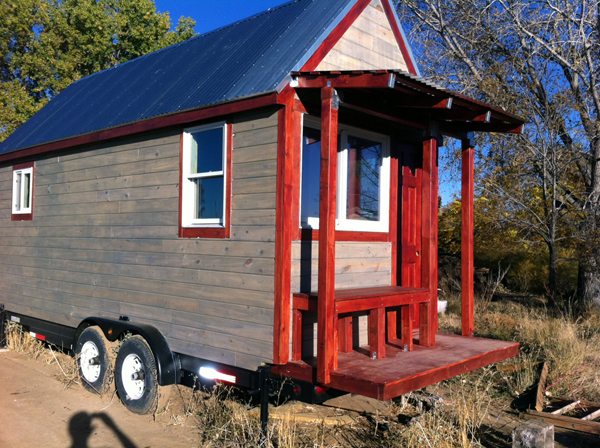
Photos courtesy of Merete Mueller
Christopher’s tiny house is a classic example of what’s possible when you commit to learning as you go. With no construction background, he took on the entire build himself in the Colorado mountains. The process — including the mistakes, breakthroughs, and everything in between — became the heart of the documentary.
Building the Frame and Rafters
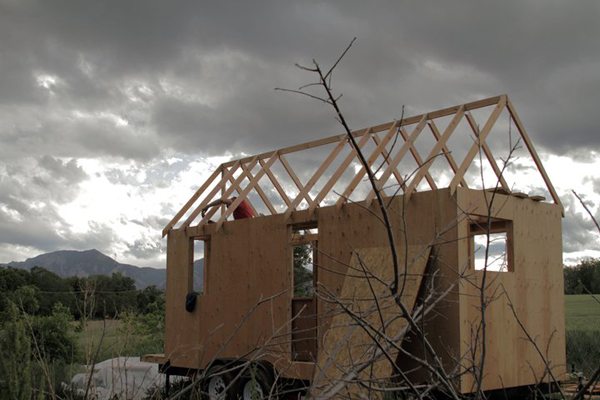
Here we see the house after Christopher finished the rafter framing for the roof. For first-time builders, the framing stage is one of the most rewarding milestones — it’s when the structure starts to look like an actual house. The rafters define the roofline and give you a real sense of the interior volume you’ll have to work with.
Inside During Construction
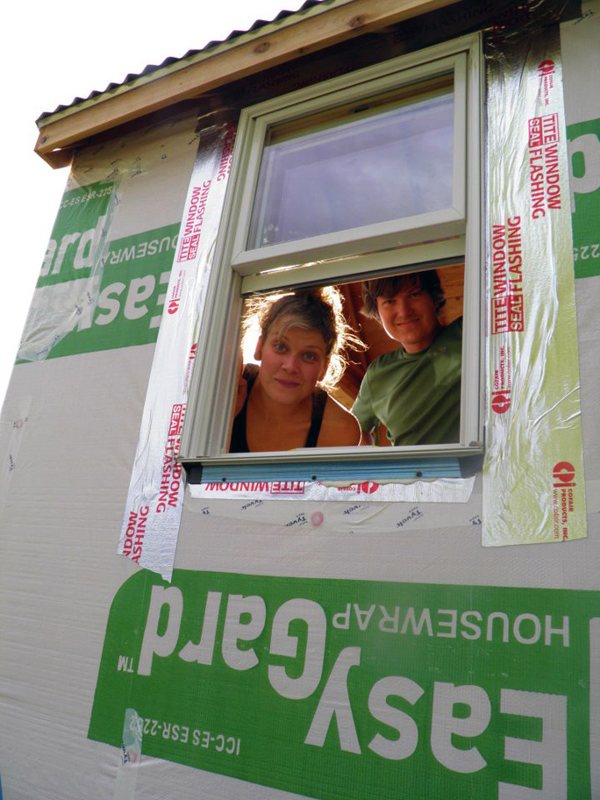
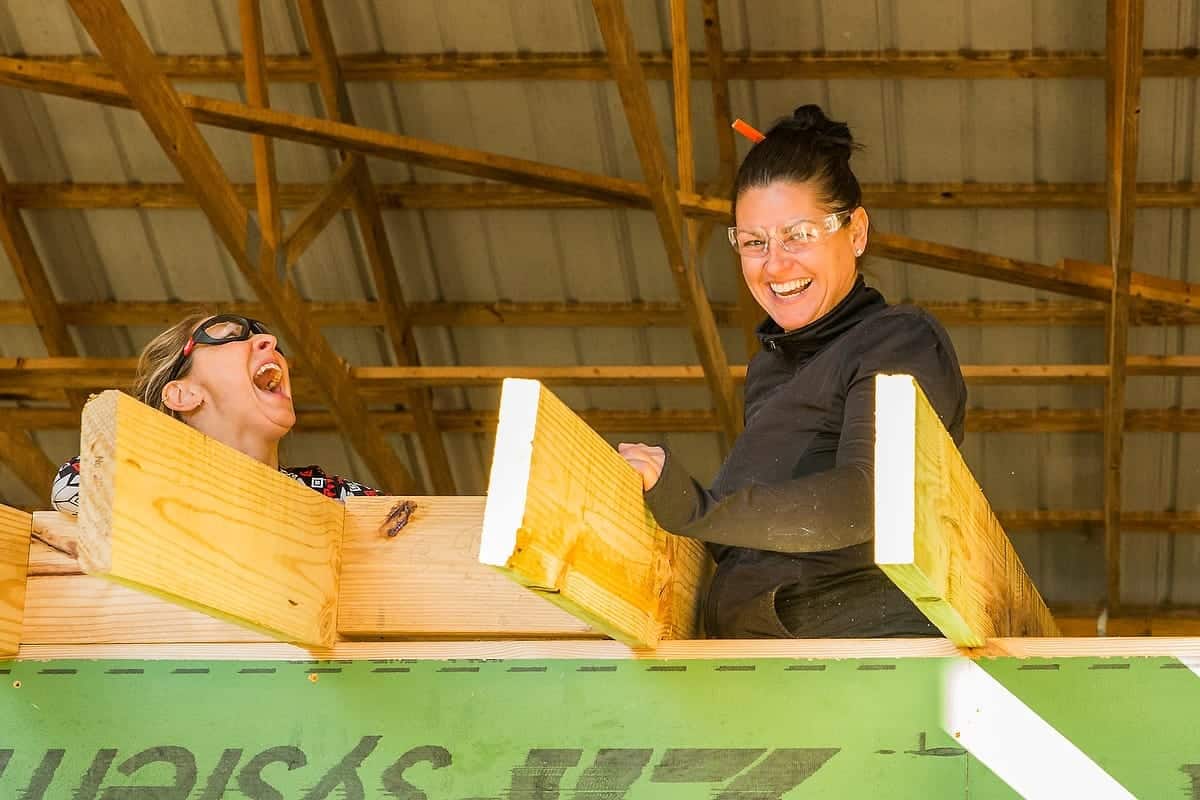
Merete and Christopher inside the house after applying house wrap — a critical step for weatherproofing. House wrap creates a moisture barrier that protects the wall framing from rain and condensation while still allowing water vapor to escape from inside. It’s one of those steps that doesn’t look dramatic but makes a huge difference in the longevity of a build.
Roof Installation Complete
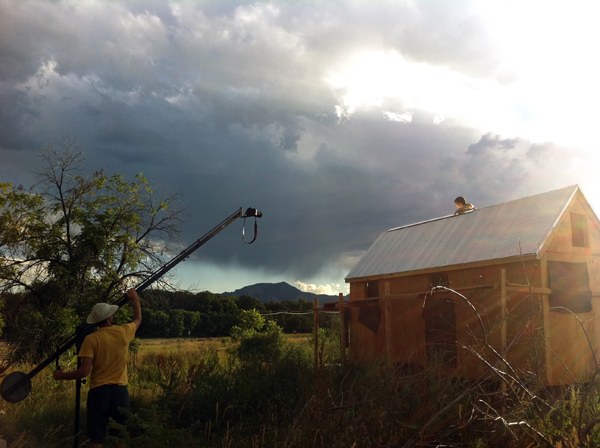
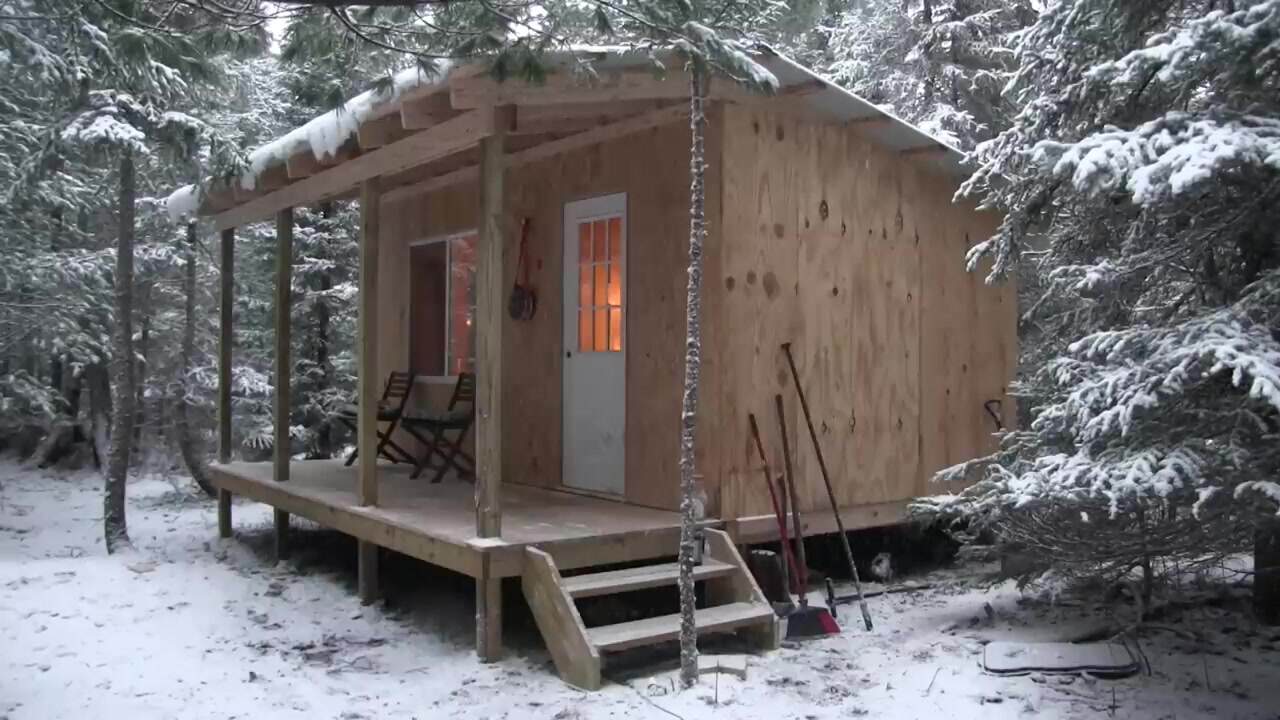
With the roof completed, the house is “dried in” — meaning it’s protected from the elements. This is a major milestone in any build because it means you can work on the interior regardless of weather. For a DIY builder in the Colorado mountains, where weather can be unpredictable, getting the roof on is especially important.
Watch the TINY Documentary Trailer
Watch the trailer for TINY: A Story About Living Small and see the journey that inspired thousands to rethink how they live:
Highlights of the TINY Documentary
- Title: TINY: A Story About Living Small
- Filmmakers: Christopher Smith and Merete Mueller
- Subject: Christopher’s DIY tiny house build in Colorado
- Builder Experience: First-time, no prior construction background
- Location: Colorado mountains
- Scope: Also profiles other families living in homes under 400 sq ft across America
- Central Question: “What really makes a house feel like a home?”
- Impact: Helped spark mainstream interest in the tiny house movement
Key Takeaways for Aspiring Tiny House Builders
- You don’t need experience to start: Christopher had zero building experience and still built a complete tiny house — his journey proves that willingness to learn matters more than prior skills
- Document your build: The construction photos and film footage became a resource that inspired thousands of others to start their own projects
- Community matters: The documentary showed that the tiny house movement is about more than just small buildings — it’s about a community of people rethinking how they live
- The question is personal: “What makes a house feel like a home?” has a different answer for everyone, and that’s the point
- Start with the frame: These construction photos show the natural progression of a build: framing → rafters → house wrap → roof — each step builds on the last
Related Stories
- Jack’s $22K DIY Tiny House in Colorado
- Paraglider’s Incredible DIY Tiny House
- Tim’s $42K DIY Off-Grid Tiny House on a Gooseneck Trailer in Colorado
If you enjoyed this you’ll LOVE our Free Daily Tiny House Newsletter with even more!
You can also join our Small House Newsletter!
Also, try our Tiny Houses For Sale Newsletter! Thank you!
More Like This: Tiny Houses | DIY Builds | Video Tours
See The Latest: Go Back Home to See Our Latest Tiny Houses
Disclosure: This post may contain affiliate links. If you purchase through one of our links, we may earn a commission at no additional cost to you.


Alex
Latest posts by Alex (see all)
- Activan Jackson 144: A Short AWD Sprinter Camper Van with a Queen Bed and Tiled Shower - October 16, 2026
- He Built a $6,500 Mini Camper From a Cargo Trailer While Road-Tripping 8 States - October 16, 2026
- Alaskan HS 640: A Lightweight Composite Hard-Side Truck Camper - October 16, 2026





great, I cannot wait. Just cannot wait.
I just learned that 49 million Americans are now living in poverty; and. The elderly population has an increase due to rising medical costs, they, too, are finding themselves living in poverty, as per former President Bill Clinton on a C-Span TV this month. Former Prez Clinton said that the USA has the highest diabetes in the world. Ouch!!!
Also,1 in 31 U.S. Adults are Behind Bars, on Parole or Probation
http://www.pewcenteronthestates.org/news_room_detail.aspx?id=49398–Mar 2, 2009 – The number of offenders on parole and probation across the United States has surged past 5 million, complicating the challenges for fiscally ailing states as they try to curb corrections costs without jeopardizing public safety, according to a new report. The Pew Center on the States report, released Monday, says the number of people on probation or parole nearly doubled to more than 5 million between 1982 and 2007. Including jail and prison inmates, the total population of the U.S. corrections system now exceeds 7.3 million — one of every 31 U.S. adults, it said.
A Woman of color with Eco Nappy hair, barefootin’ and drinking spring water in rural south central Arkansas
I viewed your film twice, because I liked it and had the time to do so, ’cause I live in a tiny house, too. Have a nice day!
A woman of color with Eco Nappy hair, barefootin’ and drinking spring water in rural south central Arkansas
Many, many senior citizens all over America need to be re-educated about housing themselves in later life. This is one such sad case: Jacksonville man, 74, loses home in morning blaze
Posted: November 21, 2011 – 5:09am
Herman Jackson never asked for much. He grew up in Bainbridge, Ga., plowing fields behind mules — “from sun to sun,” he said. He moved on to work 20 years for Union-Camp as a forklift operator and boilermaker. But he lost the little he had trying to stay warm Monday morning when a fire destroyed most of his home in the 800 block of West 17th Street.The Jacksonville Fire and Rescue Department received the call about 3 a.m. and arrived in less than five minutes, said District Chief Steve Gerbert. Yet by the time they arrived, there was heavy fire showing and the blaze had already claimed a large part of the house, Gerbert said. But Jackson said it wasn’t just a house to him. “My godmother left me the house when she died,” Jackson said. “I took care of her while she was sick with cancer.” Jackson managed to escape the flames that ignited when he attempted to refill a kerosene space heater, then smother the flames with blankets and clothes. He alerted neighbors who called 911, but he couldn’t save his home.”My whole life was in that house,” he said. Read more at Jacksonville.com: http://jacksonville.com/news/crime/2011-11-21/story/jacksonville-man-74-loses-home-morning-blaze#ixzz1eMEM3GQy
Thanks so much for sharing all this info, sesameB, and for reading and watching the trailer. I’m looking forward to the film so much. Actually did another post on them today along with DEEK, who you know of. Link is below..
https://www.tinyhousetalk.com/9-ways-you-can-use-a-200-micro-shelter
We need tiny houses in America, here is a true story from my files about a very close friend and mentor. She was the first squatter I ever met in my life back in the 1980s in Florida! She refused to live in a big house or any house!
Homeless by choice
Tuesday, February 13, 2001
An American Beach original
Mystical figure fights for history
By Alliniece T. Andino Times-Union staff writer,
She threads a wire through part of her dreadlocked gray hair to loop it up and around to the side. In the 1970s, Betsch moved to American Beach after she lost the Jacksonville home she inherited from her father. Betsch couldn’t afford the taxes. Any money she inherited she gave away to environmental causes, from land preservation to saving butterflies, a practice she continues. A trailer her sister bought her for shelter is the area’s Black History Museum, as the black marker lettering on its side proclaims. Betsch stuffed the trailer with pamphlets, books, articles and fliers until she no longer fit. “She likes nature. She doesn’t really want to be boxed in by a house,” said Thompson with a chuckle. “She’s her own person, that’s all I can say.”