
If you have been circling the idea of going off-grid but keep stalling out on the practical stuff — how many solar panels you actually need, what happens to the sewage, whether that $4,000 backyard shed could legally become a house — there is a weekend in Middle Georgia built specifically to answer those questions in person.
The United Tiny House Association and Beloved Cabin Homestead run a series of three-day Off-Grid Workshop Camps on a 16-acre homestead outside Eatonton, Georgia. Three sessions remain on the 2026 calendar, and registration is capped tightly enough that they tend to fill.
Images courtesy of United Tiny House Association / Beloved Cabin Homestead
This is not a festival where you wander past display homes and collect brochures. It is a small, hands-on camp where you sleep on the property, eat with the other attendees, and spend two full days in classes taught by people who are living the systems they are teaching.
The Three Remaining 2026 Dates
The camps run on the first weekend of the month. With the July session behind us, three are left in 2026:
- September 4–6, 2026
- October 2–4, 2026
- December 4–6, 2026
Each follows the same rhythm. Friday opens with the first class at 1PM EDT, followed by a meet-and-greet at 6PM. Saturday and Sunday are full workshop days running 10AM to 5PM EDT.
The December date is worth a second look if you are in the Southeast. Early December in Middle Georgia is cool, dry, and bug-free — arguably the most comfortable time of year to be walking a homestead and standing around a bonfire.
What Actually Gets Taught
The class list leans hard toward the systems that trip up first-time off-grid builders:
- Solar — sizing an array, batteries, and what your real daily draw looks like
- Rainwater collection — catchment, storage, and filtration
- Biogas technology and off-grid sewage — the topic almost nobody covers well
- Shed-to-home conversion 101 — turning a portable building into a livable structure
- Humanure composting
- Composting toilets — comparing the actual products, not just the concept
- Earning money with your property — the business side of a homestead
That last one deserves attention. Plenty of workshops teach you how to build off-grid; far fewer address how the property pays for itself once you are there. Beloved Cabin runs as a working stay with bookable structures, so the hosts are teaching a revenue model they operate themselves.
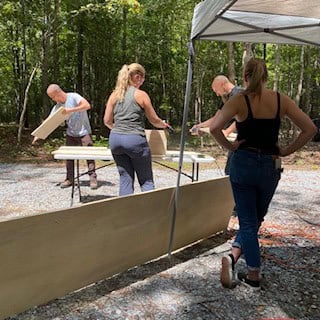
Image courtesy of United Tiny House Association / Beloved Cabin Homestead
The Shed-to-Home Field Trip
One item on the schedule sets this camp apart from a classroom weekend: a field trip to Villages Bans Portable Buildings. Shed-to-home conversion is one of the most affordable routes into small-space living in the United States, and seeing the raw product — the shells, the framing, the price points — before you sit through the conversion class changes how the material lands.
You Sleep in the Curriculum
The homestead itself functions as a walkable catalog of alternative dwellings. On the 16 acres you will find:
- A yurt and a bell tent
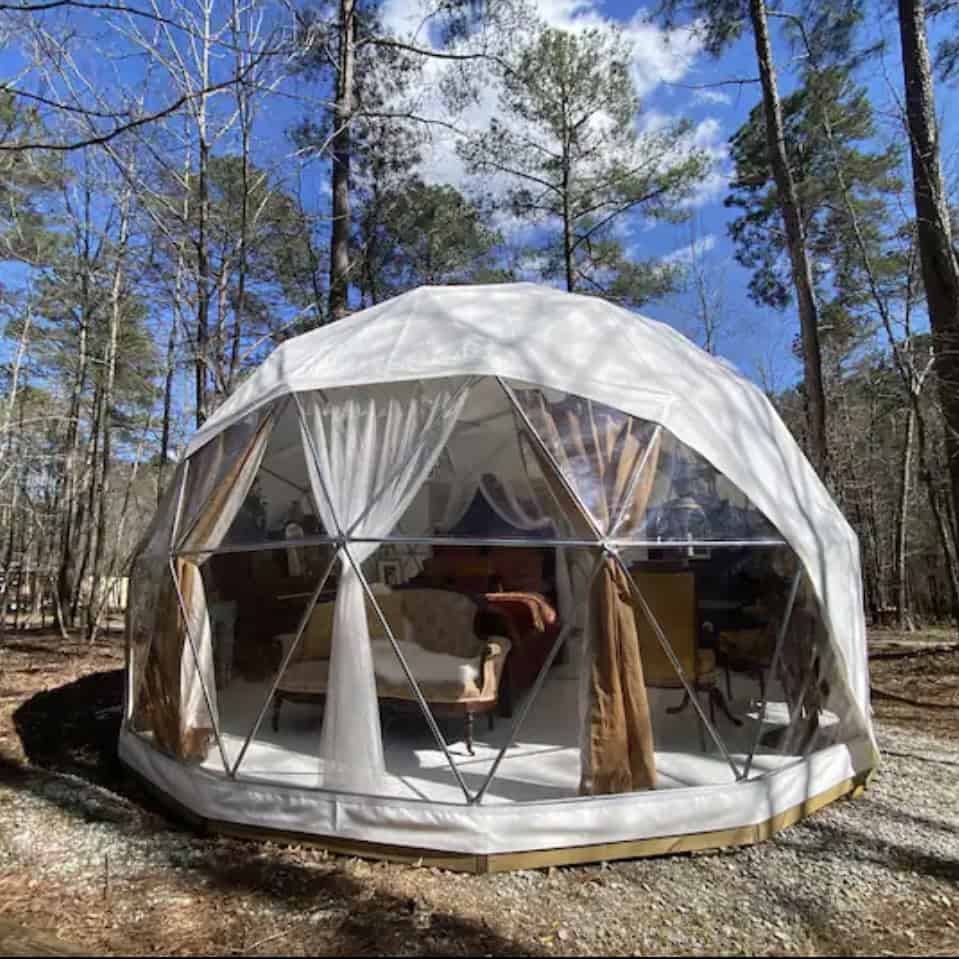
- Two geodesic domes
- A French farmhouse bus conversion
- Four tiny houses on wheels
You can tour all of them, and you can book several of them for the weekend. There is also free on-site camping if you would rather bring a tent or your own rig, plus off-site accommodations nearby for anyone who wants a conventional room.
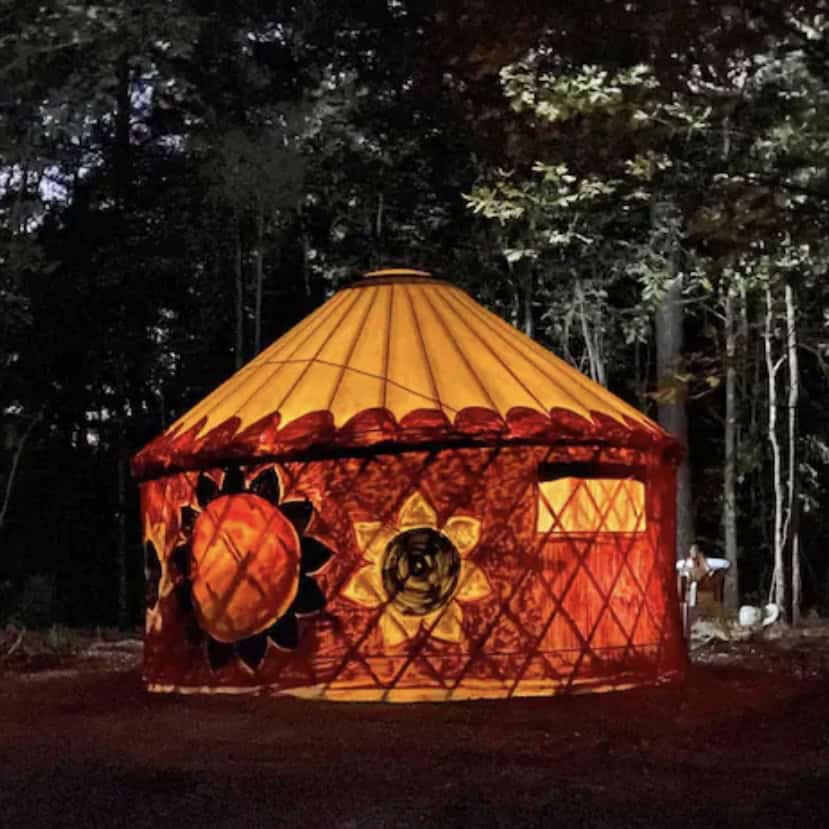
Image courtesy of United Tiny House Association / Beloved Cabin Homestead
Spending a night inside a dome or a yurt after a day of classes about them is a meaningfully different experience from looking at one on a screen. You find out fast whether the condensation, the acoustics, and the temperature swing are things you can live with.
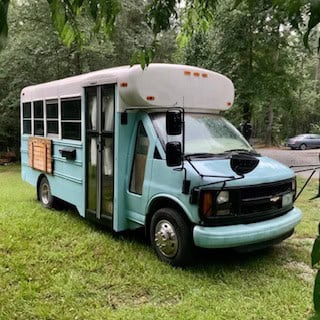
Image courtesy of United Tiny House Association / Beloved Cabin Homestead
The Social Half
The evenings are deliberately unstructured. Past camps have included live music — Arbour Season, The Octobers, and Trinity Michaels have all played — a Saturday night potluck dinner, and a bonfire.
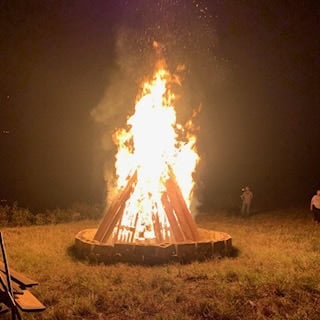
Image courtesy of United Tiny House Association / Beloved Cabin Homestead
If you have been to a tiny house event before, you already know the bonfire conversations are frequently where the useful information gets traded. Classes tell you how a system works. The people standing next to you tell you what broke on theirs in year three.
Your Hosts
The camps are hosted by John and Fin Kernohan, founders of the United Tiny House Association. The Kernohans have been organizing tiny house events across the Southeast for roughly a decade — including the Florida Tiny House Festival — and they live on the property where the camps are held.
Registration Details
- Location: Beloved Cabin Homestead, Eatonton, Georgia 31024 — about 1.5 hours east/southeast of Atlanta off Interstate 20
- Exact address: provided only to registered attendees
- Per person (1-person) registration: $299.00
- Per couple (2-person) registration: $549.00
- Format: 3 days, Friday afternoon through Sunday at 5PM
- Capacity: very limited — the organizers say so repeatedly
Prices listed are the current discounted registration rates. Worth confirming directly, since these have moved before.
Bring Your Home and Attend Free
Here is the detail most people miss. If you are a private owner — not a builder — of a tiny house, skoolie, vintage camper, yurt, or other small structure, and you are willing to open it for tours during the weekend, you can attend for free. A gas stipend is available to approved homes.
If you already own something interesting and were on the fence about the cost, that changes the math entirely. It is also how these events stay varied year to year: the display lineup is mostly regular owners rather than a row of manufacturer units.
Who This Is Actually For
Be honest with yourself about which camp you are in. If you want to browse fifty finished tiny homes and compare builders, a festival is a better use of your weekend and your money. This camp is for the person who has decided off-grid is the direction and now needs to understand greywater, battery banks, and composting systems well enough to make decisions.
The tell is in the class list. Nothing on it is aspirational. It is all plumbing, wiring, waste, and cash flow.
Learn More
- 2026 Off-Grid Workshop Camps — schedule, registration, and accommodations
- United Tiny House Association
Related Stories
- Every Tiny House Festival and Workshop Left in 2026
- Hands-On Tiny House Building Workshops by Tiny Home Builders
- Wild Abundance Tiny House, Carpentry, and Timber Framing Workshops Near Asheville
- Catskills Tiny House Workshop in Upstate New York
Would you spend a weekend learning humanure composting and biogas, or would you rather tour finished homes at a festival? Let us know in the comments.
This post may contain affiliate links and/or sponsored content.

Alex
Latest posts by Alex (see all)
- The Joey by CozyCo: A 161 Sq Ft Studio That Doesn’t Skimp on the Specs - August 5, 2026
- This $89.5K Tommy Camper Van Sleeps 4 Thanks to a Rooftop Tent - August 4, 2026
- Tommy Camper Vans’ 4 Layouts Explained: Which Floor Plan Fits You? - August 4, 2026
