
Disclosure: This post may contain affiliate links. If you purchase through one of our links, we may earn a commission at no additional cost to you.
This is the story of Natalie Bogwalker’s tiny log cabin in Western North Carolina—a hand-built structure using logs harvested from her own land, featuring traditional saddle-notch construction and thoughtful passive solar design.
Natalie and her friend Eric did most of the log cutting and hauling, then built the cabin with help from friends. Today she operates Wild Abundance, teaching classes on self-sufficiency, tiny living, natural building, and other Earth skills.
Don’t miss other inspiring tiny homes like this, join our FREE Tiny House Newsletter for more!
The Tiny Log Cabin Exterior
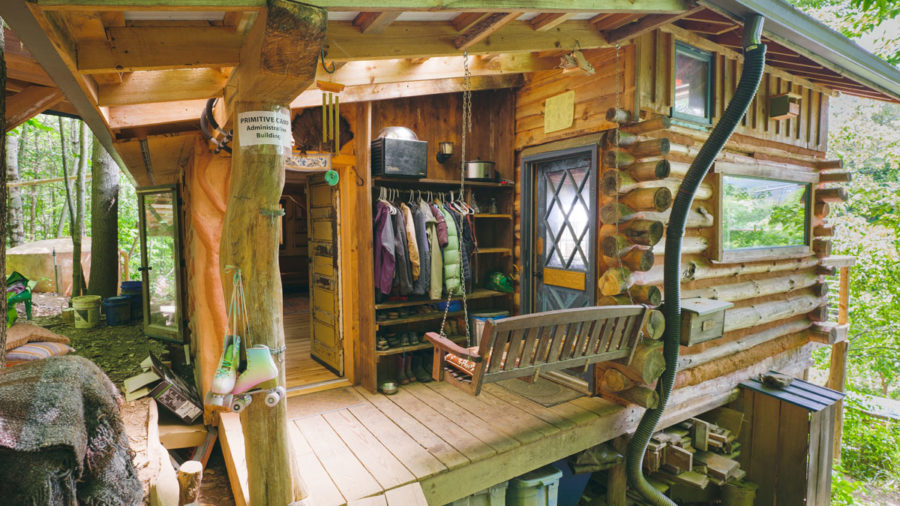
Images via Natalie Bogwalker
Traditional Saddle-Notch Log Construction
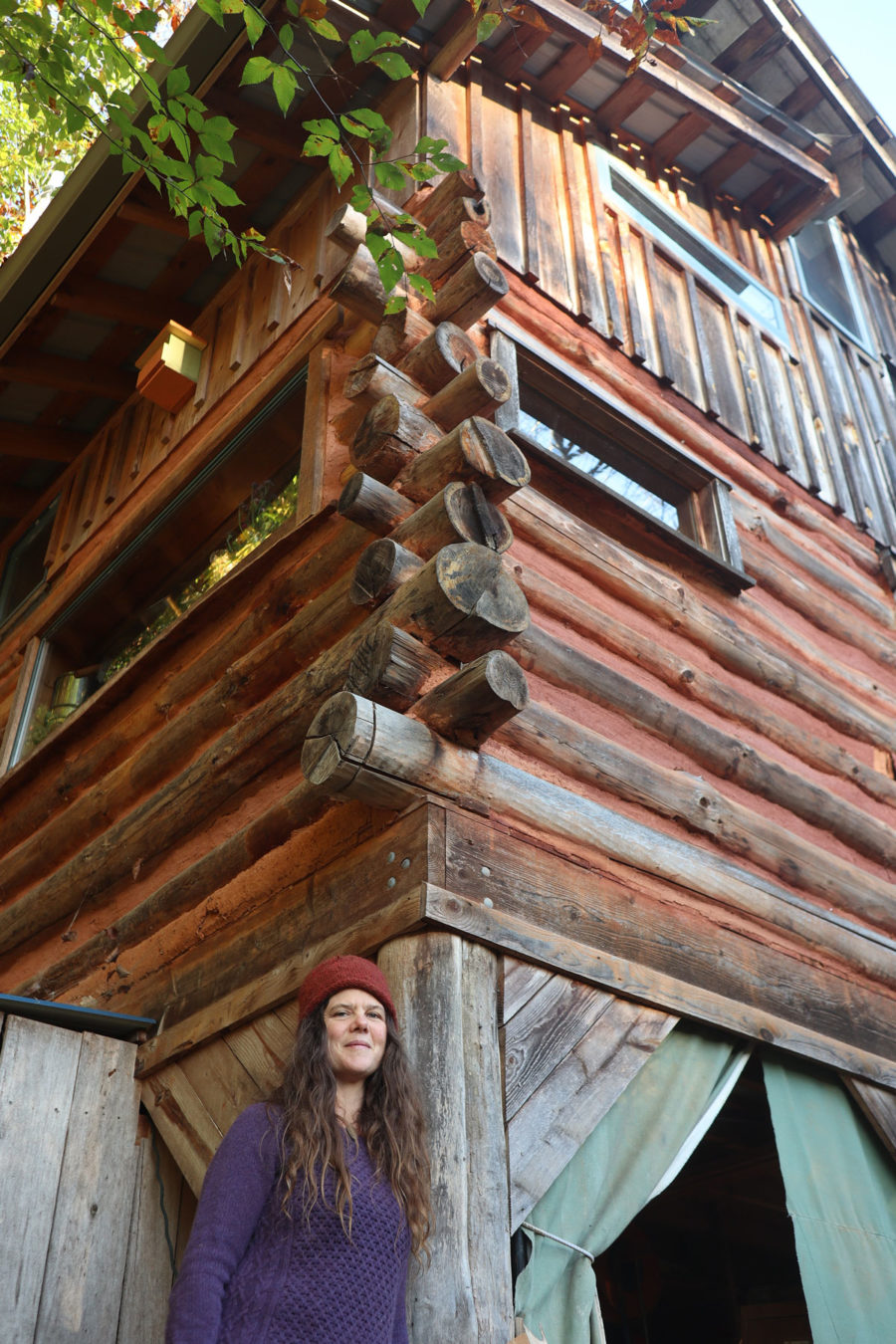
The original build measures 12 ft. x 16 ft., with all logs full length and saddle notched. The round logs were harvested largely from the land where the cabin sits in Western North Carolina.

Images via Natalie Bogwalker
The Building Process
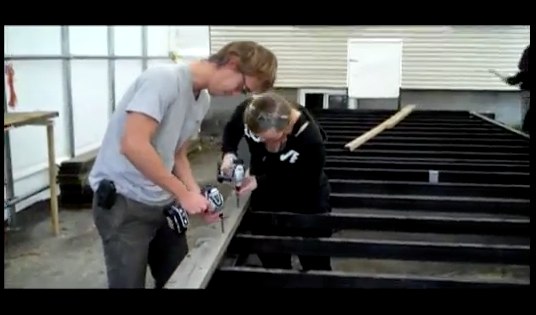
After cutting and hauling the logs, Natalie built the foundation and floor, then stacked the logs with help from friends. The top of the building uses stick framing with a roof on top. After letting the structure sit and settle for 5-6 months, all doors and windows were cut out and framed in—an important step in log cabin construction that allows for natural settling.

Images via Natalie Bogwalker
Traditional Chinking Technique
The chinking process took a couple of months. Wood chunks were split down until they fit perfectly into the gaps between logs. Nails were inserted into the chinks, then cob was applied over the nails. The interior received clay plaster while the exterior was finished with lime plaster to protect the chinking from weather. This traditional approach has held up well over the years.
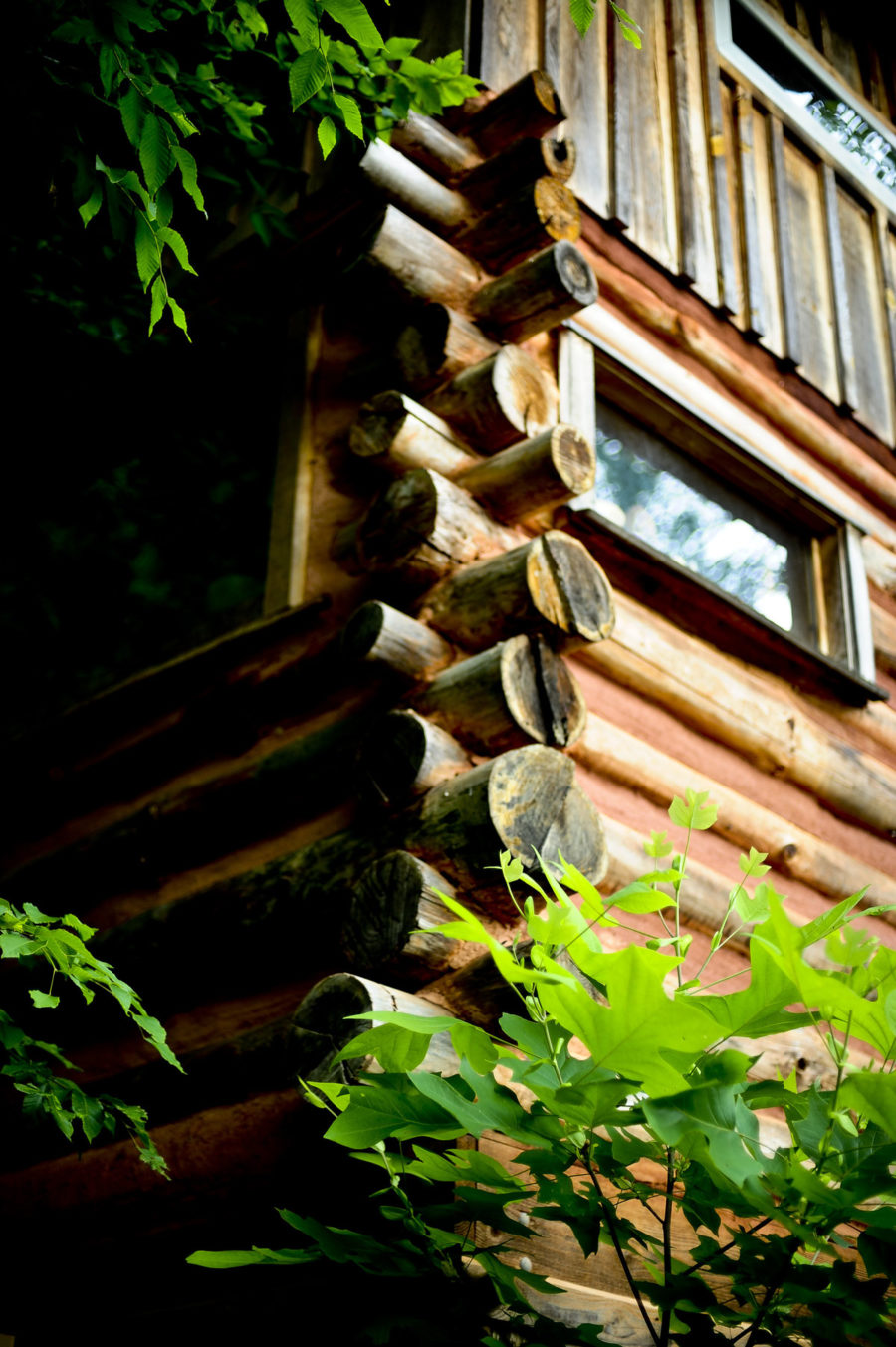
Images via Natalie Bogwalker
Passive Solar Design with Thermal Mass
The cabin was crafted with passive solar design in mind. The sink and window sill are made from soapstone, which absorbs heat from sun shining through the south-facing windows. When the cookstove gets going, the soapstone also absorbs that heat and radiates it back, keeping the space warm. Upstairs, old slate roofing on the walls absorbs sunlight and radiates heat back into the room.
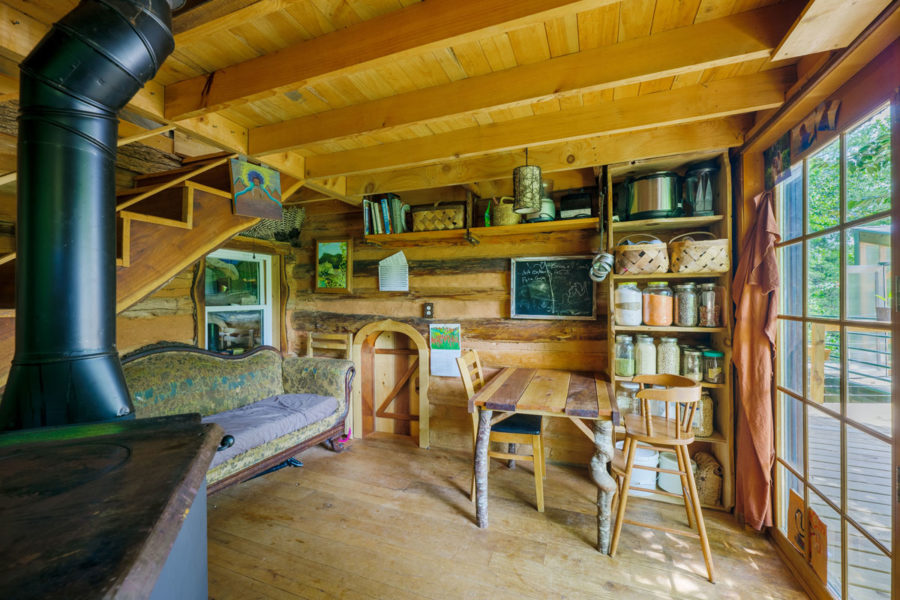
Images via Natalie Bogwalker
Additions Over the Years
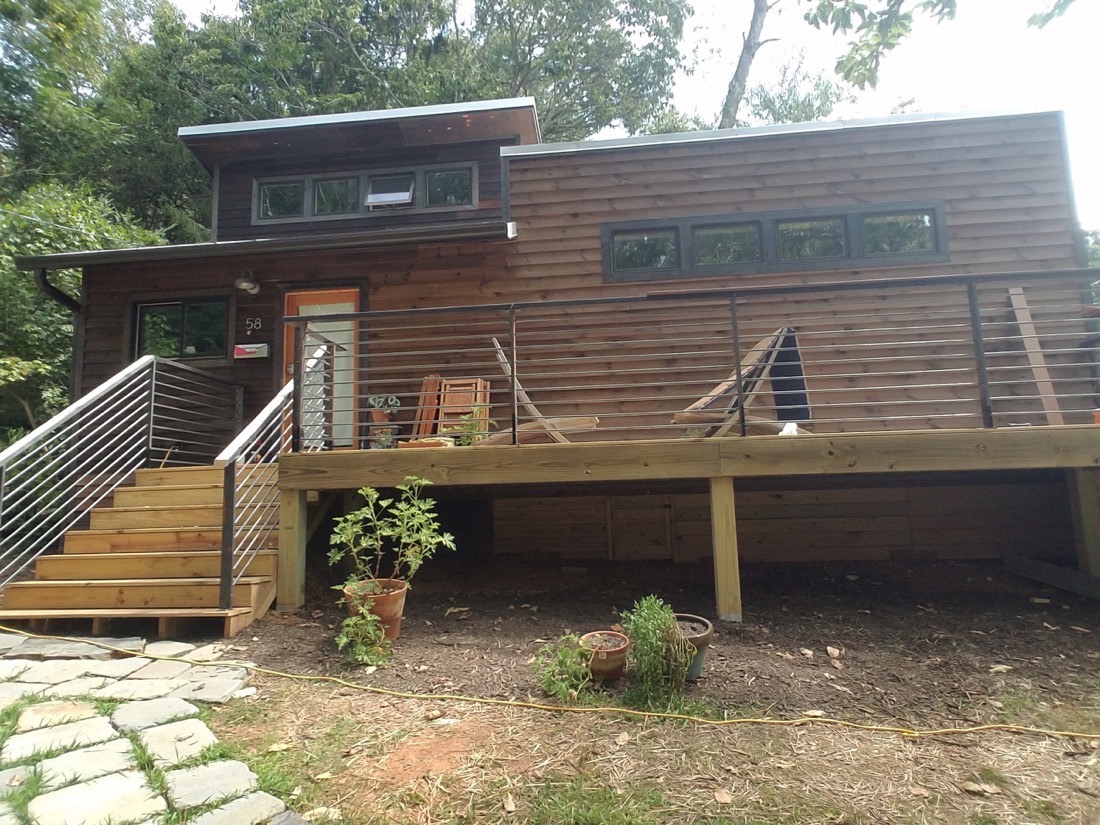
The original log cabin has received several additions over time, demonstrating how a tiny home can grow and adapt to changing needs while maintaining its character.
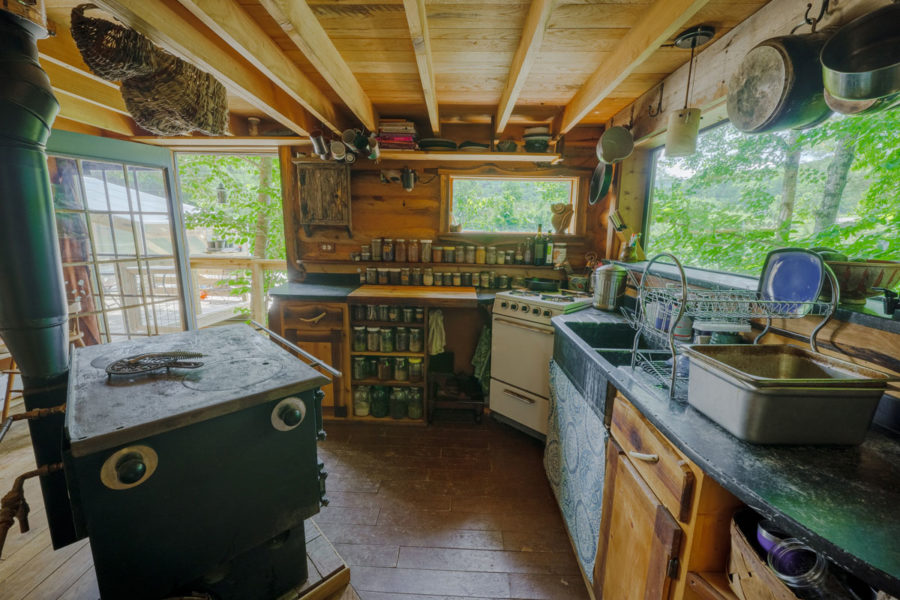
Images via Natalie Bogwalker
Wild Abundance: Teaching Self-Sufficiency Skills
Natalie is the Director and Owner of Wild Abundance, a permaculture and building school based in Western North Carolina. The school offers in-person and online classes on tiny house building, women’s carpentry, foraging, and other Earth skills.

Images via Natalie Bogwalker
Tiny House Building Education
Wild Abundance offers comprehensive tiny house building classes that teach the skills demonstrated in this cabin—from foundation work to natural building techniques.

Images via Natalie Bogwalker
Community Building
The cabin was built with help from friends, including Barron Brown, a Wild Abundance instructor. This community-based approach to building is central to the Wild Abundance philosophy.
Images via Natalie Bogwalker
Design Details
- Original Size: 12 ft. x 16 ft.
- Location: Western North Carolina
- Construction: Full-length round logs with saddle-notch joinery
- Log Source: Harvested from the property
- Chinking: Wood chunks with cob and plaster (clay interior, lime exterior)
- Roof Framing: Stick-framed above log walls
- Thermal Mass: Soapstone sink and window sill, slate on upper walls
- Heating: Wood cookstove with passive solar assist
- Windows: South-facing for passive solar gain
Lessons from This Log Cabin Build
Natalie’s cabin offers valuable insights for anyone interested in natural building:
- Let log structures settle before cutting openings — Waiting 5-6 months after stacking logs before cutting doors and windows allows for natural settling and prevents structural issues
- Harvest materials from your land when possible — Using on-site logs dramatically reduces costs and ensures materials are adapted to local conditions
- Traditional chinking techniques still work — The combination of wood chunks, cob, and plaster (clay inside, lime outside) has proven durable over many years
- Passive solar design multiplies heating efficiency — South-facing windows combined with thermal mass (soapstone, slate) reduces reliance on the wood stove
- Community building creates more than structures — Building with friends shares skills, builds relationships, and makes large projects manageable
- Small cabins can expand over time — Starting with a 12′ x 16′ footprint and adding on later allows you to build within your means while leaving room to grow
- Natural materials require maintenance but reward it — Lime plaster protects exterior chinking from weather while allowing the structure to breathe
- Building skills are teachable — Natalie’s journey from cabin builder to building instructor shows how hands-on experience translates to valuable knowledge worth sharing
Learn More
- Wild Abundance Website
- Follow Wild Abundance on Instagram
- Wild Abundance on Facebook
- Wild Abundance YouTube Channel
- View Available Classes at Wild Abundance
Our big thanks to Natalie Bogwalker of Wild Abundance for sharing!
You can share this using the e-mail and social media re-share buttons below. Thanks!
If you enjoyed this you’ll LOVE our Free Daily Tiny House Newsletter with even more!
You can also join our Small House Newsletter!
Also, try our Tiny Houses For Sale Newsletter! Thank you!
More Like This: Tiny Houses | Cabins | Off-Grid | DIY
See The Latest: Go Back Home to See Our Latest Tiny Houses
Disclosure: This post may contain affiliate links. If you purchase through one of our links, we may earn a commission at no additional cost to you.


Alex
Latest posts by Alex (see all)
- A Hotel Designer’s 484 Sq Ft Milan Apartment with a Rotating Room Divider - October 9, 2026
- Hermosa Orchards Village: A Durango Tiny Home Community with Its Own Fruit Orchard - October 9, 2026
- The Sanctuary Minnesota: A Tiny House Village on 80 Acres of Woods - October 9, 2026







Pretty amazing build. Very pretty inside and out. Love all that wood and the way the skylight is over the porch with a swing. This what we used to call a rambling house, one that gets added onto so it seems to be moving out into the yard, like someone rambling around. I love them! They have so much character because each new room is a little different than the one before. All the rooms you have built so far are beautiful and inviting. Best wishes for your school.
What an amazing, creative, beautifully inviting build! I can’t say enough good things to this warm, cozy house, bravo!
What an amazing human you are! …and great friends too. Your life and work are very inspirational to me, thank you
I have a rural property where I would like to install a well powered by solar energy. Can someone direct me to a knowledgeable source for off-grid solar installations? I contacted one company, but the conversation ended on their end when they realized they couldn’t make a sale without listening to the customer’s needs. Any help will be greatly appreciated. Unfortunately, the local electric co-op in my area wants nearly $35,000 to hookup to the grid. That amount I cannot afford.
Look into EcoFlow units, as they can provide 120 AC power from their lithium-ion batteries that are recharged by Solar. That allows usage of a standard off the shelf well pump.
In addition, you can run smaller AC appliances like a Toaster oven, small fridge, etc.
Units can go up to 7,000 watts of power, but you would likely only need a smaller unit, say 3,500 watts.