
Disclosure: This post may contain affiliate links. If you purchase through one of our links, we may earn a commission at no additional cost to you.
I write publicly about tiny houses, but the most common question I get from my readers isn’t about the design, building techniques, or appliances. Seriously. The most common type of question I receive is about finding land for your tiny house.
As the tiny house movement grows, more and more people are becoming interested in tiny house living, yet finding safe, practical, and affordable land for your tiny house continues to be a big challenge.
That’s why I’m so excited to announce that my new book, Tiny House Parking, is available on Amazon.
How to Find a Place to Build and Live In Your Tiny House
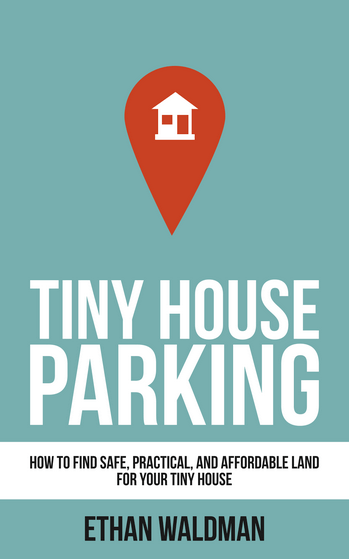
As a Tiny House Talk exclusive, I’d like to share a free excerpt from the book that will help you figure out where to park your tiny house while you’re building it. Scroll down to read it!
Where to Park Your Your Tiny House While You’re Building It
Our next topic is really only applicable if you’re building rather than buying your tiny house on wheels: finding a good place to build your house.
It’s not essential that you find the future home of your tiny house before you build it. If you’re comfortable living in a house that’s in a legal grey area, you may also be comfortable investing time and money into building a house you don’t yet have land for. As Aldo says, there’s always another campsite.
But, whether you’ve got everything planned or you’re just hoping it all works out, one thing you do need to secure as soon as possible is the land you’re going to build your tiny house on. There are a number of options and considerations to bear in mind when it comes to choosing this space.
Options
The options available to you will largely depend on who you know and how much money you have to spend.
If you know someone who owns land, or if you’re buying the land on which you will eventually live, you could of course build your tiny house on that. This is likely to be cheaper than renting a separate space. Just must make sure the land has everything you’ll need (this next section will help you determine those needs) before you go this route.
Sometimes, though, that option isn’t ideal or even possible. Maybe you haven’t found land yet, or maybe it’s too far away from the nearest town (where you’ll get supplies, services, and help) to be convenient while you’re building. I built my house in my parents’ yard, which was much closer to town than the land where I’d eventually park. I never ceased to be amazed by how often I needed to run to the hardware store to get something I was missing and was grateful that it was only a 10-minute drive from my building site. Using someone else’s space can also come with its own perks, like access to tools or expertise while you’re working.
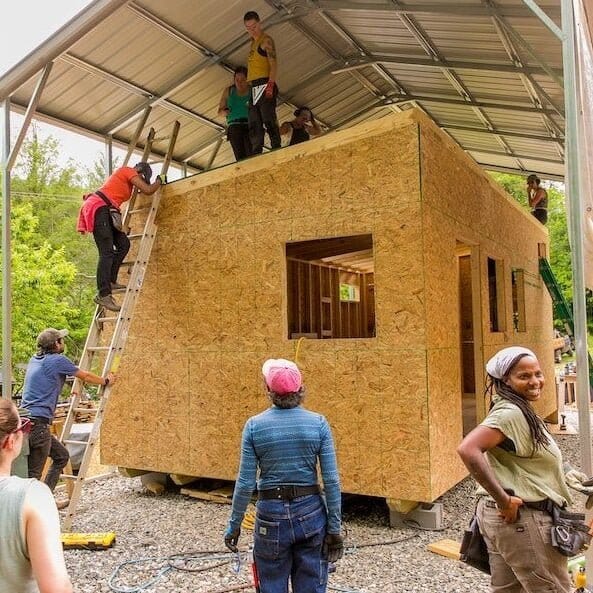
If, for whatever reason, your house’s final destination isn’t ideal for building, start by spreading the word that you’re looking for some land. Large warehouses, storage facilities, and barns are particularly ideal places to build tiny houses. Contact any businesses, farms, and ranches in your area that might have enough space to store a tiny house. You may be able to rent or trade work for a section of their building or land.
This approach worked well for Andrea Tremols and Cedric Baele. They worked for the non-profit Sustainable Warehouse for free, deconstructing old homes in exchange for free lumber and the use of the non-profit’s huge storage warehouse.
Considerations
To find a great place to build your tiny house, it’s not enough to just take any old spot you find. There are some additional considerations you’ll want to keep in mind to make sure the space you settle on is a good fit for you and your tiny house.
Time Frame
When considering your options for parking what will become your tiny house, bear in mind your timescale for building the house. That includes both how long you expect the building process will take and any breaks you’ll need along the way.
I wish I could tell you exactly how long it will take you to build your tiny house, but the answer is different for everyone. The amount of time it takes will depend on how much time you have available to work on the house, your skills and experience, and whether or not you’ll be getting help from friends or contractors.
What I can do is give you a couple of real-world examples. Gabriella and Andrew could have moved into their tiny house after putting in 117.5 hours of work. That’s hardly a month of full-time work. However, not only is Andrew a professional builder, their tiny house wasn’t actually complete at this point. Then there’s me: I thought my house would only take three months to build… and it took thirteen, working mostly part time with one hired (professional) helper!
If you can work full time on building your tiny house and you’re a super pro builder, you may be able to complete the project in as little as two months. If your building skills are closer to average, it will probably take closer to twelve. If you have a full-time job and can only work on your house part time, the construction will likely take one to three years. Whatever your situation, it’s always better to overestimate how much time it will take then underestimate!
Of course, there are plenty of ways to shorten this timeframe. You could figure out how to put in more of your own time. You could also hire someone to do the work for or with you. Another option, if you’re sure you want to build some of the house yourself but you have limited time or funds, is to buy the shell or beginnings of a tiny house and complete it yourself.
The point of all this talk of time frames is this: When choosing a space in which to build your tiny house, make sure it will be available for the entire time that you need it. If you can’t guarantee this, at least make sure your tiny house will be in a portable condition (framing and sheathing completed) by the time you need to move it.
What about breaks? You might not be planning to take any breaks, but if nothing else, climate will both have an impact on when you can and cannot build.
If you live in an area where winters are cold, snowy, and difficult, start building as early in the year as possible. You won’t be guaranteed to finish in time, but you should aim to get as far into the build as you can before the weather turns. I live in Vermont, where working outside becomes difficult in October and nearly impossible in December. That meant I needed to have the exterior of my tiny house built and waterproofed by November, when the first snowfall came. I began in June and only just finished in time.
The same goes for difficult summers. If you live in a climate where it’s not possible to work outside all day, every day in the summer, factor time out into your planning or find an indoor construction site with air conditioning!
…
This section of the book goes on to help you determine whether the size of the area is going to be suitable for your tiny house, whether the area provides adequate shelter for your building materials and tools, whether the cost of the location is worth it, and more!
Tiny House Parking: How to Find Safe, Practical, and Affordable Land for Your Tiny House is available now on Amazon.
Ethan Waldman is the author of Tiny House Decisions and Tiny House Parking. He lives in a tiny house on wheels in Northern Vermont with his girlfriend.
Disclosure: This post may contain affiliate links. If you purchase through one of our links, we may earn a commission at no additional cost to you.


Latest posts by Ethan Waldman (see all)
- How to Find a Place to Build Your Tiny House - September 15, 2015







Join the Conversation
34 comments