
Disclosure: This post may contain affiliate links. If you purchase through one of our links, we may earn a commission at no additional cost to you.
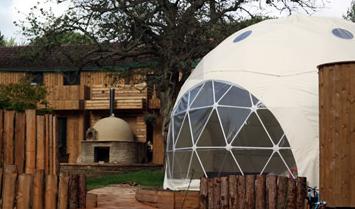
Eco Hab, based in Manchester, UK, designs prefab dome-shaped tiny homes focused on ecological living. Their unique rounded structures incorporate high insulation, renewable energy systems, and sustainable features for comfortable off-grid living.
Eco Hab Dome Home

Single Pod Configuration
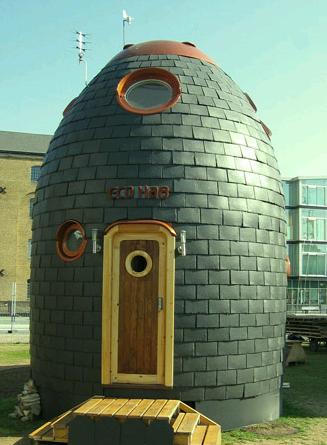
Eco Hab Features
- High Level Insulation: Maintains comfortable temperatures with minimal heating
- Expandable Designs: Connect multiple pods for growing families
- Completely Sealed: No air leaks for maximum energy efficiency
- Underfloor Heating: Radiant heat from wood stove or solar
- Rainwater Harvesting: 4m pod collects 5 liters per millimeter of rainfall
- Composting Toilets: No sewage connection required
- Solar Panels: Supplemental water heating
- Wind Turbines: 1kw turbine powers electrical needs
- Full-Featured Kitchens: Complete cooking facilities
Living in a 4 Meter Eco Pod
According to designer Aidan Quinn: “Having lived in a 4m diameter pod for some time, I must say it offers a very pleasant living and work space which requires the minimum of fuel (logs) to maintain a comfortable temperature during the depths of winter. It also has a light filled, natural and organic feel to the building.”
The prototype pod uses a wood burning stove that heats water in a copper cylinder for underfloor heating, supplemented by solar panels. A 1kw wind turbine connected to four 12-volt batteries provides all electrical requirements except washing machine and dryer.
Design Details
- Manufacturer: Eco Hab (Manchester, UK)
- Shape: Dome / pod
- Sizes: 4 meter and 6 meter diameter options
- Expandability: Multiple pods can connect
- Off-Grid Capable: Yes, fully self-sufficient options
- Best For: Eco-conscious living, off-grid homes, unique architecture
Lessons from Dome Home Design
- Dome Shapes Are Energy Efficient: Rounded forms have less surface area for heat loss than rectangular buildings
- Small Spaces Heat Quickly: Minimal fuel maintains comfort in compact, well-insulated pods
- Modular Expansion Works: Starting small and adding pods allows growth without rebuilding
- Multiple Energy Sources Add Reliability: Combining wind, solar, and wood provides backup options
- Rainwater Collection Scales with Roof Area: Dome roofs efficiently channel water to collection systems
You can share this using the e-mail and social media re-share buttons below. Thanks!
If you enjoyed this you’ll LOVE our Free Daily Tiny House Newsletter with even more!
Also, try our Tiny Houses For Sale Newsletter!
More Like This: Tiny Houses | Prefab | Off-Grid
See The Latest: Go Back Home to See Our Latest Tiny Houses
Disclosure: This post may contain affiliate links. If you purchase through one of our links, we may earn a commission at no additional cost to you.


Alex








Eco Hab site useless. Seven bulleted items to click and no visual cues. One item leads to Ask.com. Gee, thanks for the info. To builder/sellers: you are not being well served by listing here.
Is EcoHab still in production?Cannot find any info
This concept is clearly the way forward.
It is my intention to build a tiny eco house asap. It is becoming a huge frustration that I can not source a hydrogen fuel cell heating and power system.
An off grid eco house is the answer to a happy life.
I like the little Eco-Hab Dome home, so where do we find it? Can I see a floor plan? What is the cost? Can you email some information about that cute little home?