Rich Daniels, of Rich’s Portable Cabins in North Powder, Oregon is here to share some wisdom regarding tiny house building standards and safety issues. Since I think his concerns are valid and very important for the future of tiny homes I’m sharing it with you below. Please pass it on.
Wanted to just take a moment to show my appreciation for the Tiny House forum you have created and add a note of concern that I have. I truly enjoy seeing all of the Tiny living spaces that people create for themselves, it is great to see the marriage of art and ingenuity. My concern has been and continues to be our transition as a community into mainstream living. Fighting the decades long belief that bigger is better and trying to have city, counties and states recognize us as a viable legal living option. Those who build Tiny Homes for resale should be vehemently aware of this situation and there is where my concern begins. Although many of the designs I have been seeing lately on your medium are brilliant in many ways, some if not all are lacking the safety features that all manufactures must conform to.
…(continued below)
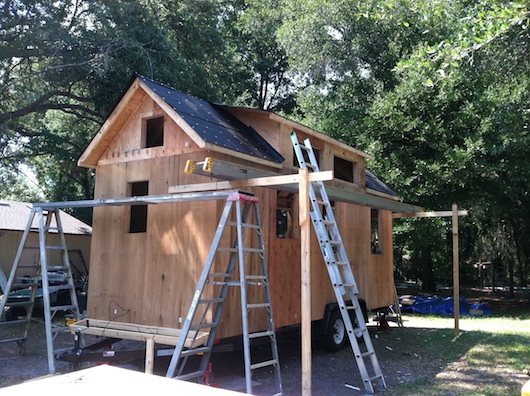
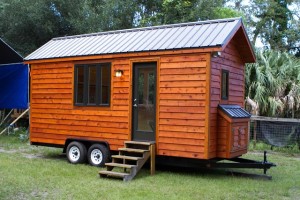
Below you can see one of Rich’s tiny houses on wheels built to standards inside:

Images © Rich’s Portable Cabins
[continue reading…]
{ }
Welcome to the captivating world of building a tiny house on wheels, where creativity and craftsmanship combine to create compact yet comfortable living spaces.
In this post, we’ll delve into the detailed process of constructing the Robins Nest, the second project by the innovative Brevard Tiny House Company. From the initial design to the final touches, you’ll witness the intricate steps involved in crafting this charming tiny home.
Don’t miss other amazing resources like this – join our FREE Tiny House Newsletter for more!
Designing the Perfect Tiny Home
The journey begins with a meticulous design process. The Brevard Tiny House Company collaborates closely with its clients, creating scale models to precisely meet their needs and desires. The Robins Nest was conceptualized with a deck cleverly built over the tongue of the trailer, adding a unique and practical feature that sets it apart.
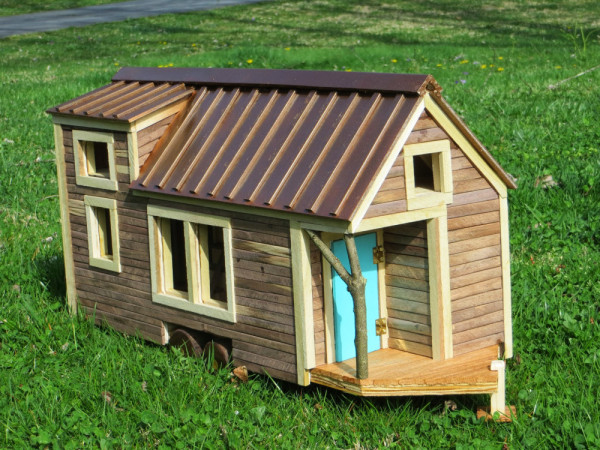
All Images © BrevardTinyHouse.com
If you ever wonder how these tiny houses are built from the trailer to the framing then you’ll enjoy getting to see it all come to life below:
[continue reading…]
{ }
If you’ve been wondering how much does it cost to build a tiny house you’re in the right place.
Designing and building your own tiny house is a great way to create a mortgage-free lifestyle fast.
So it’s no wonder that you’d be interested… But the question is, “how much?”
And since I receive lots of questions every day on tiny housing via email, Facebook and Twitter…
I decided I’d start answering them in public so we can all benefit.
And to encourage discussion (and connections) in the comments below.
Question: So How Much Does it Cost to Build a Tiny House?
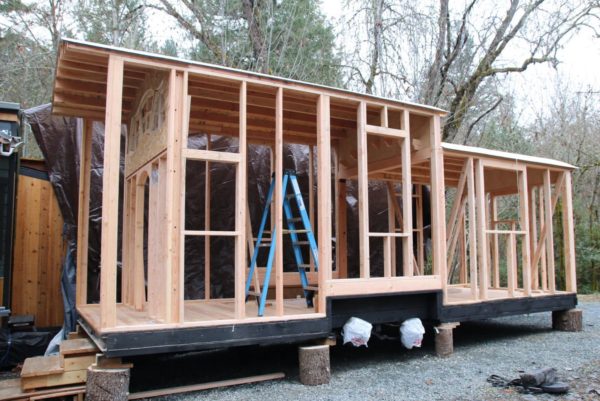
Image © Rogue Valley Tiny Homes (See The Rest Here)
Received from Courtney S. on our Facebook (thanks for the question Courtney!):
“Hi, I’m interested in building a tiny house and I was wondering about pricing? Thanks!”
[continue reading…]
{ }
In this post you’re going to learn how to design and build your own version of a tiny house to scale.
This is a great way to play around with different ideas you might have before you actually start spending lots of money building your home.
It allows you to work out kinks and try out different concepts after you’ve gathered ideas for your future tiny house before you ever buy any of your materials.
And one of our readers, Dan Paquette, is going to show you exactly how to do it step by step in the video below.
How to Build your own Scaled 3D Tiny House Design (VIDEO)

What you’ll need before you start:
- 4 1/4 inch styrofoam sheets
- Marker & pencil
- Tape measurer
[continue reading…]
{ }
In last week’s article on passive solar design for tiny houses I briefly mentioned advanced framing and SIPs—two alternatives to conventional 2×4 stud framing.
Well, it turns out there are a lot of alternative framing systems out there. Why would you use one of them to build your tiny house?
In a lot of ways, conventional 2×4 stud framing is pretty awesome. This technology makes it possible to build houses quickly and cheaply. It’s flexible and can be used to create a wide variety of structures, including tiny houses. And it’s based on a standardized set of dimensions with which most other building products are compatible.
But conventional framing has some weaknesses, and the main one is that it’s not terribly easy to seal and insulate well, so it’s not very energy-efficient. That’s one of the five big factors we’d look for in an ideal framing system for a tiny house:
5 Factors for Framing Tiny Houses
- Insulation. Does it provide good thermal insulation and few air leaks?
- Strength. Can it stands up to the rigors of transportation, high winds, etc.?
- Weight. Is it relatively lightweight? (Sorry, concrete, you’re out!)
- Cost. Is the additional cost (if any) justified by the benefits?
- Ease of construction. Can it be built quickly, and is professional installation required?
[continue reading…]
{ }
This video tour captures a tiny house on wheels mid-construction, showing the framing, layout decisions, and building process. The 12-minute tour provides insight into how builders approach trailer-based construction and make design choices during the build. The project used new plans refined from a previous successful build.
Video Details
- Duration: 12 minutes 11 seconds
- Content: Construction site tour
- Stage: Post-framing, pre-windows
- Builder: Dan Louche (Tiny House Project)
Construction Site
[continue reading…]
{ }
Building a tiny log cabin using materials harvested within 100 feet of the construction site represents the ultimate in self-reliant construction. These hand-built cabins demonstrate that with basic tools, time, and wooded property, anyone can create a rustic retreat using traditional notching techniques and minimal purchased materials.
Construction Details
- Materials Source: Trees within 100 feet of build site
- Construction: Solo builder using hand tools and power tools
- Techniques: Half-notch log joinery, hand-split shingles
- Foundation: Large rocks (first cabin), concrete blocks (second cabin)
- Flooring: Dirt floor (first cabin), hand-made wood floor (second cabin)
First Cabin Project
- Labor: 100 hours total
- Trees: 5 fir trees plus saplings
- Purchased Materials: Bag of screws, mortar, concrete blocks, thick poly, zinc strip for roof
- Foundation: 4 large rocks
- Tools: Hand saw, axe, mallet
Log Cabin Exterior

Photo: Timothy Epp (representative cabin image)
[continue reading…]
{ }
Tumbleweed Tiny House workshops teach participants how to build their own tiny houses from start to finish. These hands-on classes cover trailer foundations, framing, insulation, roofing, and systems installation. Attendees learn practical skills alongside other aspiring tiny house builders, gaining the knowledge needed to construct their own homes.
Workshop Curriculum
- Foundation: Building on a trailer vs. permanent foundation
- Tools: The essential tools needed for construction
- Framing: Wall and roof framing techniques
- Sheathing: Exterior sheathing installation
- Insulation: Proper insulation and moisture management
- Venting: Condensation prevention strategies
- Roofing: Roof installation methods
- Siding: Exterior siding techniques
- Systems: Water heaters, appliances, toilets, air conditioning
- Codes: Building codes, restrictions, and zoning information
Workshop Locations
Tumbleweed workshops have been held in cities across the United States including:
- Orlando, FL
- Santa Fe, NM
- Nashville, TN
- Honolulu, HI
- Boston, MA
- Olympia, WA
- Washington DC
- Chicago, IL
- Los Angeles, CA
- Portland, OR
- New York, NY
- Santa Rosa, CA
[continue reading…]
{ }
Austin Hay began building a Tumbleweed Fencl tiny house as a high school sophomore, demonstrating that age is no barrier to tiny house construction. His motivations included downsizing, environmental responsibility, and financial independence. The project proves that with determination and proper planning, anyone can take on a tiny house build.
Project Details
- Builder: Austin Hay
- Model: Tumbleweed Fencl
- Type: DIY tiny house on wheels
- Motivation: Downsizing, environmental impact, financial freedom
- Status: Self-built project
- Message: Demonstrating one person can make a difference
Fencl Build in Progress

Photo via Austin Hay
[continue reading…]
{ }