
Disclosure: This post may contain affiliate links. If you purchase through one of our links, we may earn a commission at no additional cost to you.
Passive solar greenhouses use building orientation, thermal mass, and insulation to maintain growing temperatures without active heating systems. This design approach from the University of Missouri’s Bradford Research and Extension Center demonstrates how proper solar design can extend growing seasons significantly.
Passive Solar Greenhouse Design
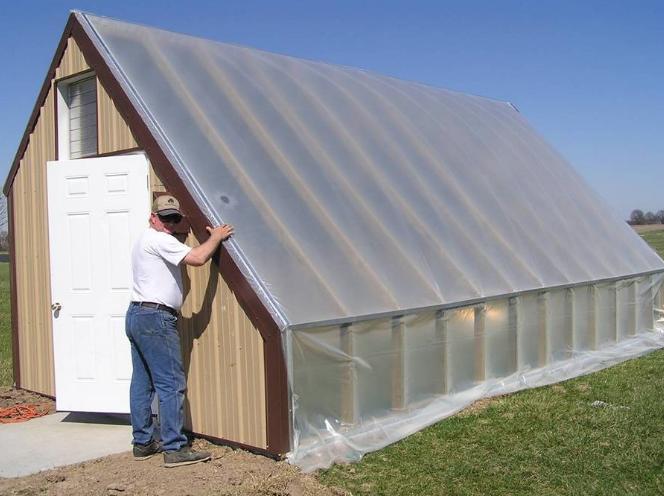
Photo Credit: University of Missouri, Bradford Research and Extension Center
Passive Solar Greenhouse Features
- Orientation: South-facing glazing to maximize winter sun exposure
- Glazing Angle: Optimized for local latitude
- North Wall: Insulated solid wall (no glazing on north side)
- Thermal Mass: Materials that absorb heat during day and release at night
- Ventilation: Controlled openings for summer cooling
- Insulation: Well-insulated foundation and north wall
- Source: University of Missouri Bradford Research Center
How Passive Solar Greenhouses Work
During the day, sunlight enters through south-facing glazing and heats thermal mass materials (water barrels, concrete, stone). At night, as air temperatures drop, the thermal mass slowly releases stored heat, keeping the greenhouse warmer than outside temperatures. The insulated north wall prevents heat loss while the angled glazing optimizes solar gain during winter months.
Lessons from Passive Solar Greenhouse Design
- Orientation Is Critical: South-facing glazing (in the Northern Hemisphere) maximizes winter solar gain
- Thermal Mass Stores Heat: Water, concrete, and stone absorb daytime heat for nighttime release
- Insulation Prevents Heat Loss: Solid, insulated north walls retain heat better than all-glass designs
- Passive Systems Reduce Operating Costs: No fuel or electricity needed for heating in properly designed structures
- University Research Provides Tested Designs: Agricultural extension services offer proven plans and construction guidance
Resources
For detailed construction plans and additional information, contact your local agricultural extension service or university research center.
You can share this using the e-mail and social media re-share buttons below. Thanks!
If you enjoyed this you’ll LOVE our Free Daily Tiny House Newsletter with even more!
Also, try our Tiny Houses For Sale Newsletter!
More Like This: Tiny Houses | Off-Grid Living
See The Latest: Go Back Home to See Our Latest Tiny Houses
Disclosure: This post may contain affiliate links. If you purchase through one of our links, we may earn a commission at no additional cost to you.


Alex
Latest posts by Alex (see all)
- Studio Home Laurel: A One-Bedroom Backyard ADU in Four Architectural Styles - October 10, 2026
- A 6’5″ Man’s DIY Tiny House on Wheels, Permitted in Calgary - October 10, 2026
- A Long House: A Designer’s 603 Sq Ft Seoul Apartment Opened Up Around Morning Rituals - October 10, 2026







8 comments