A while back I showed you this 450 square foot small apartment with the custom one piece multi-functional piece of furniture.
I’m glad to announce that Kirsten Dirksen of Faircompanies.com has just published a video tour of the same apartment owned by teacher/resident Eric Schneider.
450-Square-Foot Small Apartment Goes Multi-Functional
In 2005 Eric purchased the largest apartment that he could afford in Manhattan. He ended up with what you’re seeing here.
It’s a 450-square-foot studio the he got for $235,000. At that time it was a very basic apartment with some closets and an old kitchen.


Photo Credits Alan Tansey
[continue reading…]
{ }
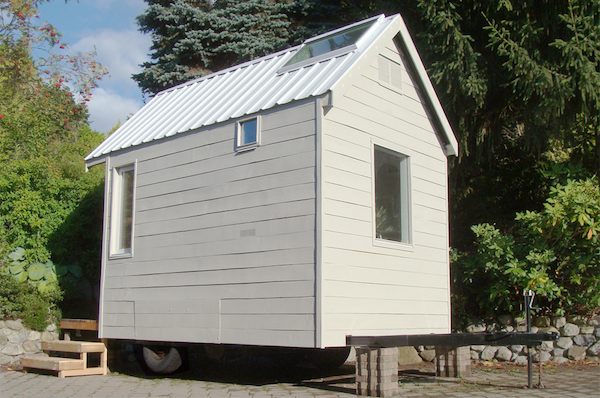
I wanted to show you this tiny house on a trailer that’s in West Vancouver, British Columbia, Canada.
I’ve been exchanging emails with the owners of the home and was up for sale for an asking price of $20,000 CAD.
Tiny House on a Trailer for Sale in Canada
The little home was built by two architecture graduates, Lauren Aarntzen and John McFarlane.
The trailer has a 5000 lb capacity and the house can actually be detached and installed onto a regular foundation if one wanted to.
There are lots of things that I like about this tiny house and the first thing I’m going to point out to you is the front porch.

Photos Courtesy of Lauren Aarntzen and John McFarlane
I know you may have thought about downsizing before, but have you ever considered going this small?
At less than 100 square feet, this house offers a queen-size bed in the loft, a bathroom, 7′ desk, and a kitchen with a double sink, stove, fridge and oven.
Plus there’s a sofa and plenty of shelving and storage. You’ll get to see all of that in the photos below so don’t miss that along with all of the other details of the house below.
[continue reading…]
{ }
It’s Thursday plans day again. Today’s tiny house plans are from Dan Louche of Tiny Home Builders.
For those of you who don’t know Dan this is second tiny house design named Tiny Living.
Tiny Living Tiny House Plans
Tiny Living is one of Tiny Home Builders latest designs after Dan created Tiny Retirement for his mother.
Not long ago I took a trip up to North Florida to check out the latest progress on his build. I’ll show you the pictures I took in a minute.
Dan Louche and Tiny Home Builders
Dan has been designing and building his own tiny houses for the last couple of years. Since then he has put together a wonderful resource for those who want to do the same.
He currently offers two designs:
If you wanted to purchase any of those plans he packages them together with his Tiny House Construction Guide that you can alternatively buy separately for just $34.99.
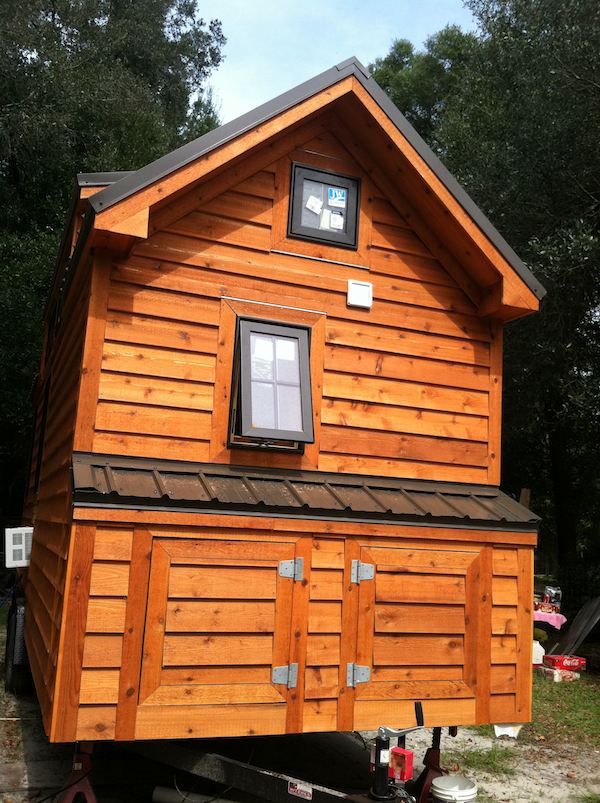
Tiny Living
Let’s take a closer look at Dan’s new house which he recently took a video tour of.

The house is 20′ long with a width of 8′ 6″ on the outside.
[continue reading…]
{ }
Every Thursday I’ll be featuring a random set of tiny house plans here on Tiny House Talk.
Today I’m introducing you to Tumbleweed’s Beavan Box Bungalow design.
Beavan Box Bungalow Tiny House Plans
The Beavan is one of Tumbleweed Houses latest designs in the Box Bungalow category.
As you may already know all of this company’s house plans are designed by Jay Shafer, who has been living happily in really small spaces since 1997.
That’s over ten years of extremely simple living. That’s why he’s #1 when it comes to designing micro sized spaces for humans.
Jay Shafer and Tumbleweed Tiny Houses
Jay is at the forefront of today’s tiny house movement not because he is the first person to live so simply but because he has successfully shared his amazing ideas with the world.
In his Small House Book, he shows you the current generous loopholes which allow you to bypass minimum size housing building code restrictions in most areas.
The Beavan Box Bungalow
Let’s take a close look at this beautiful design which was recently featured on HGTV’s Design Star.

Photo Courtesy of Tumbleweed Houses
[continue reading…]
{ }
This week’s tiny house is situated in the land of multi-million dollar homes.
Its owner, Fiver Brown, has found a life hack to live frugally in this area.
How? A floating home. It’s a former World War II lifeboat that was converted into a 481 square foot house in 1967.
San Francisco Bay 481 Square Foot Houseboat
The boat is 13′ x 37′ with fantastic views of the bay. Fiver says he sees stingrays, seals, fish and birds from his kitchen and loft windows.
His little house is paid off so all he has to worry about is the boat slip rental at Galilee Harbor Co-op which is located in central Sausalito, California.
FYI: Sausalito is just north of San Francisco if you used the Golden Gate Bridge to get there. The community is composed of:
- Artists
- Marine workers
- Creative writers
- Painters
- Photographers
- Boat-builders

Screenshot Courtesy of Faircompanies.com on YouTube
Video tour and interview below:
[continue reading…]
{ }
For this week’s small space furniture series I wanted to reintroduce you to study carrels.
I am sure that you’ve used one of these in the past at your school, college or library in the past.
These little privacy booths give you the ability to focus on your work or studies.
Custom Study Carrels for Work or Study in Small Spaces
I’m currently working on opening up a co-workspace where I live in Florida.
Since the location I’m renting is really small I decided that I wanted to use study carrels to create privacy for each workstation.
Then I thought this would be a great way to stay focused while you work at home on your dining table. It’s a super simple way for you to focus and block out any distractions around you.
Here are your options. You can:
- Make your own out of plywood or cardboard
- Order the inexpensive ready made cardboard version
- Design and build your own
- Order them ready made for more money
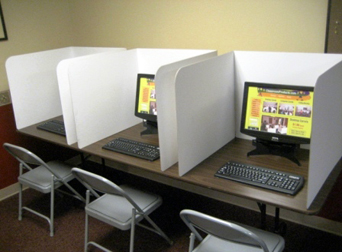
Photo Courtesy of ClassRoomProducts.com
Study Carrels so you can Work out of Your Small Space
You can use these to create a more focused work environment on any of your current tables or desks.
The next option is to purchase or build your own custom made workstation with privacy panels.
On the rest of this post I’ll show you some great examples of what I found on the internet while doing research for my options.
[continue reading…]
{ }
Guest Post by Maren Kate
You think your place is small? Try our tiny studio on for size!
We are two start up founders who have squeezed into a 250 square foot micro studio in the heart of San Francisco, California. But even though the quarters are close we still really enjoy our small place.
The reason people, like us, get shoehorned into tiny studios is because quality multiple bedroom apartments are very hard to find.
So as you wait for a 2 or 3 bedroom to become available, you crash in a studio for a temporary “quick fix”. That’s what happened with us – and nine months later we’re still here!
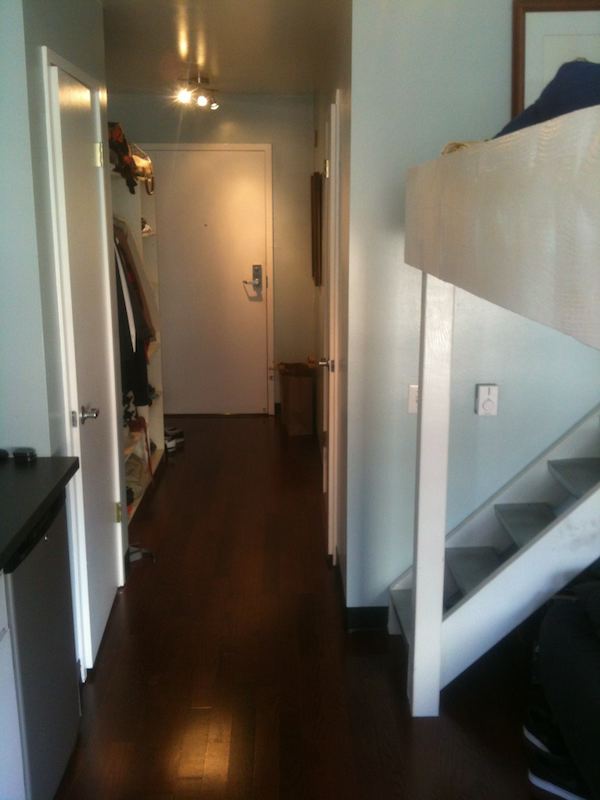
We found living in a small studio with a built in loft bed (so there is one bed below, one on top) saved us gobs on rent and acts almost like a college dorm – a nice place to sleep when it’s nighttime, but we rarely spend time in it during the day.
This forces us to spend more time at work, explore the city and socialize – we’ve also become utilitarians about what we “need” to live comfortably versus what we “want”.
I’d suggest everyone live in a tiny house or small studio at some point because it teaches you a lot about yourself and the person you live with, plus it’s a great lesson on why less is often more.
[continue reading…]
{ }
SignaTour Campers is a Tampa, Florida based small business that builds high-quality teardrop campers. These micro campers are lightweight, inexpensive to buy, cheap to maintain and you can pull it with just about any vehicle. In fact, one customer of the SignaTour teardrop trailers have been pulled theirs with a Smart Car!
Hand Built Teardrop Campers by SignaTour Campers
SignaTour Campers builds each teardrop trailer by hand to ensure the highest quality and attention to detail. Each one is 5′ x 8′ with the modified teardrop shape to maximize the space inside.
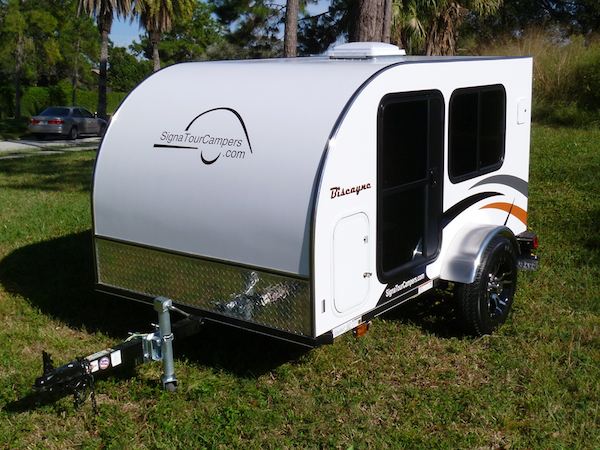
Here is a brief list of some of the materials used:
[continue reading…]
{ }
Jay Shafer, the founder of Tumbleweed Houses, designed the Epu tiny house and offers building plans for those interested in their very own little home on wheels.
He lived in this design for several years before selling it so that he can create more. This post will give you all of the information you need to find building plans for the Epu.
You’ll also find plenty of photos and a complete video tour of the house with Jay himself.
Tumbleweed Epu Tiny House
This design is 8′ wide and 15′ long and is made to sit on a 7′ by 14′ double axle trailer. Inside the ceiling is 6′ 3″ high with a loft height of 3′ 8″.
If you are a taller person these dimensions can be adjusted when building to meet your own height requirements as it has been done before.
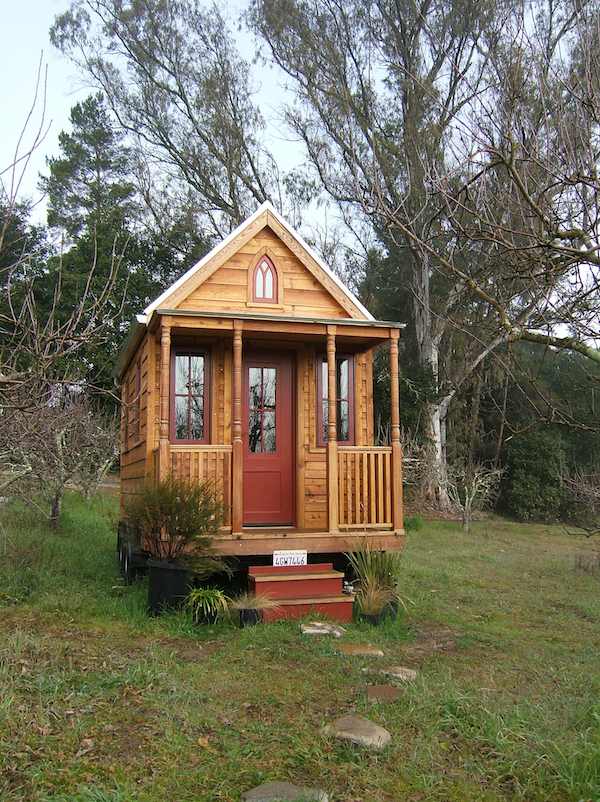
Photos Courtesy of Tumbleweed Houses
This design has been featured on Oprah and it comes with the following features:
[continue reading…]
{ }

