
Disclosure: This post may contain affiliate links. If you purchase through one of our links, we may earn a commission at no additional cost to you.
Team CASITA at Northwestern University designed and built an off-grid tiny house on a trailer as an academic project exploring sustainable, efficient housing. The 128-square-foot structure incorporated solar power, rainwater collection, and carefully selected building materials to demonstrate that small homes can operate independently from utility connections.
Project Overview
The CASITA project aimed to create a fully functional, self-sufficient dwelling using smart design principles. The team addressed the core challenges of off-grid living: generating electricity, collecting and storing water, and maintaining comfortable temperatures year-round.
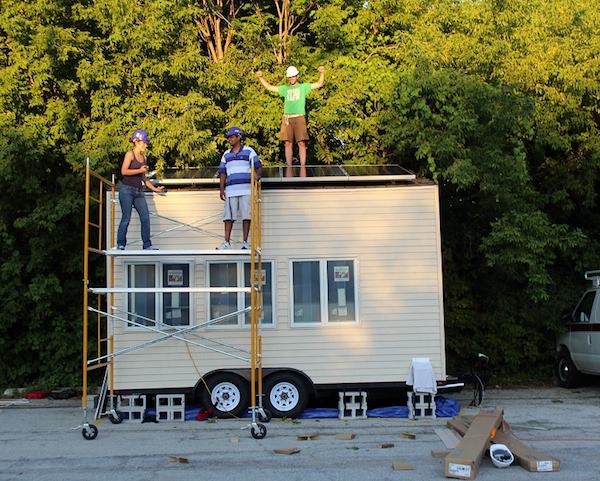
Photo Credit: Northwestern University
The Layout
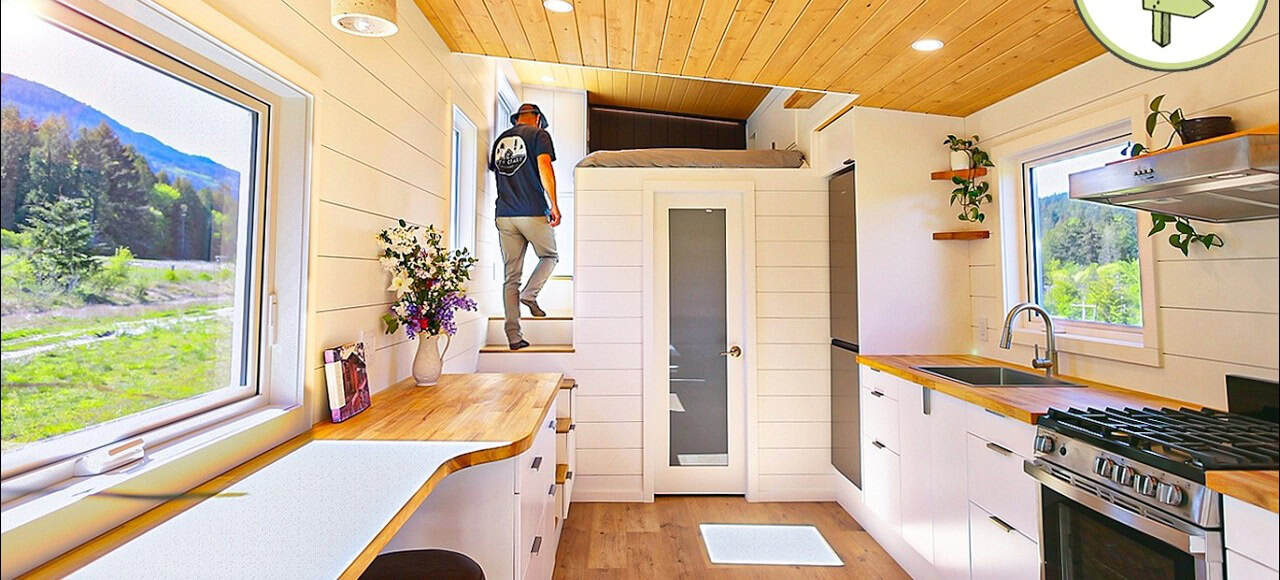
Despite its compact 128-square-foot footprint, the design included all essential living functions:
- Sleeping loft: Accessed by ladder, maximizing floor space below
- Kitchen: Full cooking facilities on the main level
- Bathroom: Complete with water heater
- Fireplace: Supplemental heat source
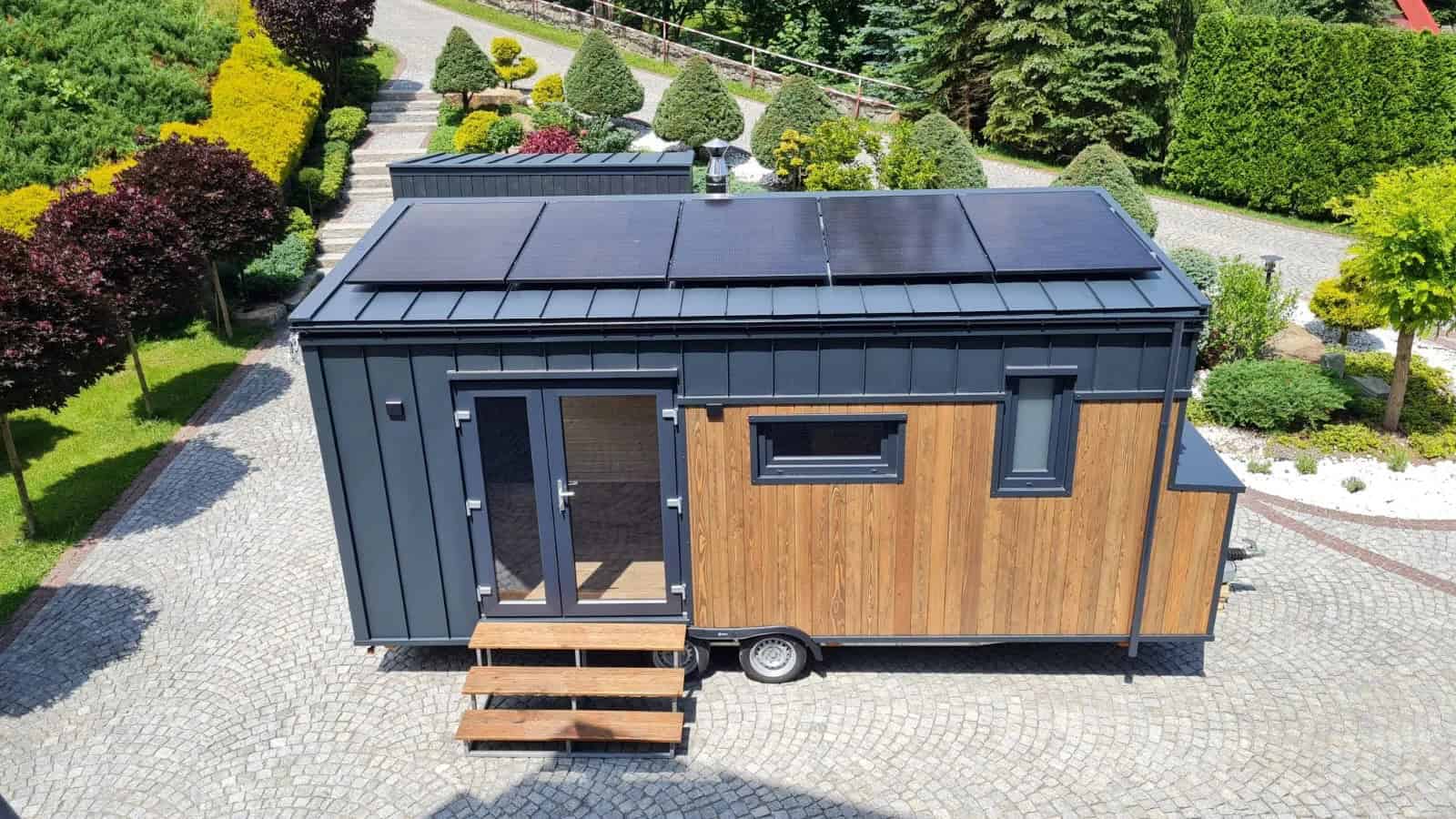
- Solar system: Roof-mounted panels with battery storage
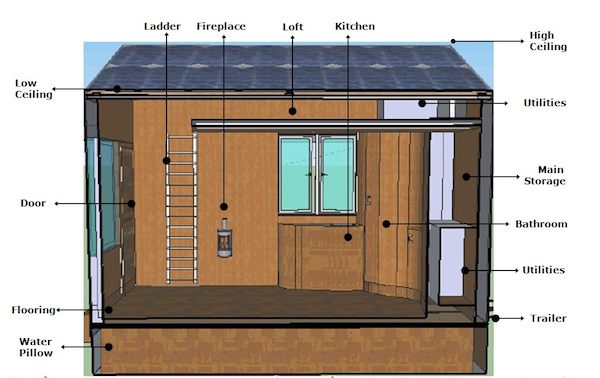
Photo Credit: Northwestern University
Building Materials
The team selected materials based on weight constraints (7,000-pound trailer capacity), sustainability, and performance:
- Framing: Wood construction engineered to withstand high winds and snow loads
- Roofing: Enviroshake—made from 95% recycled plastic, compatible with both solar panels and rainwater collection
- Flooring: Bamboo, chosen for its light weight and rapid renewability (bamboo matures in 4 years versus 40 years for timber)
- Insulation: Icynene spray foam, which expands to 100 times its original volume for comprehensive coverage
Rainwater Collection System
One of the project’s innovative features was its comprehensive rainwater harvesting system:
- Collection area: Roof plus four awnings expanded the catchment from 128 to 320 square feet
- Filtration: Debris filter before storage, additional filtration before distribution
- Storage: 500-gallon water pillow custom-fitted between the trailer wheels
- Freeze protection: Insulated enclosure around the water pillow
- Mobility: System designed for draining and insulation removal before transport
A gutter system directed water from the roof and awnings to the storage pillow, then through a pump and filter system for household distribution.
Lessons for Off-Grid Tiny House Builders
The CASITA project demonstrates several principles applicable to any off-grid tiny house:
- Maximize collection area: Awnings and overhangs increase rainwater harvesting without adding floor space
- Integrate systems early: Roofing material choice affects both solar and water collection
- Plan for mobility: Off-grid systems need to accommodate transport if the house will move
- Consider weight budgets: Every material choice impacts trailer capacity
- Address seasonal challenges: Freeze protection and insulation are critical for year-round function
The Team Behind CASITA
The project was completed by Northwestern University students under faculty guidance:
Students: Alejandro Sklar, William Fan, Andrea Morgan, Kaycee Overcash, Conor Cameron, Kevin Yngve, Kimberly Huang, Molly Baker, Taylor Lee, Vincent Zhang, Zachary Patterson, and Laurel Lau
Faculty: Karen Chou, Bruce Ankenman, and Stacy Benjamin
Consultants: Mert Iseri and Alexandra Letuchy
Academic tiny house projects like CASITA advance practical knowledge about sustainable small-space living while giving students hands-on experience with real-world engineering challenges.
Photo Credits: Northwestern University
Disclosure: This post may contain affiliate links. If you purchase through one of our links, we may earn a commission at no additional cost to you.


Alex
Latest posts by Alex (see all)
- A Hotel Designer’s 484 Sq Ft Milan Apartment with a Rotating Room Divider - October 9, 2026
- Hermosa Orchards Village: A Durango Tiny Home Community with Its Own Fruit Orchard - October 9, 2026
- The Sanctuary Minnesota: A Tiny House Village on 80 Acres of Woods - October 9, 2026




Oh, to have the money to build one of these…