This European-manufactured prefab container house comes fully equipped from the factory with windows, bedroom, kitchen, and air conditioning. Unlike recycled shipping containers that require conversion, this unit is purpose-built for residential use. The design shown targets the Australian market and provides inspiration for custom container projects.
Unit Features
Type: Purpose-built prefab container
Origin: European manufacturer
Market: Australia
Includes: Windows, bedroom, kitchen, air conditioning
The Old Lady House is a shipping container design measuring 40 by 24 feet (960 square feet) intended for two to three occupants. The layout includes two small bedrooms, a bathroom, large closet, kitchen with laundry/utility room, and open living/dining area with glass sliding doors for natural light and views. Side decks with additional sliding doors expand the outdoor living space.
Design Details
Name: Old Lady House
Size: 40′ x 24′ (960 square feet)
Bedrooms: 2
Bathrooms: 1
Occupancy: 2-3 people
Features: Large closet, kitchen, laundry/utility, living/dining, side decks
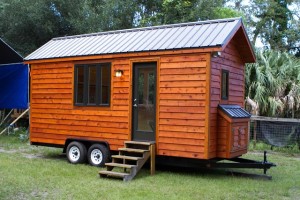
Pat Hennebery of Cobworks built two generations of teardrop trailers for family travel to Baja, Mexico. The original Baja Bullet weighed 850 pounds and featured a queen bed, small bunk, and exterior galley kitchen. The larger Baja Bullet II, built on a 16-foot tandem axle trailer, added bunk beds, walk-in galley, stainless steel exterior, and cedar siding milled from logs on his own property.
Multifunctional furniture maximizes limited floor space in tiny houses by serving double or triple duty. This collection features a sofa that converts to bunk beds in seconds and a desk that transforms into a twin bed without clearing the work surface.
Featured Designs
Sofa to Bunk Bed: Converts from couch to two-level sleeping in seconds
Desk to Bed: Twin bed with integrated desk – no need to clear items before sleeping
Applications: Tiny houses, small apartments, guest rooms, studios
Sofa Bunk Bed Transformation
This sofa converts into a bunk bed configuration quickly, providing two sleeping surfaces from one piece of furniture:
Brothers Chauncey and Dash Tudhope-Locklear operate The Recyclery, a bicycle cooperative that combines a repair business with community education and outreach. Their model demonstrates how simple transportation choices support sustainable living – the same philosophy that drives tiny house adoption.
Co-Op Details
Founders: Chauncey and Dash Tudhope-Locklear (brothers)
Michael Smith demonstrates passive solar design principles using cob and straw bale construction. The technique uses thermal mass in clay walls and floors to store temperature – coolness in summer, warmth in winter. Strategic window placement captures solar heat during cold months while the massive walls retain temperature throughout daily cycles.
Design Principles
Teacher: Michael Smith
Materials: Cob (clay, sand, straw) and straw bale
Technique: Passive solar with thermal mass
History: Methods dating to ancient Greeks and Chinese
Summer Strategy: Night ventilation, daytime closure
Winter Strategy: Solar gain through south-facing windows
How It Works
Summer Cooling
Windows open at night to allow cool air inside. In the morning, windows close and the cob walls trap the coolness inside throughout the hot day.
Winter Heating
South-facing windows allow winter sun to enter. The clay walls, straw bale insulation, and floor absorb this solar heat during the day and release it slowly through the night.
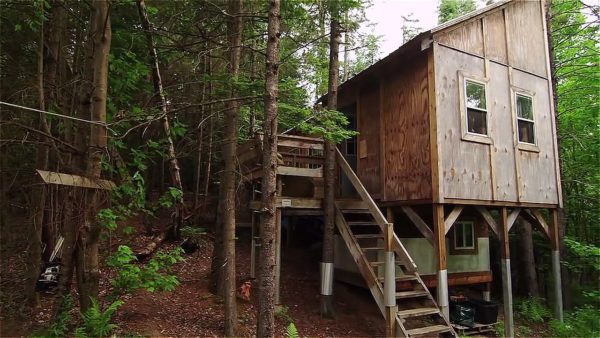
Derek and Dustin Diedricksen built this tiny cabin retreat in Northern Vermont as a weekend escape from Boston. Purchased in 2000, the property has been developed incrementally using mostly hand tools without power equipment. The cabin provides a quiet getaway for family and friends to enjoy nature, play music, and disconnect from city life.
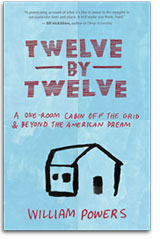
“Twelve by Twelve” by William Powers documents life in a 144 square foot off-grid cabin. The book explores what it means to live simply without modern utilities, surrounded by nature. The 12×12 footprint represents the threshold many jurisdictions allow for structures without building permits.
Book Details
Title: Twelve by Twelve: A One-Room Cabin Off the Grid and Beyond the American Dream
Author: William Powers
Subject: Off-grid living in a 12′ x 12′ (144 SF) cabin
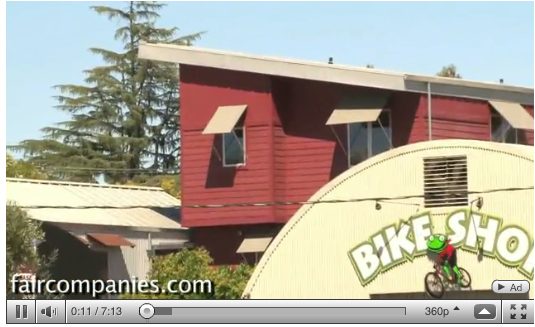
Architect Alan Cohen transformed a standard house into an integrated live-work space where he and his partner both reside and operate their businesses. The combined home and workspace eliminates daily commuting, with everything accessible by walking or bicycling. The 1730 square foot living area (downsized from 3000 square feet) includes a 1050 square foot shared office for architecture and art studio work.
Design Details
Designer: Alan Cohen, Architect
Living Space: 1730 square feet (down from 3000 SF)
Office/Studio Space: 1050 square feet shared
Uses: Architecture office + art studio
Transportation: Walking and bicycling distance to amenities