
Disclosure: This post may contain affiliate links. If you purchase through one of our links, we may earn a commission at no additional cost to you.
The Lumbec Micro-House is a 136-square-foot tiny house on wheels built by Lumbec Tiny Houses, a Quebec-based Canadian builder that earned a reputation for blending European craftsmanship with North American tiny house ingenuity. At just over 12 feet long on the main body, this micro dwelling proves that thoughtful design can deliver a fully functional home in an extraordinarily compact footprint.
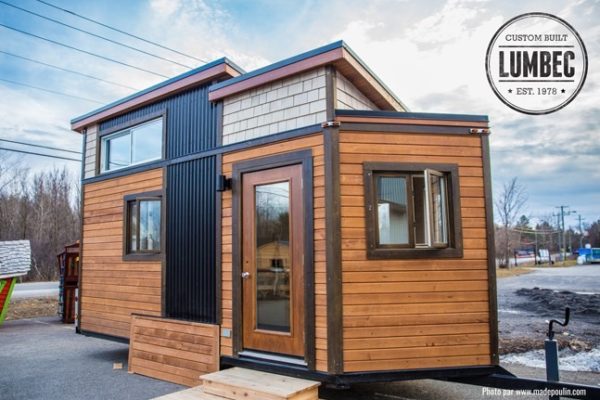
What sets the Lumbec Micro-House apart from many tiny houses in its size range is the distinctive V-shaped nose extension that pushes living space out over the trailer tongue. Rather than leaving that triangle of trailer real estate empty, Lumbec engineered usable square footage into what is typically dead space. The result is a home that feels larger than its dimensions suggest.
From the vertical cedar siding and standing-seam metal roof to the carefully planned interior with full kitchen, bathroom, and sleeping loft, this build demonstrates the level of finish and attention to detail that made Lumbec a standout among Canadian tiny house builders.
Images courtesy of Lumbec Tiny Houses
Exterior Design with V-Shaped Nose Extension
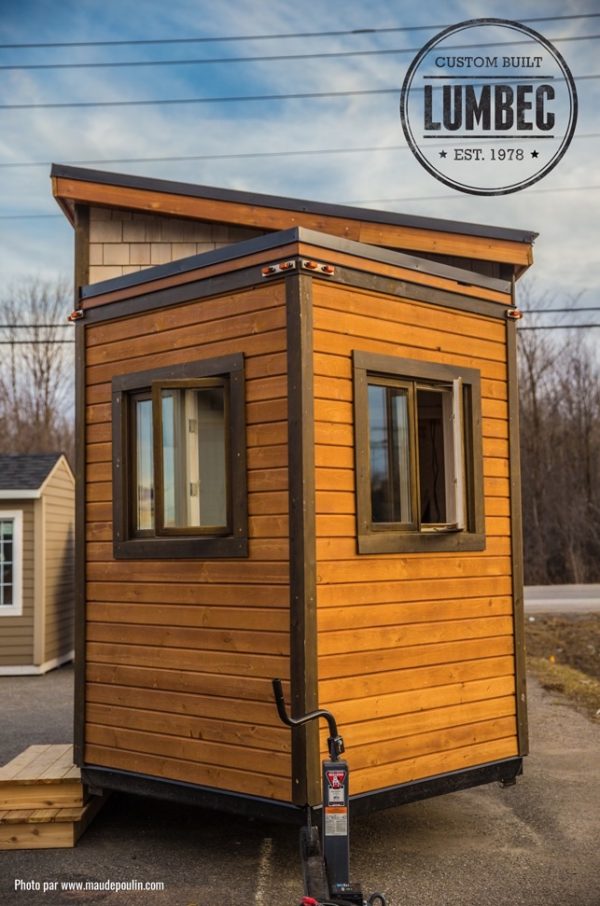
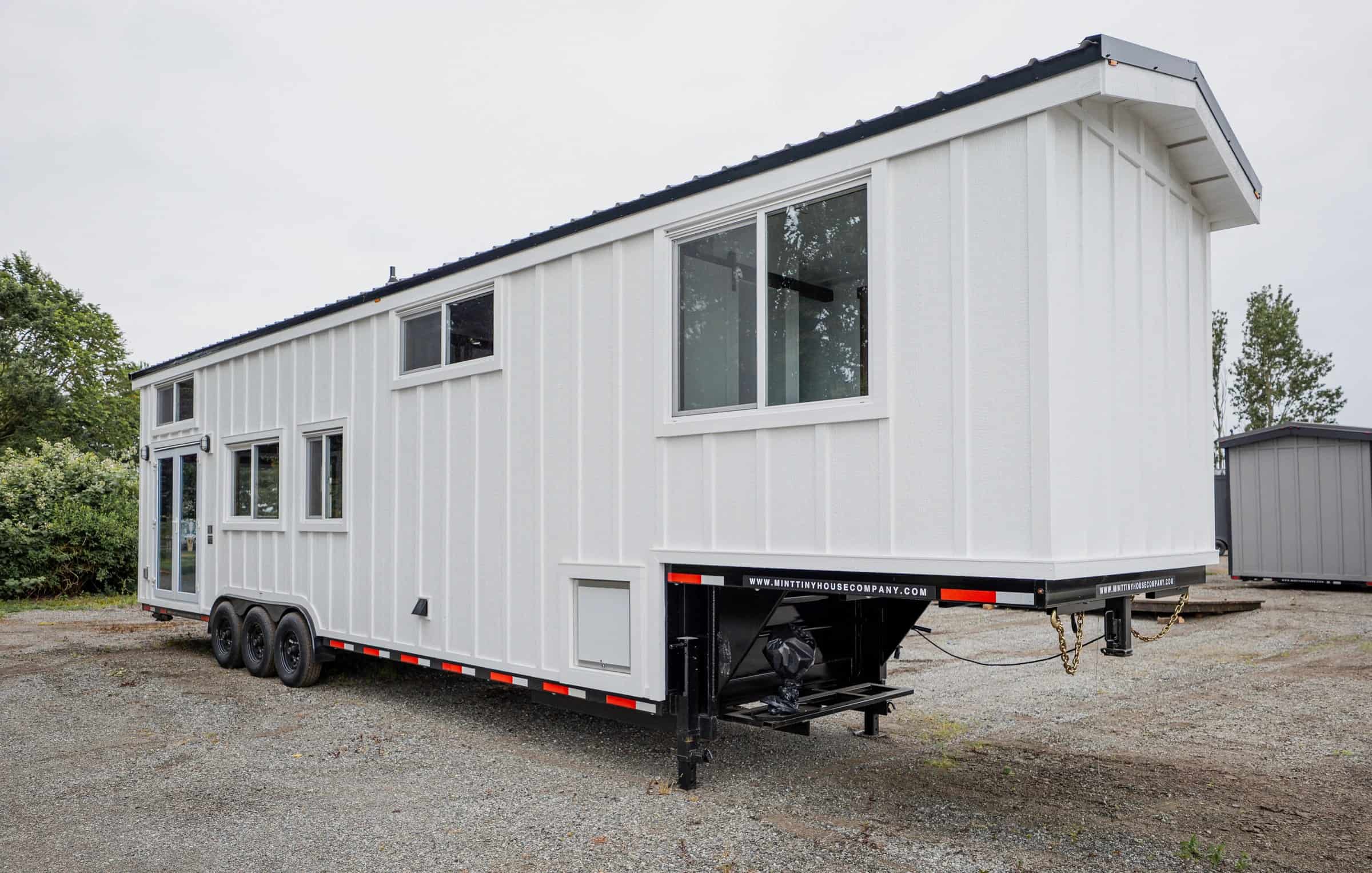
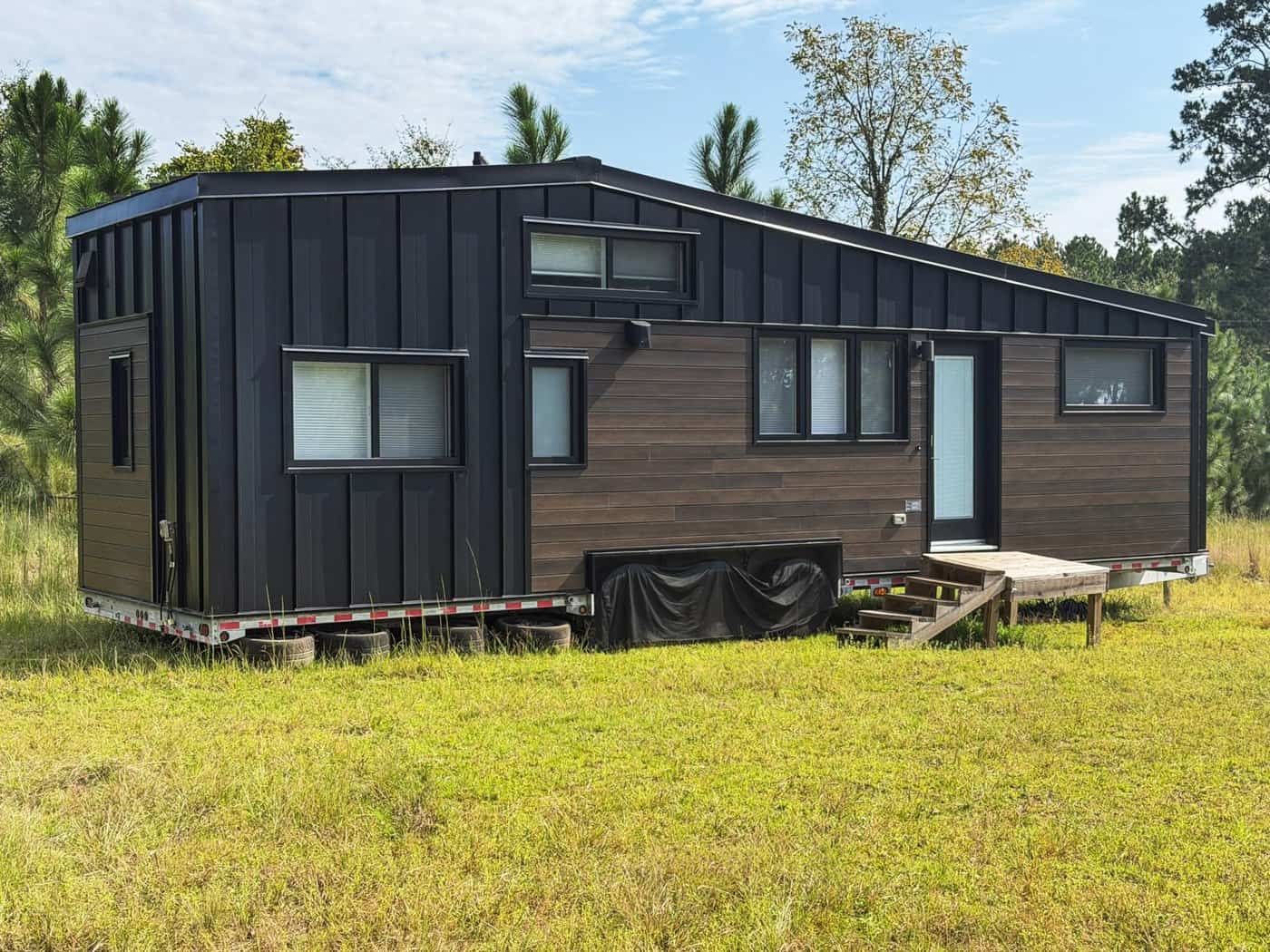
The most striking feature of the Lumbec Micro-House is its angular nose that extends forward over the trailer tongue, creating a V-shaped footprint rather than the standard rectangular box. This design choice is both aesthetic and functional — it adds usable interior space while giving the home a distinctive profile that stands out from conventional tiny houses. The vertical cedar siding weathers naturally and provides excellent insulation properties, while the standing-seam metal roof ensures decades of weather protection with minimal maintenance.

Images courtesy of Lumbec Tiny Houses
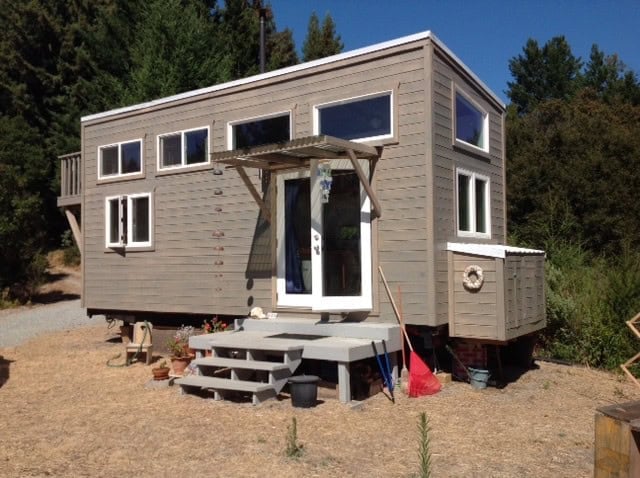
The side profile reveals the carefully considered proportions of this micro dwelling. Multiple windows on each wall flood the compact interior with natural light — a critical consideration in a home this small. The combination of fixed and operable windows allows for both views and cross-ventilation, making the space feel open and airy despite its diminutive footprint.
Images courtesy of Lumbec Tiny Houses
Side Entry and First Impressions
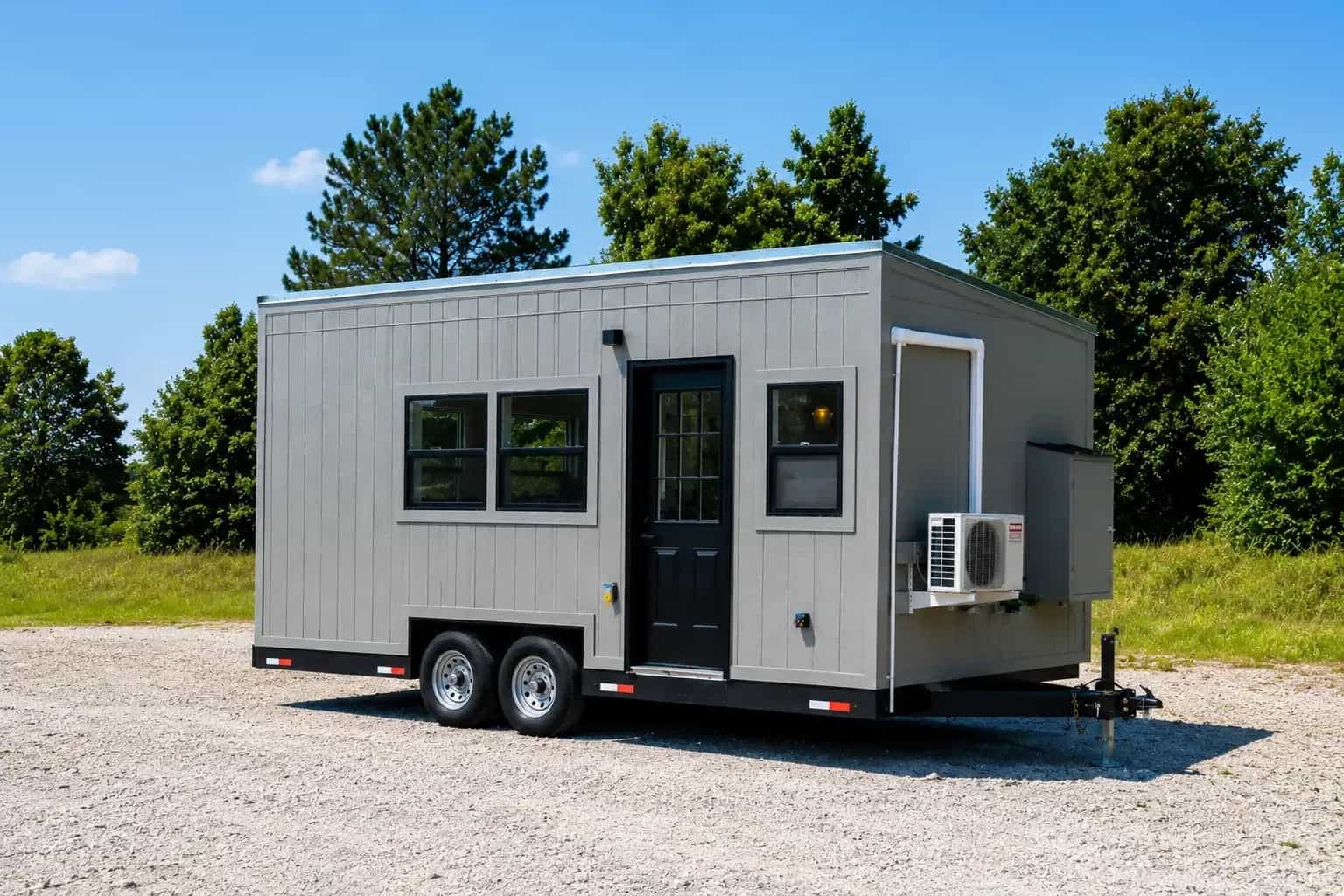
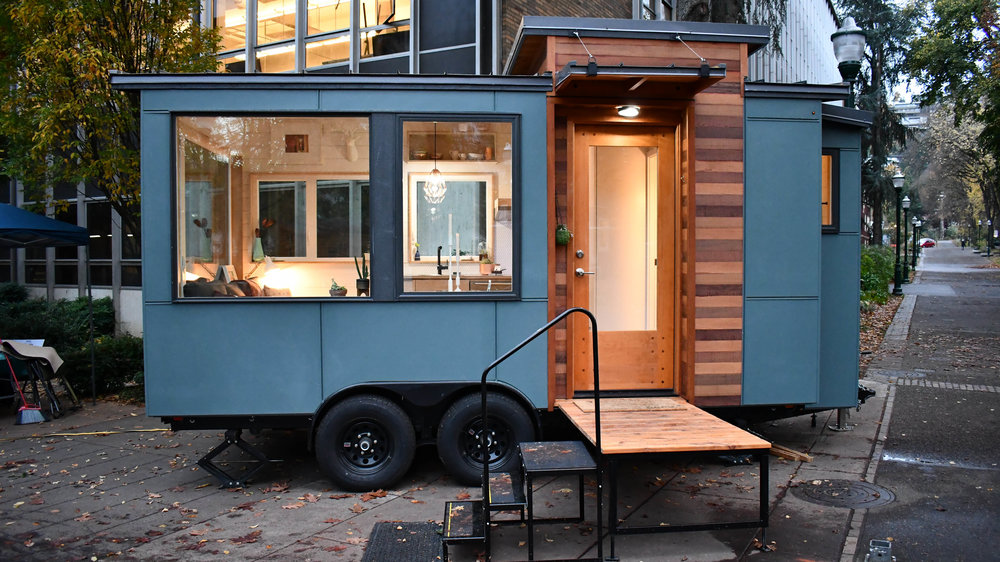
The entry door is positioned along the side of the home, which is a practical choice for a micro-dwelling — it avoids eating into the limited end-wall space that is better used for windows or built-in furniture. The sheltered entry area provides a moment of transition between outside and inside. Notice how the window placement on this elevation balances light distribution with wall space for interior storage and furniture placement.

Images courtesy of Lumbec Tiny Houses
Open Living Area with Built-In Storage
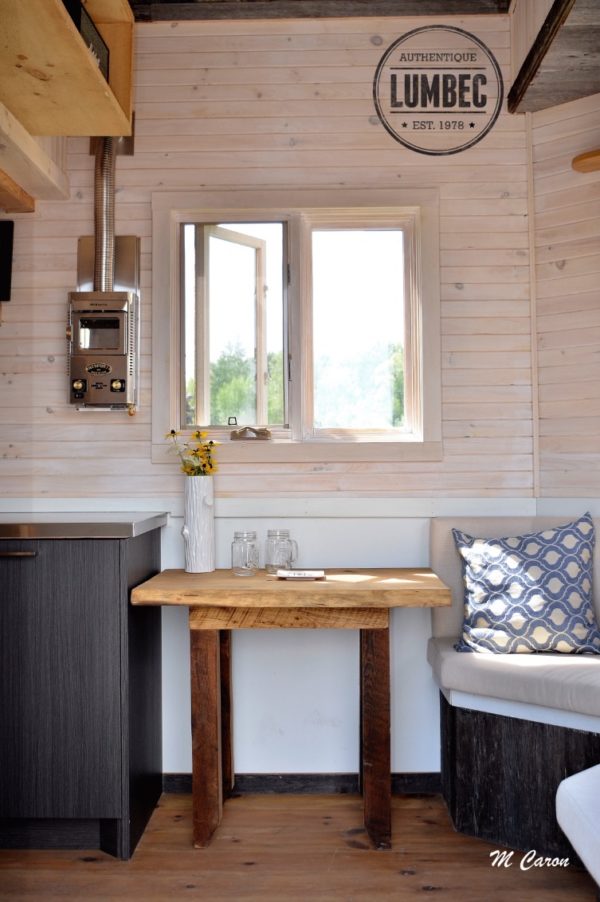
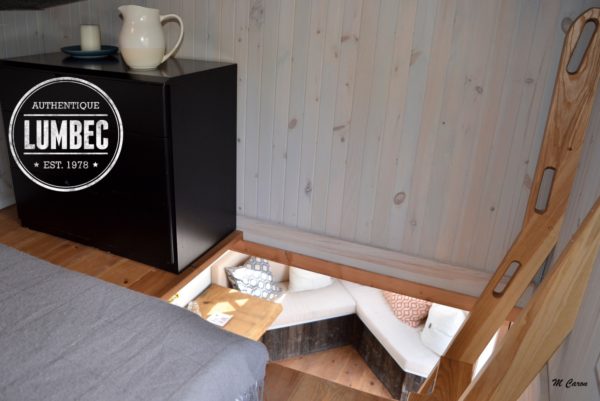
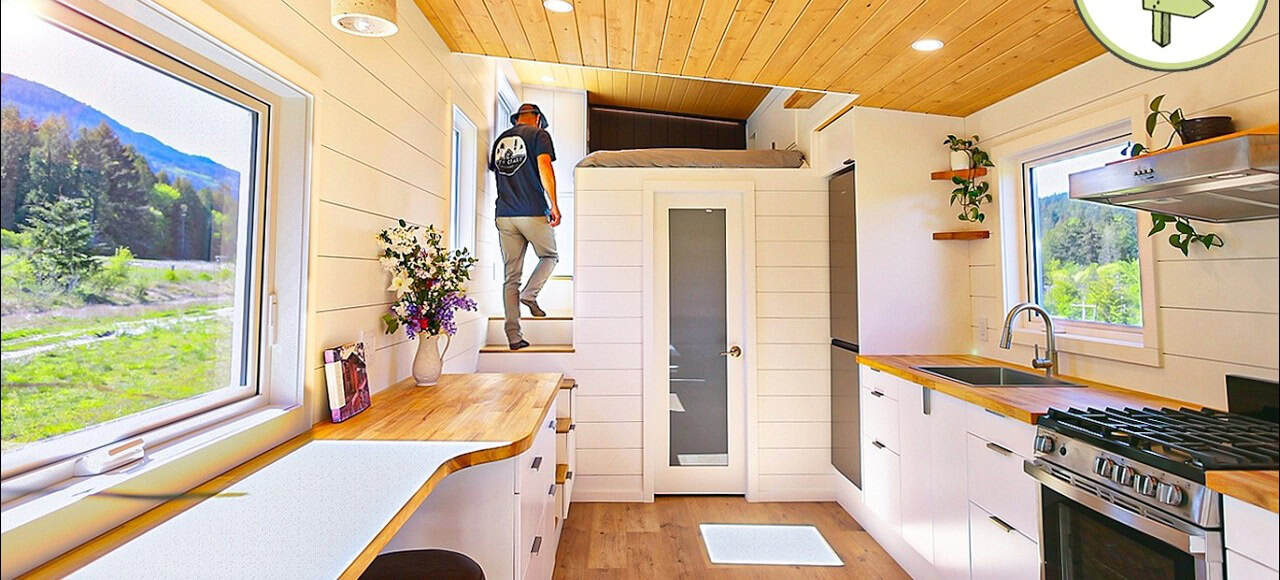
Stepping inside, the Lumbec Micro-House reveals an interior finished entirely in light-toned wood that amplifies the natural light pouring through the windows. The main living area occupies the central portion of the home and serves triple duty as sitting room, dining space, and general living area. Built-in seating with storage underneath is a hallmark of well-designed tiny houses, and Lumbec executes it beautifully here — every square inch beneath the benches holds belongings that would otherwise need closets or cabinets.

Images courtesy of Lumbec Tiny Houses
The living area doubles as a guest sleeping space when needed. The built-in benches can be configured to create a sleeping surface, while the fold-down table clears out of the way. This kind of multi-functional furniture design is essential in a 136-square-foot home — every piece must serve at least two purposes. The light wood palette throughout keeps the space feeling warm without becoming visually heavy.
Images courtesy of Lumbec Tiny Houses
Kitchen and Dining Space
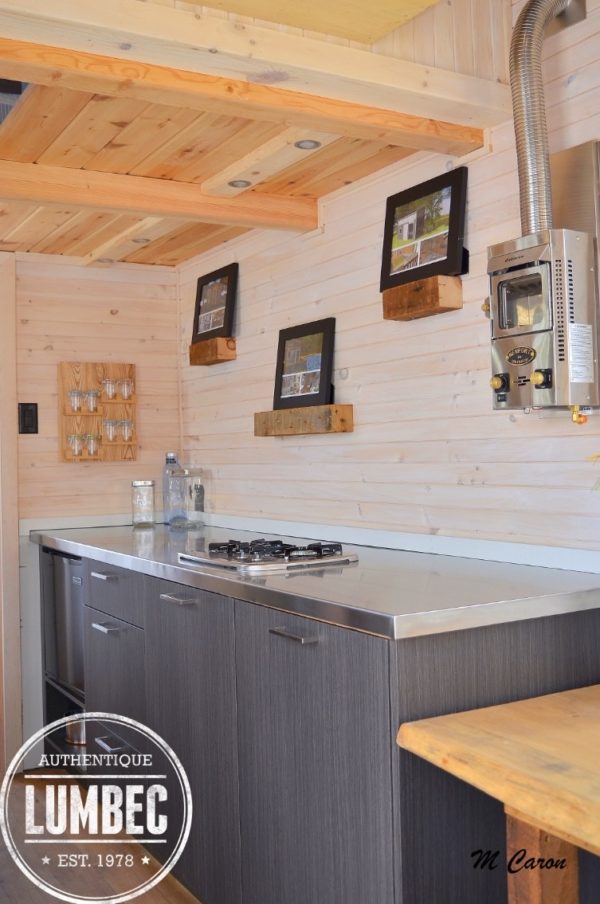
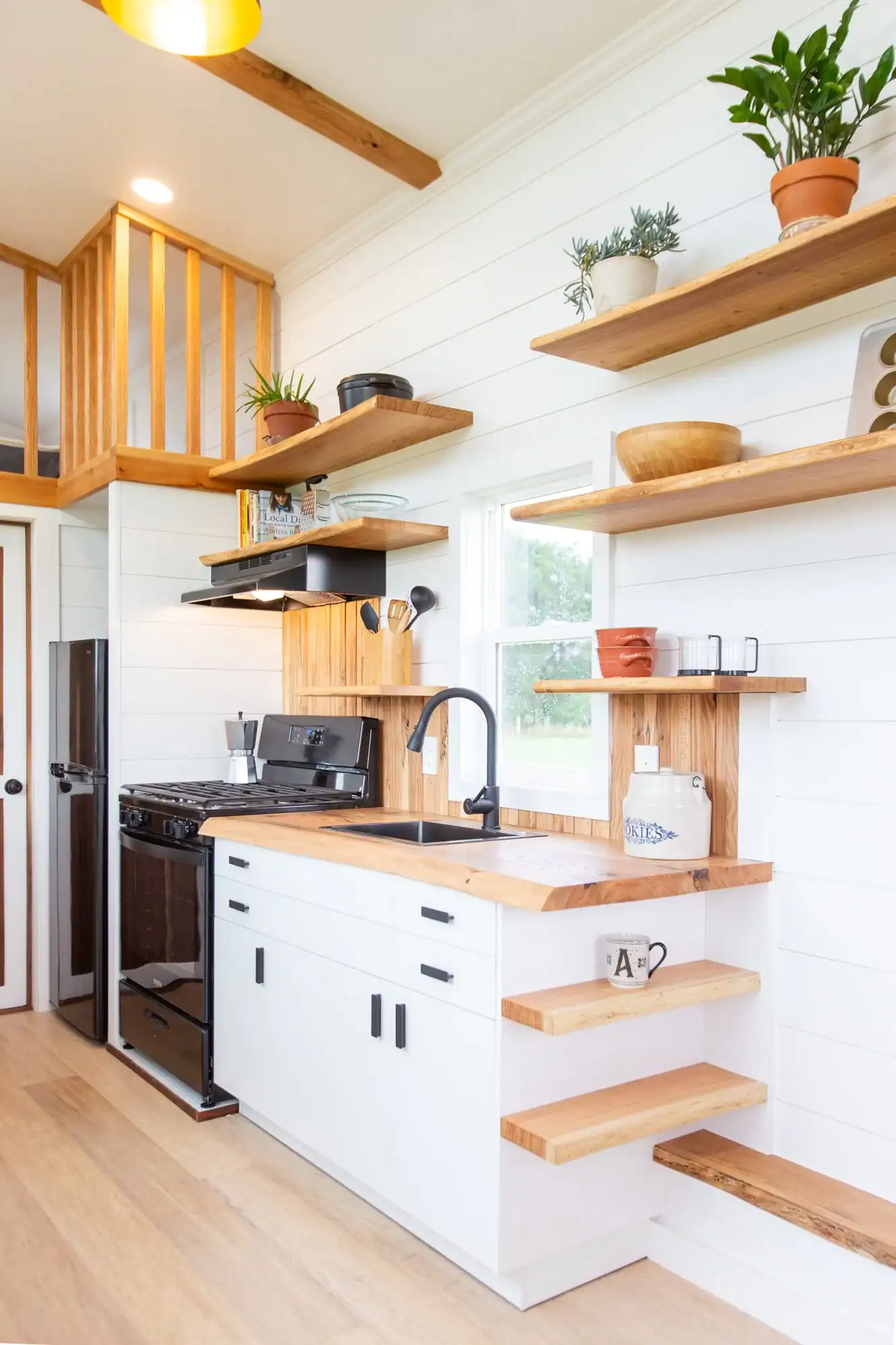
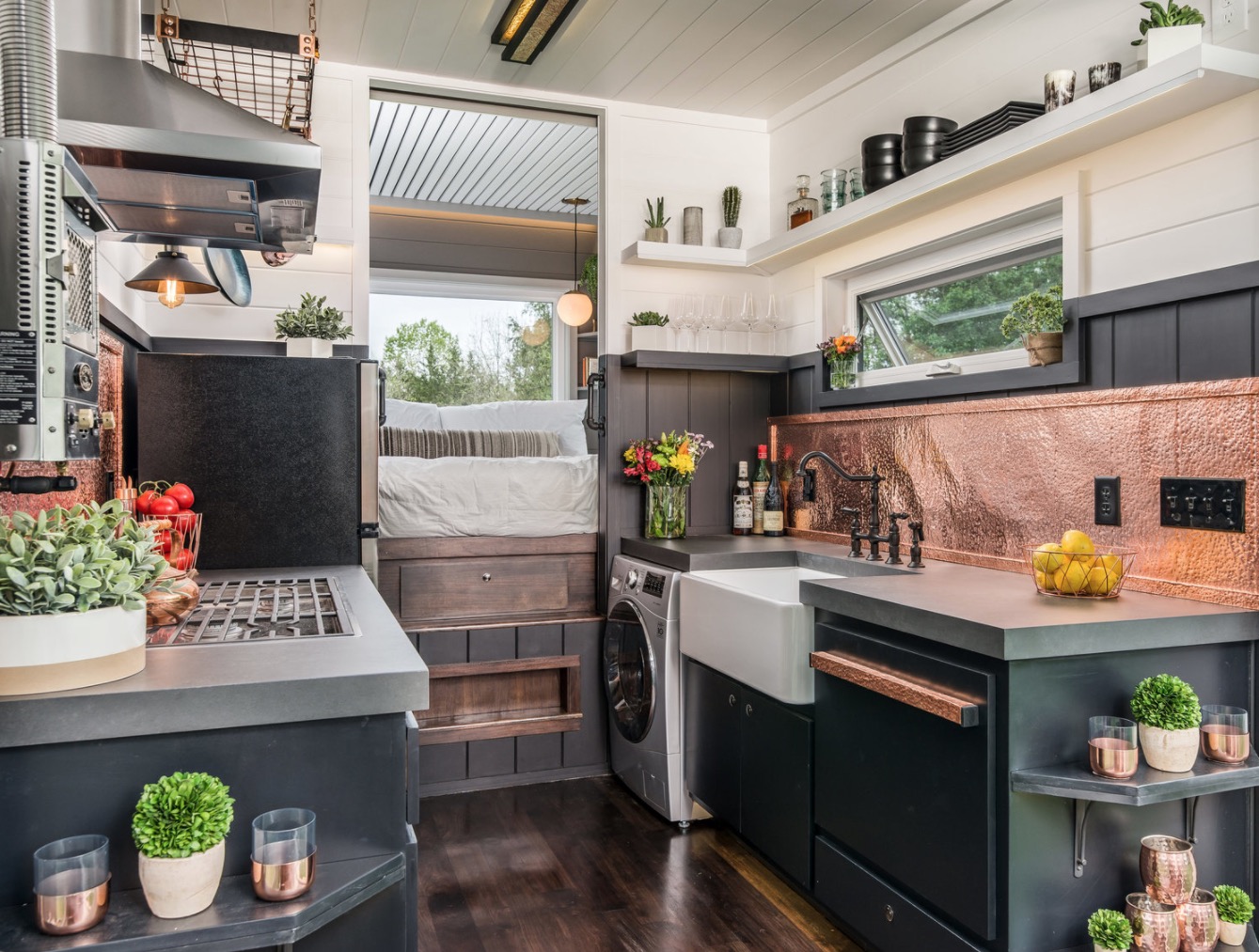
The kitchen in the Lumbec Micro-House is compact but surprisingly complete. A two-burner cooktop, sink, and preparation counter provide everything needed for daily cooking. The vertical storage approach — tall narrow shelving rather than deep cabinets — is a smart choice for micro dwellings because it keeps items visible and accessible without requiring you to dig through stacked layers. Open shelving also makes the kitchen feel less enclosed than upper cabinets would in a space this tight.
Images courtesy of Lumbec Tiny Houses
The dining arrangement integrates seamlessly with the kitchen and living areas. A fold-down or removable table allows the space to flex between meal preparation, eating, and relaxation. This is one of the key lessons from micro-house design: fixed furniture in a 136-square-foot home would make the space feel rigid and cramped, while movable and fold-away pieces let the home adapt to whatever activity is happening.

Images courtesy of Lumbec Tiny Houses
Bathroom and Utility Space
Even at 136 square feet, Lumbec managed to include a proper bathroom with toilet and shower. The wet-bath configuration — where the shower shares space with the toilet area — is the most space-efficient approach for micro dwellings. The light wood finishes continue into the bathroom, maintaining visual continuity that makes the entire home feel like one cohesive space rather than a collection of cramped rooms.

Images courtesy of Lumbec Tiny Houses
The bathroom details show the level of craftsmanship Lumbec brought to every corner of this build. Proper plumbing fixtures, a real showerhead, and adequate ventilation demonstrate that a micro house does not have to mean micro compromises on daily comfort. For builders considering their own micro-house project, this bathroom layout is an excellent reference for maximizing function in minimal space.
Images courtesy of Lumbec Tiny Houses
Sleeping Loft and Ladder Access
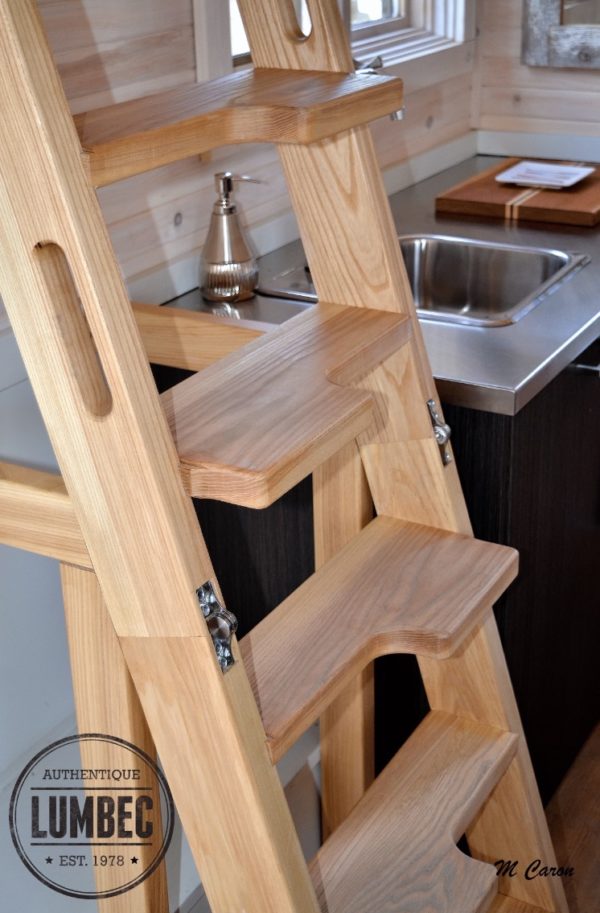
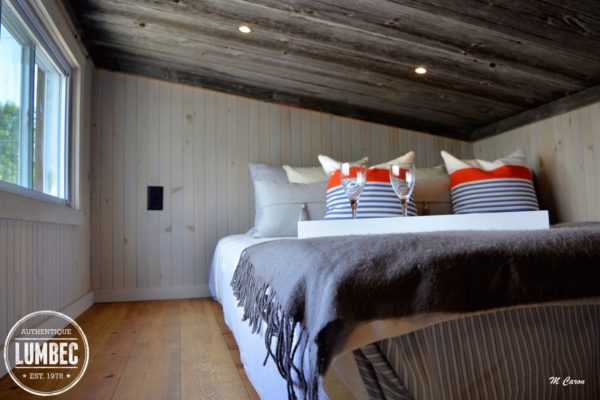
The sleeping loft occupies the space above the main living area, accessed by a ladder. While loft bedrooms are standard in tiny houses, the Lumbec version benefits from the extra headroom created by the home’s roofline. The loft has enough clearance to sit up comfortably, and windows at the loft level provide both light and ventilation — essential for comfortable sleeping in an elevated space.
Images courtesy of Lumbec Tiny Houses
From the loft, you get a bird’s-eye view of the living space below, reinforcing how efficiently the floor plan works. The loft railing doubles as a structural element and a place to drape blankets or hang small items. By keeping the sleeping area elevated, the entire ground floor remains available for daytime activities — a design principle that makes 136 square feet live much larger than the number suggests.
Images courtesy of Lumbec Tiny Houses
Interior Details and Finishing Touches
The finishing details throughout the Lumbec Micro-House reveal a builder who cared about craft as much as function. The consistent use of light natural wood creates a warm Scandinavian feel, while the careful joinery at corners and transitions shows professional-grade construction. Small touches — like the window trim details and the integration of electrical outlets and switches into the woodwork — elevate this from a basic shelter to a refined living space.
Images courtesy of Lumbec Tiny Houses
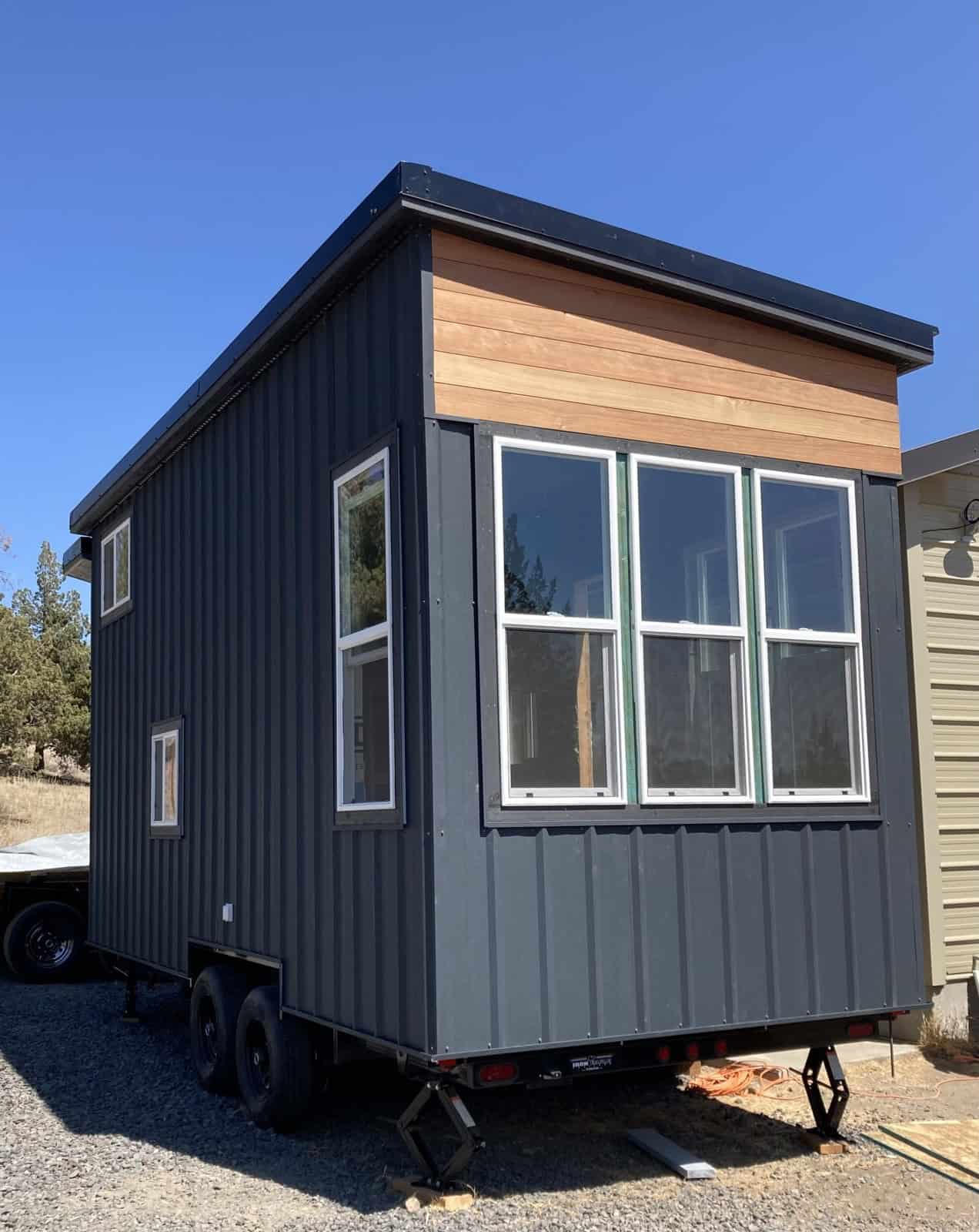
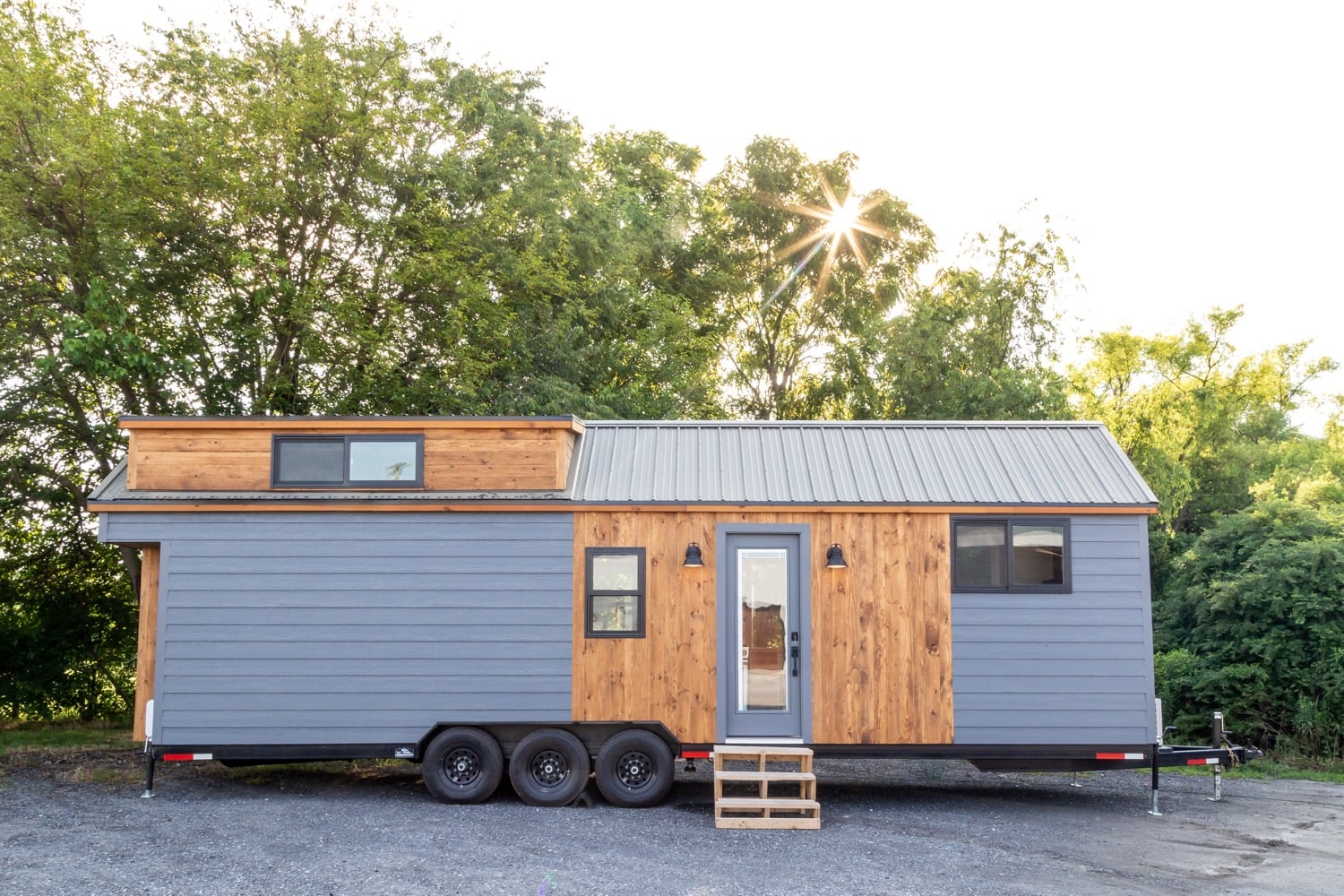
The exterior shots in different lighting conditions show how the cedar siding takes on different character throughout the day. The metal roof with its clean lines complements the wood siding, and the overall proportions of the home — despite being barely larger than a camping trailer — read as architectural rather than utilitarian. This is a key achievement for any micro-dwelling: making something this small feel intentional and designed rather than merely adequate.

Images courtesy of Lumbec Tiny Houses
The final exterior view captures the Lumbec Micro-House in its element — a compact, beautifully crafted home ready to be towed to its next destination. At 136 square feet, it represents the lower end of the tiny house size spectrum, yet it delivers every essential amenity: kitchen, bathroom, sleeping loft, and living area. For anyone considering just how small they could go, the Lumbec Micro-House is compelling proof that less truly can be more.

Images courtesy of Lumbec Tiny Houses
Design Details
- Size: 136 square feet (plus sleeping loft)
- Builder: Lumbec Tiny Houses (Quebec, Canada)
- Model: Micro-House
- Exterior: Vertical cedar siding with standing-seam metal roof
- Interior finish: Light natural wood throughout
- Layout: Open living/kitchen, wet bath, sleeping loft
- Notable feature: V-shaped nose extension over trailer tongue for extra space
- Kitchen: Two-burner cooktop, sink, open shelving, prep counter
- Bathroom: Wet bath with toilet and shower
- Sleeping: Loft bedroom accessed by ladder
- Windows: Multiple fixed and operable windows on all sides
- Storage: Built-in bench storage, vertical shelving, loft-side storage
What Makes This Build Special
- V-shaped nose design reclaims space over the trailer tongue that most builders leave empty — a creative engineering solution that adds usable square footage without increasing the trailer length
- Professional-grade finishes in an extremely compact package demonstrate that micro-dwellings can feel refined rather than rough
- Light wood interior strategy makes 136 square feet feel significantly more spacious than dark finishes would
- Multi-functional furniture throughout means every piece serves at least two purposes — seating becomes storage, tables fold away, and the living area converts to guest sleeping
- Full wet bath in a home this size proves that indoor plumbing is achievable even at the extreme small end of the tiny house spectrum
- Window strategy with multiple openings on every wall prioritizes natural light and ventilation — critical comfort factors that some micro-builders sacrifice for wall space
- Canadian four-season construction with proper insulation and weather-resistant materials means this is a year-round home, not a fair-weather shelter
Learn More
Lumbec Tiny Houses operated out of Quebec, Canada, producing a range of tiny houses including this Micro-House model. While Lumbec’s website is no longer active, their builds remain excellent examples of Canadian tiny house craftsmanship. For more tiny houses on wheels from professional builders, explore our Tiny House Builders section.
Highlights
- 136-square-foot tiny house on wheels by Lumbec Tiny Houses of Quebec, Canada
- Distinctive V-shaped nose extends living space over the trailer tongue
- Vertical cedar siding with standing-seam metal roof
- Light natural wood interior throughout creates a warm, spacious feel
- Full kitchen with two-burner cooktop, sink, and open shelving
- Wet bath with toilet and shower in a dedicated space
- Sleeping loft with windows for light and ventilation
- Built-in storage benches and multi-functional furniture throughout
- Professional-grade construction designed for Canadian four-season living
Explore More: Tiny Houses | Tiny House Builders | Tiny Houses on Wheels | Join Our Free Newsletter
Disclosure: This post may contain affiliate links. If you purchase through one of our links, we may earn a commission at no additional cost to you.


Alex
Latest posts by Alex (see all)
- A Hotel Designer’s 484 Sq Ft Milan Apartment with a Rotating Room Divider - October 9, 2026
- Hermosa Orchards Village: A Durango Tiny Home Community with Its Own Fruit Orchard - October 9, 2026
- The Sanctuary Minnesota: A Tiny House Village on 80 Acres of Woods - October 9, 2026






@ Steve Podhorecki
Sorry, totally disagree with your comment. Plenty of tiny houses have a V over the “tongue” or drawbar just like this one.
The V shape actually helps in the aerodynamics by pushing through the air. Similar to a ships bow. More dangerous would be the tiny houses that have a flat surface into the wind. That creates resistance galore thereby increasing fuel consumption and stability issues especially when hitting winds full on from just off 90°.
However, the extension of the roof upwards just past the V could (I stress “could” not would) cause some issues.
Great use of space! The ladder is beautiful. The overall design is stylish and modern and uncluttered. It’s calling to me!!!
Thumbs up for flush lighting over the range.
The semi-alternating tread ladder is almost as good as alternating treads…
I like using the hitch dead-space, as long as the hitch and tow rig are rated for it. Since this THOW will probably only be moved once or twice during its time here on earth, the discussion of windage and balance is academic. Let’s build ’em!
Very nice. The weight on tongue is probably fine as long as the longitudinal center of gravity is above or slightly forward of the middle of the axel(s). The flat plate drag of the ~45′ leading edge of the front room is much less than that of the 90′ edge of the flat wall above and behind it.
Love the exterior. the space under the ladder looks underutilized.
Like the tongue space. Doesnt appear to have closet space. The range doesnt look like it has a vent fan.
looks good
How tall is the house?
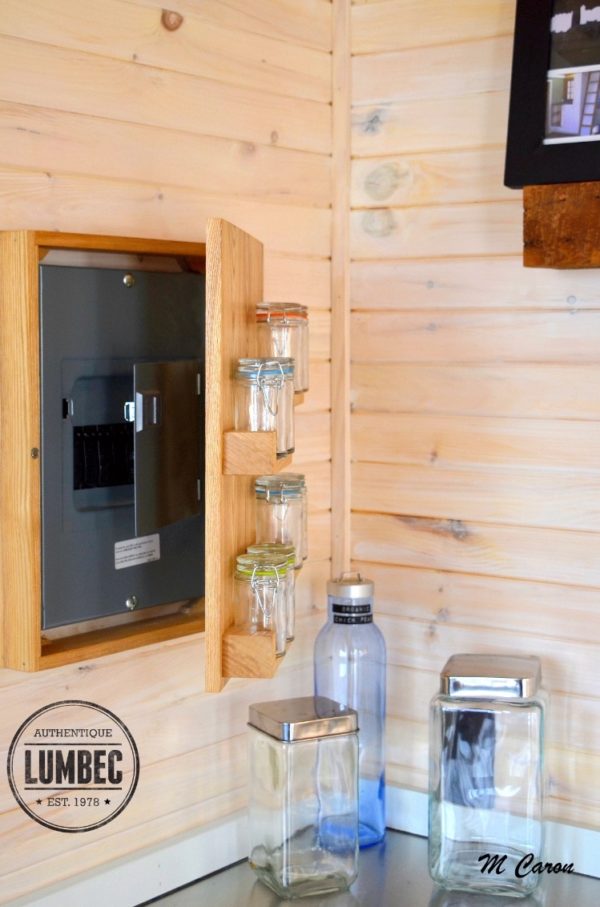
Thank you for sharing your THOW and thanks Alex for sharing it with us. I like the the shelving idea that hides the electrical panel. Panel stays easy to get to yet no longer an eyesore. Thumbs Up!
Happy Trails and God bless you all!
Very creative, right? We love sharing with you, Glema. Thanks for being a faithful reader! — Tiny House Talk Team
@ Eric,, Well, it seems my original comment has been removed as I don’t see it here, but I am sure I was NOT talking about the “V” of the house. What I was talking about is the LACK of a “V” in the trailer tongue. I had forgotten that I had seen this TH before or that I had commented on it and was about to comment on it again when I saw your reply.. So, 1) Yes, I love the “V” nose of the house. It absolutely help with towing and mileage and obviously space inside the home… 2) I DISLIKE that the tongue is a single square tube. It absolutely should have 2 more angled tubes added to it and the ball receiver should be V style. Sorry for any confusion.
I really like how people are starting to utilize the area over the hitch… great use of space.
Beautiful home…
Yes it’s very creative!
Will you share your design plans for the ladder? I’m fabricating a ladder for my tiny house.
I would be very interested in those ladder plans as well. Will be starting my tiny house construction in a few months. Cheers
May I have your ladder plans?
Thank you for sharing your tiny home. It is beautiful. I am also interested in the ladder plans if they are available.