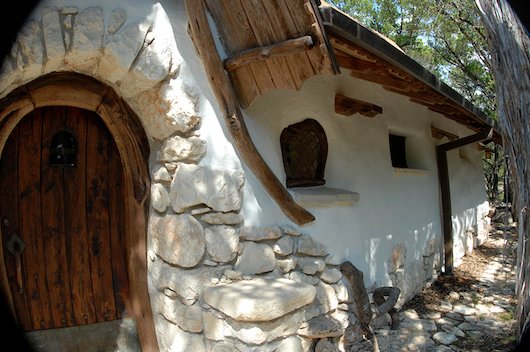
Gary Zuker is the owner of this little hobbit house in Texas. In 1989 he built it by hand for about $25,000 and lots of labor. The home took three years to complete. He is a University of Texas computer engineer with no carpentry experience before this project.
In total, the space is about 830-square-feet with lots of open areas. Gary had the help of Pliny Fisk, a local sustainable building expert in Austin. Here are some details on the materials used:
-
- Straw-clay
- Loblolly pine for scissor-truss system
- Limestone boulders for doorway, fireplace, and foundation
- Stained-glass windows
- Salvaged windows, flooring, and kitchen cabinets
Please don’t miss other exciting tiny homes – join our FREE Tiny House Newsletter!
Little Hobbit House in Texas
Photos courtesy of Gary Zuker and Paul Bardagjy
[continue reading…]
{ }
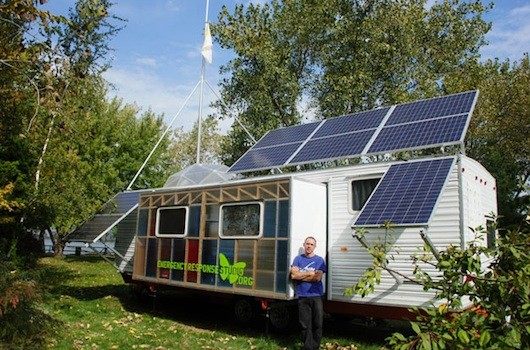
Artist Paul Villinski transformed a used FEMA trailer into the Emergency Response Studio, a solar- and wind-powered mobile studio and living space. The conversion replaced standard RV siding with twin-wall polycarbonate panels that function as a sun room and provide passive solar heating.
The design features a geodesic “sun dome” with a wall that folds completely down to create an instant deck, stage, or display area. Solar panels and a wind turbine provide all electrical power, with batteries stored beneath the floor. The interior includes a kitchen, bedroom with overhead storage, and a compact bathroom with shower.
Don’t miss other interesting tiny homes like this – join our FREE Tiny House Newsletter for more!
Emergency Response Studio Exterior
[continue reading…]
{ }
The Cube Project tiny house is an effort to create comfortable housing for one person while having the least impact on the environment.
It’s a modest size at only 10 feet on all sides, or 3x3x3 meters.
Experience this tiny home in the video at the bottom of this post.
Here are just a few of the cube’s highlights and features:
- Couch
- Large LED Television
- Slide-able table with chairs
- Double bed
- Full size shower
- Composting toilet
- Kitchen with fridge
- Stove top
- Sink and drainer
- Microwave
- Washing machine
- Air conditioner
How did they fit all of that into less than 100 square feet?
 Photo Credit: Nick Edwards
[continue reading…]
{ }
Ikea, the Swedish king of small space furniture and home decor, has unveiled their 2012 catalog.
It’s 374 pages fat and this time there’s an iPhone-app version of it.
Later this month you’ll be able to find an iPad one as well, if you use one of those.
To me, this year’s catalog and Ikea’s growth is proof that folks in general are downsizing.
People are interested in moving into smaller, smarter places.
A Home Doesn’t Need to Be Big, Just Smart
That’s what’s on the front cover in bold.
It’s filled with ideas on how to make your small space smarter though:
- Do it yourself shelving
- Storage ottomans
- Loft beds
Inside you see examples of a living room with a bunk bed over the couch.
A kitchen and dining area surrounded by three bunk beds.
Various examples of vertical space being utilized with shelving.
When you continue flipping through the pages, you’ll find:
- More ways to maximize space
- We love small spaces! (A message from the founder)
- One room, many zones

[continue reading…]
{ }
These tiny house libraries aren’t exactly the kind you’d be able to walk into.
But they’re all unique and serve a great purpose because they promote learning and literacy.
They improve communities by providing free book exchanges for people.
The mission is to supply more than 2,510 libraries all around the world.
That’s more than Andrew Carnegie!
They can also be used to raise money for clubs, scout troops, churches, high school organizations or other community groups.
Todd Bol and Josie Pradella are the founders.
Here’s how you can get involved.
Sponsor a library or build your own

[continue reading…]
{ }
The Slabtown Cube measures 12 feet by 12 feet with a full second level, creating a compact two-story tiny house with complete amenities. At 12 feet tall, the loft provides ample space for sleeping and storage while accommodating a 19 gallon water heater and RV-style washer/dryer combo.
Slabtown Cube Specifications
- Builder: Slabtown Customs
- Footprint: 12 feet by 12 feet
- Height: 12 feet
- Stories: Two (main floor plus loft)
- Foundation: Wooden skids
- Floor Joists: 2×8
- Roof: Metal with steel hurricane tiles
- Entry Door: 36 inches
- Interior Finish: Bead board pine paneling on walls and ceiling
Slabtown Cube Exterior
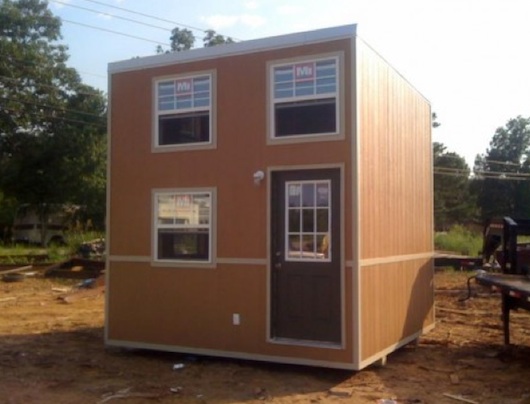
Photo via Slabtown Customs
[continue reading…]
{ }
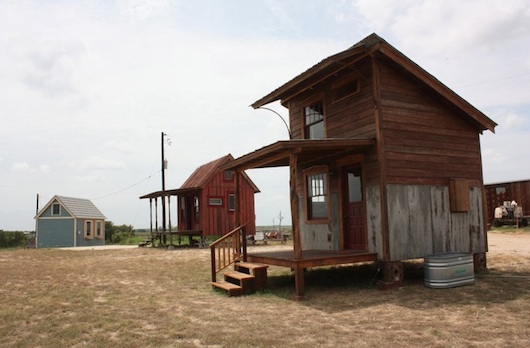
This Tiny Texas Houses cabin measures 10 by 12 feet with a 6 by 11 foot front porch, built almost entirely from reclaimed materials dating back over a century. The rustic construction features 125-year-old cedar porch posts, 1800s-era long leaf pine siding, and corrugated metal roofing from the early 1900s.
Cabin Specifications
- Builder: Tiny Texas Houses (Brad Kittel)
- Main Cabin: 10 feet by 12 feet
- Porch: 6 feet by 11 feet
- Stories: Two (main floor plus sleeping loft)
- Materials: Primarily reclaimed/salvaged
Historic Materials
- Porch Posts: 125-year-old cedar
- Exterior Siding: 2×8 long leaf pine from the 1800s
- Metal Roofing: Corrugated metal from early 1900s
- Shower Walls: 100-year-old roof shingles
- Shower Floor: River rock
Cabin Exterior
[continue reading…]
{ }
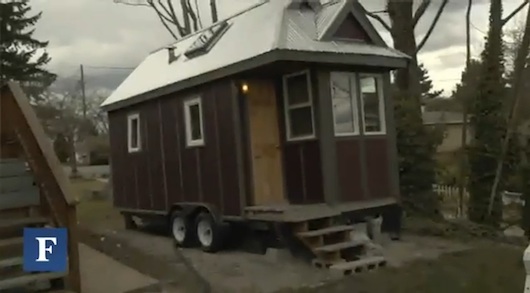
This 130 square foot tiny house sits on a 9 by 18 foot trailer, occupying roughly the same footprint as a parking space. Built by an engineer who wanted a permanent home that could travel with him, the house provides the stability of homeownership with the flexibility of mobility.
Tiny House Specifications
- Size: 130 square feet
- Trailer: 9 feet by 18 feet
- Type: Tiny house on wheels (THOW)
- Builder: Owner-built
- Build Time: Approximately 18 months from plans to completion
Tiny House Exterior
[continue reading…]
{ }
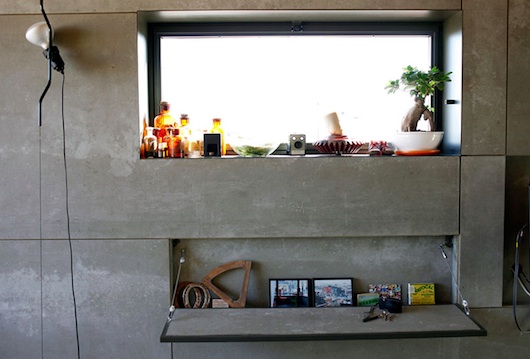
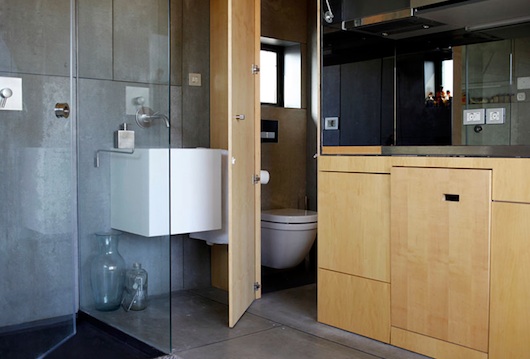
This 258 square foot transforming apartment in Barcelona was converted from a former water tank storage space in a building’s attic. Designed by architect Barbara Appollini, the space draws inspiration from small Japanese homes and space-saving boat furniture to create a living environment where walls and furniture serve multiple functions and nearly everything can be hidden away.
Apartment Specifications
- Location: Barcelona, Spain
- Size: 258 square feet
- Designer: Barbara Appollini, architect
- Original Use: Water tank storage for building
- Position: Building attic
- Outdoor Space: Roof terrace with city views
- Design Inspiration: Japanese homes and boat furniture
Main Living Area
[continue reading…]
{ }

