
The tiny house movement didn’t emerge from a single moment — it grew from a network of passionate individuals who were building, documenting, and sharing their experiences long before tiny living hit the mainstream. This collection highlights three of those early voices, each of whom played a distinct role in shaping the movement as we know it today.
From Derek “Deek” Diedricksen’s wildly creative micro shelters built for as little as $200, to Dee Williams’ seven-year journey living in her own tiny house, to the documentary filmmakers who set out to capture it all on film — these stories represent the grassroots energy that made tiny house living a cultural phenomenon.
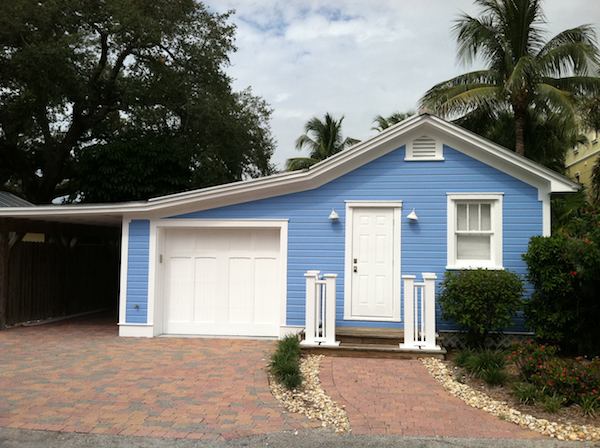 Photo by Alex Pino
9 Ways You Can Use a $200 Micro Shelter
Derek “Deek” Diedricksen is one of the most inventive builders in the tiny house world. Author of Humble Homes, Simple Shacks and host of HGTV’s Tiny Yellow House, Deek has spent years proving that you don’t need a big budget to create functional, creative small structures. In this feature, he showcases nine different ways to use micro shelters that cost as little as $200 to build — from backyard guest rooms and home offices to kids’ playhouses and emergency shelters.
What makes Deek’s approach so compelling is the accessibility. These aren’t architect-designed luxury cabins — they’re scrappy, resourceful builds that anyone with basic tools and a weekend can attempt. The article also features Christopher Smith and Merete Mueller, the filmmakers behind the TINY documentary, who were documenting the small living movement during this same period.
Read the full article: 9 Ways You Can Use a $200 Micro Shelter
Living in a Tiny House for Seven Years: Dee Williams
When most people were still asking “could you actually live in a tiny house full-time?”, Dee Williams had already been doing it for seven years. Her tiny house — a hand-built 84-square-foot home on wheels — became one of the most recognized examples of committed tiny living in the early days of the movement.
In this interview, Dee shares what she learned from nearly a decade of tiny house living: the practical realities of downsizing, the unexpected emotional shifts that come with simplifying your life, and the community connections that deepened as a result. Dee went on to found Portland Alternative Dwellings (PAD), an organization that teaches hands-on tiny house building workshops, and she authored The Big Tiny, a memoir about her journey.
Her story remains one of the most powerful arguments that tiny living isn’t a fad — it’s a sustainable, long-term lifestyle choice that can fundamentally change how you relate to your home and your community.
Read the full interview: Living Tiny for 7 Years with Dee Williams
TINY: A Story About Living Small
In 2011, filmmakers Christopher Smith and Merete Mueller launched a Kickstarter campaign to fund TINY: A Story About Living Small, a documentary that would follow Christopher’s own tiny house build while exploring the broader cultural shift toward smaller, simpler living. The campaign succeeded, and the finished film went on to become one of the most widely seen tiny house documentaries ever produced.
The documentary captures a pivotal moment in the movement’s history — a time when tiny houses were still a fringe concept and the people building them were genuine pioneers. It features interviews with many of the figures who helped define the movement, including Dee Williams and Jay Shafer, and it documents the real challenges of building and living in a tiny house — not just the Instagram-worthy highlights.
TINY is available for streaming and remains an essential watch for anyone interested in understanding where the tiny house movement came from and why it resonated with so many people.
What Makes These Stories Special
- These are the movement’s origin stories: Deek Diedricksen, Dee Williams, and the TINY filmmakers were active at a time when tiny house living had no mainstream recognition. Their work didn’t just document the movement — it helped create it.
- Accessibility was the common thread: Deek’s $200 micro shelters, Dee’s hand-built 84-square-foot home, and a documentary funded by a modest Kickstarter campaign — none of these required wealth or professional credentials. They proved that anyone could participate.
- The ideas hold up: More than a decade later, the core questions these pioneers were asking — How much space do you really need? What would you gain by living with less? — are more relevant than ever as housing costs continue to climb.
- Each person took a different path: A builder who makes shelters from salvaged materials, a woman who lived in 84 square feet for years, and filmmakers who captured it all on camera. Together, they show that the tiny house movement has always been bigger than any single approach.
Learn More
- Derek “Deek” Diedricksen: Tiny Yellow House on YouTube — Deek continues to build and share creative micro shelter projects
- Dee Williams: Author of The Big Tiny and founder of Portland Alternative Dwellings (PAD)
- TINY Documentary: TINY: A Story About Living Small (2013) — available for streaming on multiple platforms
Highlights
- A collection of stories from the early days of the tiny house movement, featuring three pioneering voices
- Derek “Deek” Diedricksen’s $200 micro shelters prove that creative small-space building is accessible to anyone
- Dee Williams lived in her 84-square-foot tiny house for over seven years — one of the longest-tenured tiny house residents in the movement’s history
- The TINY documentary captured the movement at a pivotal moment and became one of the most widely seen tiny house films
- These stories represent the grassroots energy — builders, residents, and filmmakers — that turned tiny living from a fringe idea into a cultural movement
- The questions they asked about space, simplicity, and intentional living are more relevant today than ever
These pioneers helped build a movement from the ground up. Which of their approaches resonates most with you — building creatively on a tiny budget, committing to full-time tiny living, or documenting it all for others to learn from? Share your thoughts in the comments below.
You might also enjoy exploring:
This post may contain affiliate links and/or sponsored content.

Alex


where’s that pretty blue house on this page? Can you tell us anything more about it?
Hey! welcome back, long time no see 🙂 It’s just a little house that’s a few blocks away from my apartment so I walk by it all the time.
My husband and i got cheerful that Michael managed to do his homework because of the ideas he obtained in your web page. It is now and again perplexing just to continually be giving for free strategies that men and women might have been trying to sell. And we know we now have the website owner to thank because of that. The explanations you made, the straightforward web site menu, the friendships you help to promote – it’s all astonishing, and it is aiding our son and us consider that this content is cool, which is certainly quite indispensable. Many thanks for all the pieces!
What is the floor plan for the blue small house with garage.